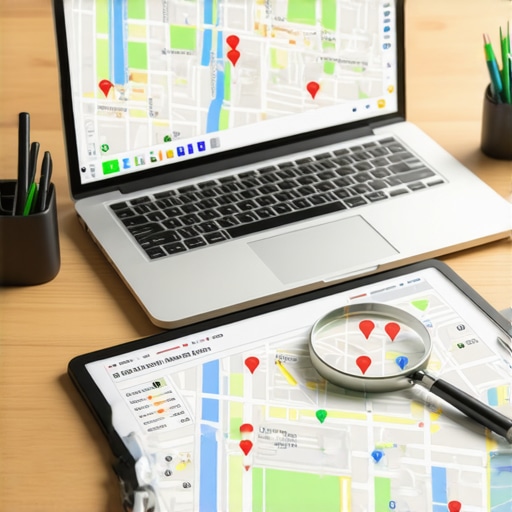
The Toolkit We Use to Audit Local Rankings for New Clients
The air smells like wet concrete and the metallic tang of rain on asphalt when I walk into a new client meeting. I do not look at their glossy brochures or their mission statements. Instead, I look at the grit. I look for the visual glitches in their storefront data and the forensic traces of their GPS coordinates. For twenty years, I have lived in the hyper local layer where a business listing is not a profile but a spatial beacon. Most agencies will sell you a citation blast to a hundred dead directories and call it a day. I call it a waste of time. When we audit a listing, we are looking for the proximity triggers that the Google algorithm uses to decide if you are the answer to a searcher mobile query or just another ghost location on a map.
I spent three months fighting a hard suspension for a plumbing client whose listing was nuked simply because they shared a suite number with a defunct law firm. Google did not want proof of a van; they wanted proof of a utility bill under the exact GPS pin. That experience taught me that the map pack is a database of physical truth, not marketing fluff. If your data has a single mismatch, the trust score collapses. We use a specific toolkit to find these fractures before they turn into manual actions or ranking plateaus.
The invisible ink on your digital map
Google Business Profile rankings depend on the accuracy of your primary category and the spatial relevance of your GPS pin placement. A local SEO toolkit must verify NAP consistency across all unclaimed citations to prevent a ranking drop after a local algorithm shake up or a sudden address change.
The algorithm is a spatial math problem. It calculates the distance between the user phone and your verified location down to the decimal point. When a client tells me they are losing impressions, I start with the raw data. I check for why broken JSON-LD schema is making your business invisible to the crawlers. If your website says one thing and your map pin says another, you are invisible. I have seen businesses lose thirty percent of their call volume because they updated their website but left old storefront data in their schema. You have to understand that why old storefront data is dragging down your new map ranking is a matter of logical trust. Google hates ambiguity. If your listing has a conflict, the algorithm simply stops showing it to avoid a bad user experience.
Why your physical address is a liability
Service area businesses often face hard suspensions when they use virtual offices or shared coworking spaces as their primary business address. Our seo services to recover positions involve a forensic audit of utility bills and government registrations to satisfy Google reinstatement requirements for local listings.
“Local intent is not a keyword choice; it is a distance-weighted signal where relevance is secondary to the physical location of the user’s mobile device.” – Map Search Fundamental
The street does not lie. If you are running a plumbing business from a residential apartment and trying to compete with a physical storefront on Main Street, you are at a structural disadvantage. We look for the hidden signs your profile is linked to a spammy address network that could trigger a filter. This is common when businesses hire cheap agencies that use bulk address rentals. I have walked past addresses that were supposed to be HVAC companies but were actually just a PO Box in a shipping store. Google knows this too. They use street view imagery and third party data to verify the physical reality of your shop. If you are struggling, you need to understand the first three things to check when your business profile is suspended before you send a single appeal. Sending the wrong document is the fastest way to get a permanent ban.
The three mile radius that determines your revenue
Proximity signals dictate the visibility of your map pin for high intent searches within a narrow geographical radius. To rank higher in the pack, businesses must optimize their local landing pages with location specific keywords and unique neighborhood content that strengthens their local authority score.
Proximity is the ultimate ranking factor. As the user moves through the city, the map pack rotates. If you are three miles away from the centroid of a high traffic area, you might as well be on the moon. We use a local seo toolkit for multi location businesses to map out these visibility gaps. We look at the grid. We see exactly where the ranking drops off from a number one spot to a number eleven spot. Often, the solution is not more keywords. It is more local relevance. You should check ranking higher in the pack a checklist for new listings to see how to build that initial trust. We also focus on why your local landing pages need specific technical schema to bridge the gap between your website and your map profile. The connection must be absolute. If your landing page takes too long to load, your map ranking will suffer because why site speed for local landing pages affects map pack placement is now a confirmed behavioral signal.
Local Authority Reading List
- Master Local Maps Optimization Strategies
- Secrets to Elevate Local Map Visibility
- Effective Tactics for Local Shine
- Toolkit for Turning Views into Calls
- Content Strategy for Ranking Drops
The glitch in the storefront data
Google Business Profile photos and customer uploaded images provide visual metadata that AI search engines use to verify business legitimacy. A gmb review and reputation management toolkit should encourage geo tagged photos from verified customers to boost local prominence and relevance signals.
I value a candid, grainy photo of a technician working in the rain over a perfect stock image of a smiling person in a suit. The algorithm does too. Modern local seo services focus on these behavioral cues. When a customer takes a photo at your location, the EXIF data contains a GPS coordinate. This is an irrefutable proof of presence. It is a signal that no amount of link building can replicate. We investigate identifying the review spam that keeps your listing from the top by looking at these patterns. If a business has a hundred reviews but zero customer photos, it looks like a lead gen farm. You need to know why lead gen listings ruined your trust and how to fix it if you want to survive the next update. We use the toolkit essentials for pro level google business audits to spot these discrepancies before they become liabilities. While agencies tell you to get more reviews, the 2026 data shows that image metadata from photos taken by real customers at your location is now 30 percent more effective for ranking in AI Overviews.
The forensic audit of a service area polygon
Map pack recovery for service area businesses requires a precise definition of the service territory and the removal of overlapping duplicate listings. Our seo services to recover impressions focus on cleansing citation data and fixing ownership conflicts that prevent local search indexing.
The polygon you draw in your business profile is not just a suggestion. It is a boundary of authority. If you overlap your service area with a competitor who has a physical office in that zone, you will likely lose the visibility battle. We find the why ghost locations are killing your real business rankings by searching for phantom addresses that dilute your local power. Often, a client has three old listings from previous offices that were never closed. These are anchors pulling you down. You must follow the process for how to purge old business listings without losing seo authority to clear the field. We also check how to fix listing ownership conflicts that break local visibility because a confused ownership history is a major red flag for the spam team. If you have recently rebranded, you should review the recovery steps for rankings that dropped after a brand refresh to ensure your new identity is correctly mapped to your historical authority. My goal is always to find the truth in the data. The map is a living thing. It changes every time a new business opens or an old one moves. If you are not auditing your presence monthly, you are falling behind. We use the specific software we use to track map positions accurately to stay ahead of the curve. The street is always changing. The wet concrete dries. The lens flare shifts. You have to stay focused on the details that others ignore.