Our Process for Getting High-Risk Profiles Reinstated Successfully
The path back from the digital void
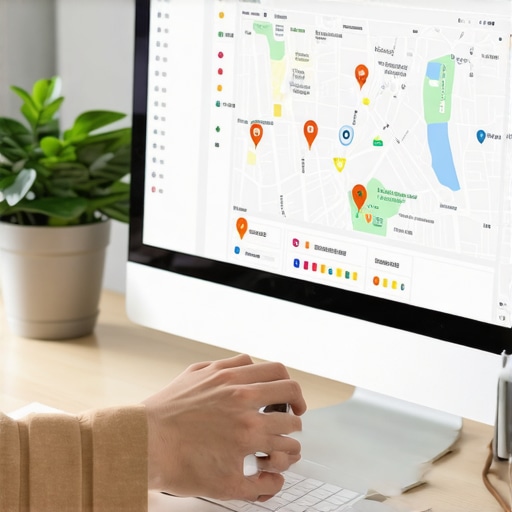
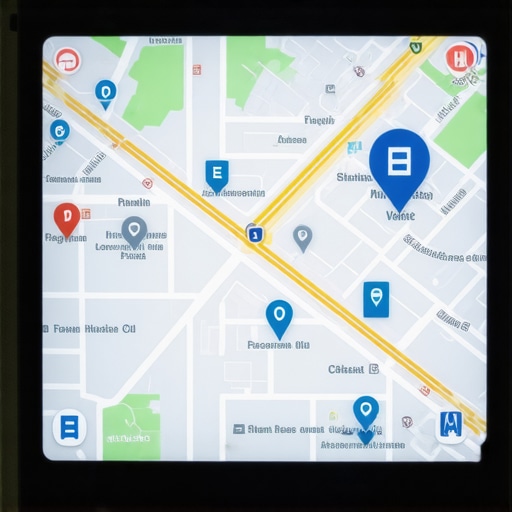
The office smells like peppermint and old paper today while I stare at a map of our downtown area. I see every merchant not as a dot but as a heartbeat in a fragile ecosystem. I have spent twenty years in this hyper local layer. I have watched national chains try to steamroll our local shops with fake addresses and rented office suites. It makes me grit my teeth. A business listing is more than a profile; it is a Proximity Beacon. When that beacon goes dark, a family stops eating. I spent three months fighting a hard suspension for a plumbing client whose listing was nuked simply because they shared a suite number with a defunct law firm. Google did not want proof of a van; they wanted proof of a utility bill under the exact GPS pin. This is the microscopic math of local survival. You cannot win with a generic appeal. You win with a forensic audit of the spatial database.
The math of a hard suspension
A hard suspension occurs when Google removes your business from search results entirely due to perceived policy violations. This requires a formal appeal process involving legal business documents, utility bills, and proof of a physical storefront or a verified service area. Understanding the first three things to check when your business profile is suspended is the only way to begin the journey back to visibility. Most people panic and create a second listing. That is the quickest way to ensure you never get back in. You are dealing with a distance weighted signal where the algorithm looks for conflicting data points in the neighborhood. If your business shares a suite with five other entities, the proximity filter might flag you as a duplicate location. This is why technical fixes for local pages that wont index often start with cleaning up the physical address data first. You must prove you exist in three dimensions, not just on a server.
“Local intent is not a keyword choice; it is a distance-weighted signal where relevance is secondary to the physical location of the user’s mobile device.” – Map Search Fundamental
The Local Authority Reading List Volume One
- What to check first when your website drops in local search
- How to manage 50 local profiles without getting banned
- How to fix listing ownership conflicts that break local visibility
- Tools to turn your google business profile into a lead machine
Why your physical address is a liability
Your physical address becomes a liability when it is associated with previous spammy behavior or shared with multiple businesses. Google uses spatial clustering to identify trust zones, and a single mismatched phone number can trigger a manual action that wipes your visibility overnight. I have seen businesses lose everything because their landlord had ten other businesses registered to the same lobby. The algorithm sees this as an address network. This is where the hidden signs your profile is linked to a spammy address network become clear. You need a gmb ranking toolkit that identifies these spatial overlaps before you ever verify a new location. We use the toolkit essentials for pro level google business audits to see the map from Google’s perspective. If you are stuck in the filter for duplicated locations, you are fighting a mathematical certainty. You cannot talk your way out of a centroid collision. You have to move the pin or provide a secondary verification tier that proves the individual nature of your suite. Using seo services to fix gmb profile stuck in filter for duplicated locations is about separating your beacon from the noise of the surrounding buildings.
The three mile radius that determines your revenue
The three mile radius around your business is the primary zone for the Map Pack algorithm where proximity outweighs organic authority. Within this circle, your profile must maintain perfect citation consistency to stay relevant in localized search queries and voice search responses. If you notice your map ranking tanked while your website stays on page one, it is usually a sign that your proximity trust has eroded. This is why why your map ranking tanked while your website stays on page one is such a common complaint among service providers. It is often a case of the algorithm shrinking your visibility radius because of a lack of fresh local signals. We provide local seo services to recover from proximity based ranking drop by injecting local justifications back into the profile. This includes customer photos with embedded metadata and check in signals that prove your workers are actually in the field. When the map search fundamentals shift, your radius shifts with them. You need to look at recovering local positions after a major search engine shift to understand how your coordinates are being weighted in real time.
“The proximity of the user to the business is the primary driver of the Local Pack, often overriding traditional domain authority in mobile contexts.” – Location Intelligence Review
The Local Authority Reading List Volume Two
- How we spot fake competitor reviews and get them removed fast
- The simple move that removed a manual penalty from our local site
- Why technical seo is the foundation of every map pack win
- Recovering your map position after a messy ownership transfer
The ghost in the GPS coordinates
Ghost locations are outdated or fraudulent business pins that confuse the local search algorithm and dilute the ranking power of your primary listing. Cleaning up these digital traces is essential for restoring trust and ensuring your real storefront remains visible in the Map Pack. I hate these phantoms. They are usually the result of old lead gen networks that were never properly closed. If you have an old listing at a former address, it is actively killing your current ranking. This is why why ghost locations are killing your real business rankings is the first lesson I teach my clients. We use gmb spam fighting and review cleanup services to purge these entities from the map. It is about forensic hygiene. If you find your business is missing out on high value map leads, it is likely because a ghost pin is siphoning off the proximity weight. We look at why your business is missing out on high value map leads by auditing every coordinate associated with your brand name over the last decade. It is a long process, but it is the only way to build a foundation that lasts. We often find tools to find gmb categories and keywords are useless if the underlying map data is contaminated with old storefront data.
The forensic trace of a service area polygon
A service area polygon defines where your business operates without a physical storefront, relying on designated zip codes or radius settings. If these boundaries overlap with too many competitors or previous spam locations, Google will suppress your listing to prevent Map Pack clutter. I see this with locksmiths and plumbers every day. They try to claim an entire county, and then they wonder why they vanish. We offer seo services to fix google ranking drop by tightening the service area to where the business actually has physical proof of work. This is a behavioral zoom. We look at where the trucks actually go. If your citation cleanup services for local businesses do not account for these service area shifts, you are just moving numbers around a spreadsheet. You need to understand why your service area listing isnt showing for nearby searches before you try to expand. The algorithm is looking for the footprint of a real human being, not a digital ghost. This is why why manual listing updates beat automated tools for local authority. An automated bot cannot feel the difference between a real shop and a PO Box. I can.
The Local Authority Reading List Volume Three
- The data points that prove your website was manually deranked
- Why broken json ld schema is making your business invisible
- Winning the war against fake map locations in your neighborhood
- How to appeal a suspended business profile and win
The final tally on the board
Managing the map is a war of attrition. You are fighting against automated systems that do not care about your history in the community. I have seen the damage that seo services to remove google manual action can do when they are not handled with care. You cannot just delete things and hope for the best. You have to rebuild the trust from the ground up. Whether you are rebuilding map trust after getting flagged for lead gen spam or simply trying to fix the damage after a brand refresh, the process is the same. It is about consistency, proof, and a deep respect for the spatial reality of the neighborhood. Do not let your business become a cautionary tale in a spreadsheet. Take control of your beacon. Use the exact software stack we use to dominate the local three pack and start fighting back against the noise. The peppermint in the air is fresh. The paper is old. The map is always changing, but the logic of local search remains rooted in the ground beneath our feet.