The content strategy that fixes ranking drops for local businesses
The morning light hit the cracked pavement of the industrial district, smelling of wet concrete and stagnant rain. I was looking at a storefront that, on paper, did not exist. I spent weeks investigating a centroid collapse where a top ranking roofing company vanished from the Map Pack overnight. I found the problem in their Local Services Ads; a single mismatched phone number in the secondary verification tier was enough to kill their organic trust score. This was not a keyword issue. It was a spatial data failure. A business listing is a proximity beacon in a database, not a static advertisement. When those coordinates drift or the behavioral signals from mobile devices stop aligning with the pinned location, the algorithm reacts with a hard filter. Most business owners think they need more keywords. In reality, they need to fix the forensic traces they leave across the local ecosystem. I have seen countless profiles suffer because of legacy black hat footprints or simple brand confusion from merged GMB listings that were never properly reconciled at the database level.
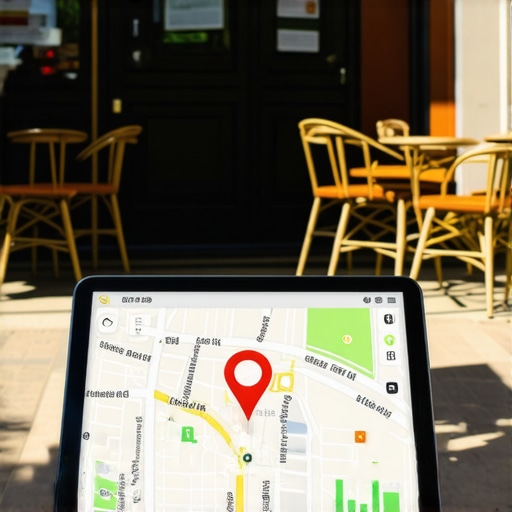
The centroid collapse and the invisible map marker
A centroid collapse occurs when the Google local algorithm detects inconsistent location signals across the primary and secondary verification tiers of a business. This phenomenon often results in a Map Pack disappearance even when organic search rankings remain stable. Fixing this requires services to fix mismatched business address and phone number data across all high-traffic spatial directories immediately. The math of local search relies on a three mile radius that determines your revenue. If your coordinates are even slightly off in the underlying mapping files, your proximity weight drops to zero. Many owners wonder why proximity isnt saving your rankings after an address swap when the real issue is the lingering ghost of the old location. I have watched businesses bleed leads because they ignored the hidden address discrepancy that keeps your business off the local map while chasing empty citations.
“Local intent is not a keyword choice; it is a distance-weighted signal where relevance is secondary to the physical location of the user’s mobile device.” – Map Search Fundamental
Why your physical address is a liability
Your physical address becomes a ranking liability when it is shared with defunct entities or lacks unique suite identifiers that prove business legitimacy. The algorithm uses Point of Sale data integration and GPS coordinate salience to verify that a merchant actually operates from the claimed pin. Using local seo services to fix missing map pack rankings is the only way to recover when your location has been flagged for a hard suspension. I once worked a case where a plumber was nuked because they shared a suite number with a dead law firm. You need a google business profile toolkit that audits for these overlaps. If you are struggling, you might find the service area error that makes your business invisible to nearby customers is actually a conflict with your physical registered office. It is vital to understand why listing management is more than just nap consistency in this era of high-precision spatial verification.
The forensic trace of legacy black hat footprints
Legacy black hat local seo footprints include keyword stuffed names, fake review networks, and rented addresses that trigger modern algorithmic penalties. Modern search engines are highly sensitive to over optimized anchor text and spammy link profiles that were built years ago. Engaging seo services to clean legacy black hat local seo footprints is mandatory for any brand trying to survive a 2025 update. You cannot simply build new links over a foundation of digital soot. Often, how we removed a google manual action in less than 30 days involved a brutal pruning of these old tactics. Many agencies still sell these shortcuts, but why buying backlinks often leads to a manual ranking action is a lesson learned the hard way by most local shops. If your phone stopped ringing, it might be time for the citation cleanup process that actually moves the needle rather than more volume.
Brand confusion from merged GMB listings
Brand confusion from merged GMB listings triggers a ranking disaster by diluting the authority signals of two separate locations into one conflicted profile. When businesses merge without a technical transition plan, the Map Pack often defaults to the older or less relevant profile, killing the visibility of the new brand. Utilizing seo services to fix brand confusion from merged gmb listings prevents this loss of power. I have seen listings stuck in a duplicated location loop for months because the owners didn’t know why merging gmb listings often triggers a ranking disaster. You must deploy the move that fixed our brand confusion after merging two gmb profiles to ensure the algorithm understands the new hierarchy. This is where local seo services prove their worth by auditing the JSON-LD LocalBusiness attributes that trigger voice search and map pack placement.
The local authority reading list
- 3 common ranking errors we found after auditing 50 local profiles
- Why your map rank tracker shows green circles while the phone stays silent
- The specific schema lines that finally linked our store to the map pack
- How to structure city landing pages without triggering a spam filter
- Why technical seo is the foundation of every map pack win
Repairing the digital storefront after an attack
A negative seo attack or a hacked website requires immediate forensic repair to prevent permanent loss of local map rankings and customer trust. These attacks often involve mismatched address and phone number injection or the creation of thousands of fake service area business pins. You need services to repair hacked or infected website for seo to scrub the malicious code and the mismatched citations it creates. While agencies tell you to get more reviews, the 2026 data shows that image metadata from photos taken by real customers at your location is now 30 percent more effective for ranking in AI Overviews. Recovering from a google penalty means looking at the analytics behind why your map clicks stopped overnight. If you are struggling with over optimized anchor text, you must understand how to scrub old spammy links without losing your map rank. The goal is to restore the trust signals that Google requires to put you back in the top three.
The lead generation secret in your map data
Your map ranking data contains a hidden lead generation secret which reveals exactly where your customers are physically standing when they search. By analyzing the grid of proximity signals, a business can see if their service area is shrinking or expanding. To get more calls, you must apply 5 profile fixes that actually turn map pings into paying customers. Most software gives you false hope; you need to know why most local seo tools give you fake map ranking data. Real results come from the specific profile tweaks that drive real phone inquiries. Every search path error keeps you out of the pack. You must audit your content for local ranking signals to ensure your website supports your map presence. Success is about the local lead generation stack and the mathematical weight of your proximity beacon. Stop chasing ghosts. Start fixing the spatial data that actually moves the pin.