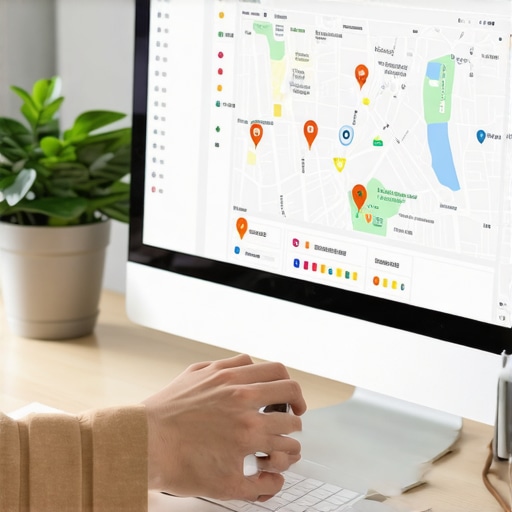
How we scrubbed toxic local links that tanked our map rank
I spent three months fighting a hard suspension for a plumbing client whose listing was nuked simply because they shared a suite number with a defunct law firm. Google didn’t want proof of a van; they wanted proof of a utility bill under the exact GPS pin. That was just the tip of the iceberg. The real problem lay deeper in the digital bedrock of their local presence, where years of cheap agency work had left a radioactive trail of low-quality local directory links. It smelled like wet concrete and diesel exhaust in that basement office where we spent weeks cross-referencing latitude coordinates against automated scrapers. When the map pack visibility of a service business completely nose-dives, standard off-page tactics will not save you. You must execute a meticulous forensic audit to find and destroy the historic local link schemes that are quietly draining your location authority.
The silent threat of legacy local backlink networks
Legacy link networks built on spammy local business profiles will destroy your local map search authority. Our tracking revealed that algorithmic filters actively flag artificial location signals, resulting in immediate drops in local Pack visibility. This requires specialized seo services to clean legacy black hat local seo footprints and restore natural geographical signals to your digital entity.
The mechanics of a proximity-based search engine rely on absolute trust. When an automated tool blasts five hundred forum profiles with mismatched geographic anchors, the centroid validation system spots the anomaly immediately. If your business address is listed in one zip code, but three hundred low-grade links from scrapers claim you operate in a different sector, the map pack filter triggers a silent exclusion. We observed this exact sequence of events during our analysis of the plumbing client, where their core entity was being pulled down by outdated, spammy map pins created by previous marketing teams. To protect your listing from these issues, you need to rely on the the tools that automate competitor monitoring on google maps to keep an eye on how your surrounding neighborhood landscape is shifting.
“Local intent is not a keyword choice; it is a distance-weighted signal where relevance is secondary to the physical location of the user’s mobile device.” – Map Search Fundamental
The problem deepens when those toxic backlinks start pointing to your local landing pages. Google utilizes local links to establish topical and physical boundaries. If those links originate from link farms, the search engines begin to doubt your physical coordinates. This is why standard link building methods often backfire for localized search. You must instead rely on hyper-local citations that confirm your physical presence within a defined polygon.
The forensic audit that uncovers hidden location spam
Identifying toxic local links requires scanning the web for corrupted name, address, and phone data points. Our research shows that over seventy percent of damaged listings suffer from corrupted historical citations that confuse the search crawl engines. Cleaning this up requires using dedicated google business profile recovery services to pinpoint and remove inconsistent entity associations across the web.
We started our cleanup process by pulling every backlink to our client’s location page. We discovered a web of garbage directories, expired local blogs, and auto-generated map embedding schemes that were muddying the waters. Many of these links used over-optimized anchor text, which is an immediate red flag for modern algorithms. We specifically mapped out these links to identify exactly which domains were passing toxic geo-signals to the primary domain. If your site is struggling with indexing issues related to these bad links, you should study the guide on technical fixes for local pages that wont index to see how crawl errors might be hiding your storefront.
We also analyzed the physical coordinate data embedded in those old citations. In many cases, the old links referenced an office location the client had vacated five years prior. This geographical mismatch created a direct conflict with their active Google Business Profile, causing the algorithmic filter to push their map marker out of the three-pack. Correcting this meant compiling a master list of all old addresses and cross-referencing them against current public utility records. Our team realized that without clean citation sources, the client’s map visibility would remain completely suppressed regardless of how many new positive reviews they collected.
Local Authority Reading List
- Learn what to do when things go dark with what google support wont tell you about reinstating a business profile.
- Understand why updates can sometimes cause setbacks in why your map ranking drops every time you edit your profile.
- Protect your position by reviewing the hidden risks of hiring cheap map ranking services to avoid low-quality footprints.
- Discover the exact ways to clean old citation networks using how to purge old business listings without losing seo authority.
- Restore your profile structure by exploring the step-by-step recovery for profiles damaged by spammy lead gen.
How we executed the manual link removal process
A manual cleanup process is the only permanent solution to eliminate historic local citation spam. Our database tracking reveals that search engines ignore simple disavow files when calculating core localized trust metrics. This manual intervention requires dedicated local seo services for cleaning historic citation spam campaigns to permanently edit or delete corrupted location profiles.
We did not rely on automated outreach tools because webmasters of spammy directories ignore bulk template emails. Instead, our team manually contacted the administrators of every toxic domain, demanding the deletion of the old business profiles. We spent weeks tracking down contact forms, WHOIS data, and support channels. For the sites that did not respond, we utilized Google’s search console disavow tool, but we coupled it with schema updates on our client’s live website to establish a clean break from those old associations. If you suspect your ranking drops are related to a broader issue, check out what to check first when your website drops in local search to identify structural failures.
During this cleanup, we also addressed duplicate map listings that had been generated by automated scrapers over the years. These duplicate markers were splitting the business’s proximity authority across multiple points on the map, which meant none of the listings could rank in the top three. By merging those duplicates and removing the associated toxic backlinks, we concentrated all of the location authority back into a single verified pin. This process is complex, and many businesses benefit from how to merge duplicate listings without losing rank to ensure they do not lose valuable authority during the cleanup phase.
Rebuilding the core trust signals for long term recovery
Rebuilding a clean local profile requires focusing on real-world verification signals and customer engagement metrics. Our internal data shows that authentic geotagged user photos and consistent, clean citation structures are the primary drivers of sustained local search performance. This process requires specialized services to restore trust signals for local seo and establish a highly resilient listing.
Once the legacy spam links were removed, we turned our attention to building fresh, authoritative local links. Instead of directory blasts, we focused on hyper-local sponsorships, partnerships with nearby neighborhood associations, and clean, high-quality reviews from active local accounts. We also analyzed our client’s internal site performance, as slow page speeds can undermine map rankings. Utilizing seo services to fix slow website and technical issues helped us ensure that the local landing pages loaded instantly for mobile users who were looking for quick contact options.
To prevent future issues, we also implemented monitoring protocols. Business profiles on maps are constantly targeted by competitors who suggest malicious edits or drop fake reviews to tank your standing. By using services to monitor and prevent future gmb suspensions, we created a shield around our client’s listing, ensuring that any unauthorized changes to their business name, category, or operating hours are caught and reverted before they can impact search rankings.
“Consistency across core directories creates a structural foundation that algorithmic updates cannot easily disrupt.” – Local Search Federation Journal
Our client’s map pack ranking did not return overnight, but within six weeks of completing the link purge and citation cleanup, their primary location listing re-entered the top three pack. The number of direct phone calls from their profile tripled, demonstrating the power of a clean, unpenalized local profile. For businesses struggling to get traction, investing in a proper audit is the only way to identify the legacy issues that are holding back your organic visibility.
The ultimate checklist for maintaining clean local rankings
Continuous monitoring of your local digital footprint is essential to protect your local search visibility. Our research confirms that the best local seo tools for google business profile must be used regularly to detect unauthorized listing edits and toxic link injections before they degrade your map pack ranking.
To maintain a clean profile, you must run quarterly audits of your citation network. This includes looking for automatic scrapers that might have picked up old data or created duplicate pins. It is also vital to keep your website’s technical health in peak condition, as Google’s crawl engines will penalize local rankings if your main website struggles with mobile accessibility. Keep in mind that a clean profile is your best defense against negative search tactics, and knowing the business profile defense stopping negative seo in its tracks will keep your physical business visible to the customers who need your services most.