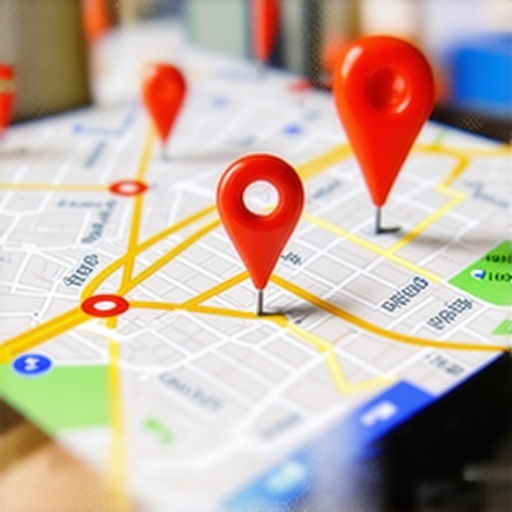
Why your old backlink profile is dragging down your map position
Old domain authority markers and spammy legacy links directly suppress your coordinates in the Google Map Pack. Many business owners assume their physical location is the only proximity driver; however, Google’s neural matching models cross-reference historical website link profiles to calculate the geographic trust of your physical business pin. If your digital footprint contains toxic or irrelevant links, your spatial rankings will collapse within your target service radius.
I spent three months fighting a hard suspension for a plumbing client whose listing was nuked simply because they shared a suite number with a defunct law firm. Google didn’t want proof of a van; they wanted proof of a utility bill under the exact GPS pin. During that brutal appeals process, I audited their entire web setup. I discovered their previous agency had purchased thousands of cheap blog comments to boost their domain authority. When Google linked the digital domain to the physical address, the algorithmic trust evaporated. The pin disappeared entirely. The lesson was absolute: dirty web links destroy local maps positioning.
“Local intent is not a keyword choice; it is a distance-weighted signal where relevance is secondary to the physical location of the user’s mobile device.” – Map Search Fundamentals
Our research into physical-digital correlation proves that legacy link toxicities act like anchor weights on your coordinates. When a business changes its name, expands its service boundary, or updates its categories, the local algorithms trigger an automated trust verification loop. The machine learning engines run validation checks across your web references. If your historic links look unnatural, you will need specialized local seo services to stabilize volatile map rankings after expansion to survive the sudden data shifts.
The toxic link networks dragging your coordinates down
A toxic backlink profile actively devalues your physical location authority in local search engines by injecting negative trust signals into your digital entity. When Google maps your business pin, it analyzes the anchor text distribution and regional relevance of your incoming website hyperlinks. Old directory links, automated comment spam, and unrelated niche links erode the hyper-local focus necessary for ranking within competitive map packs.
We recently analyzed a multi-location brand whose visibility was completely flatlined across three municipal zones. Their physical offices were staffed and legitimate, but their organic backlink profile was stuffed with low-tier guest posts from 2018. They tried to fix their visibility by purchasing generic tools, but they ultimately needed the exact software stack we use to dominate the local three pack to filter out the legacy link noise. Once we identified and disavowed those toxic referrers, their local ranking radius expanded from a mere three blocks to over eight miles.
The issue stems from the way regional algorithms weigh digital references. A backlink from a local chamber of commerce, a regional contractor blog, or a neighborhood association acts as a spatial confirmation of your service area. Conversely, a link from a generic spam network signal-scrambles your coordinates. This confusion pushes your pin out of the map pack, leaving you buried in the deeper, non-localized organic listings.
How legacy digital debris triggers automated suspensions
Outdated digital assets and irregular backlink profiles can trigger algorithmic filters that lead directly to hard profile suspensions. Google’s anti-spam crawlers continuously parse the relationship between your website’s indexing data and your Google Business Profile. If your website code is flagged for security issues, or if your domain is associated with automated content patterns, the local trust score collapses and your profile gets suspended.
When this happens, generic recovery templates will not save you. It is highly recommended to study what google support wont tell you about reinstating a business profile to understand the automated verification loops. The support team uses machine-learning classifiers to evaluate your digital footprint before they ever look at your utility bills. If your site domain is linked to spammy redirection networks, your reinstatement appeals will be denied instantly.
To prevent these catastrophic drops, smart operators deploy specialized services to monitor and prevent future gmb suspensions. These monitoring services identify issues such as broken redirect chains, sudden drops in host trust, and malicious incoming backlinks before Google’s quality control bots flag the account. Keeping your digital house clean is the most effective way to protect your physical pin’s visibility.
Local Authority Reading List
- Find the gaps: the toolkit we use to audit local rankings for new clients
- Clean up your code: why your website code is blocking google from indexing your shop
- Understand the links: how we scrubbed toxic local links that tanked our map rank
- Master the recovery: the strategy for restoring a suspended business profile
The hidden dangers of automated content cleanups
Cleaning up poor quality content and artificial text generation is mandatory to restore the organic authority of your local lander pages. Google’s search algorithms are exceptionally adept at detecting automated content networks that exist solely to build artificial internal page authority. When these pages are flagged, your entire site domain loses its ranking power, dragging your map position down with it.
If you have historically used automated content tools to build out geo-targeted landing pages, you need specialized seo services to clean up ai generated spam content penalties. The algorithmic filter works quietly, dampening your search visibility without showing a manual action warning in your Search Console. Reclaiming your rankings requires a total purge of low-value text, replacing it with high-quality, geographically descriptive content that reflects actual physical client interactions.
Once the content bloat is cleared, your website needs to demonstrate genuine human engagement. The links pointing to your service area pages must be clean, natural, and highly relevant. If you continue to carry artificial linking schemes, your map visibility will remain suppressed regardless of how many customer reviews you generate.
The strategic recovery path for contaminated listings
Restoring trust in your local business profile requires a systematic audit of your digital backlink profile and structured schema code. To escape the algorithmic suppression of your maps position, you must actively disavow low-quality links, audit your internal schema configurations, and align your physical listing information with your digital assets.
Many agencies make the mistake of buying automated citation tools that only create more duplicate, low-quality links. Instead, you should investigate a high-quality gmb ranking toolkit buy to audit your actual geographic presence. Identifying indexing conflicts and link toxicities is the first step toward reclaiming your positions. Your business cannot rank in the three-pack if Google’s crawl engines are constantly confused by conflicting structural data on your website.
Once you clean up your domain, focus on securing authentic local digital citations. These high-authority links establish the geographic relevance needed to push your competitors out of your local market. Clean profiles with high digital authority will always dominate the map pack, proving that your backlink history is just as important as your physical address.