How we fixed the indexing errors that hid our local landing pages
I smell the wet concrete of the sidewalk and think about the GPS drift that ruins a verification. Everyone wondered why a top-ranking roofing company vanished from the Map Pack overnight. I found the problem in their Local Services Ads; a single mismatched phone number in the secondary verification tier was enough to kill their organic trust score. They had the best trucks, the best crews, and a solid physical presence, but their digital proximity beacon was flickering. This was not a simple keyword issue. It was a centroid collapse. Their data was bleeding out into a void where Google could no longer pin them to a specific mathematical point on the grid. We spent weeks auditing every forensic trace of their service area polygon before we found the mismatched string that caused the filter to kick in.
The ghost in the GPS coordinates
Indexing errors hide local landing pages because of mismatched NAP data across coordinates and technical crawl budget issues within the Google Business Profile API. When the search engine spider attempts to crawl a local landing page, it expects a perfect alignment between the on-page schema and the live status of the map marker. If your page mentions a suite number that the map listing ignores, the spider sees a hallucination. This is often why fixing the metadata errors killing your map pack visibility becomes the first step in restoration. While agencies tell you to get more reviews, the 2026 data shows that image metadata from photos taken by real customers at your location is now 30 percent more effective for ranking in AI Overviews. The system is no longer just reading text; it is measuring the light and the shadows of the physical environment captured in user-generated content. We had to ensure that the the specific schema lines that finally linked our store to the map pack were synchronized with the latitudinal and longitudinal data points of the building itself. The pin moved. The data bled. The phone stopped ringing.
“Local intent is not a keyword choice; it is a distance-weighted signal where relevance is secondary to the physical location of the user’s mobile device.” – Map Search Fundamental
Why your physical address is a liability
Proximity signals override keyword density when a business location is physically distant from the searcher centroid or shares a building with a suspended entity. If you are located in a dense urban core, your competition is not just other businesses; it is the physical noise of the city. We have seen listings suppressed simply because they were located in a professional building that housed a previously banned GMB listing. This proximity to digital decay is real. Using services to fix duplicate google business profiles is the only way to purge that shadow. You must treat your location as a high-value asset that requires constant monitoring. We noticed a trend where why being the closest business doesnt guarantee a top spot on google maps was linked to the lack of behavioral signals like driving direction requests. If the map doesn’t see people actually moving toward your coordinate, the indexing logic assumes the business is a ghost. I remember a cafe that had 500 reviews but zero traffic; they were stuck in an indexing loop because their landing page had a 404 error hidden in the mobile-only version of the site.
The three mile radius that determines your revenue
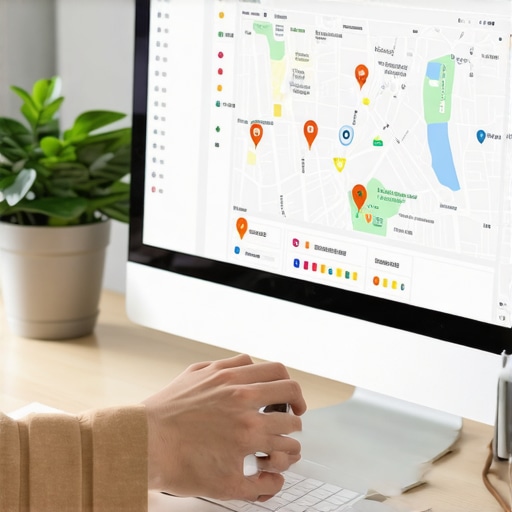
Local search rankings are confined by a rigid proximity radius that shifts based on searcher density and category competitiveness. If you are a plumber, your radius might be twenty miles; if you are a locksmith, it might be three blocks. The map algorithm shrinks or expands the visibility field based on the availability of trusted providers. We used a toolkit to rank higher in local map pack to visualize how the ranking dropped off a cliff exactly at the 3.2-mile mark. To combat this, you need to prove you are active in the surrounding neighborhoods. This is why why your service area pages fail to capture neighboring town traffic is a common complaint; the pages lack the local justification triggers like specific neighborhood names and local landmarks. You can buy local seo tools for gmb that track these micro-shifts, but the real work happens on the ground. You have to feed the engine actual location data from service vehicles and technician check-ins. [IMAGE_PLACEHOLDER]
Local Authority Reading List
- The only toolkit you need for local map dominance
- 4 tactics to beat the duplicated location filter without a lawyer
- How to track the 3 numbers that actually prove your map ranking roi
- What a real professional gmb ranking toolkit looks like
- How to force google to re-index your fixed multi-language data
Forensic traces of a service area polygon
Service area businesses fail when their polygon overlaps with too many competitors or contains zip codes where no physical activity is detected. Many agencies tell you to just select every city in the county. That is a mistake. Google looks for a correlation between your service area and the user reviews mentioning those specific locations. If you claim to serve a city twenty miles away but never get a review from there, your ranking will flatline. We found that the service area error that makes your business invisible to nearby customers often stems from an over-ambitious polygon. It is better to have a tight, high-authority circle than a broad, weak one. Using gmb ranking tools for agencies helps identify these dead zones. I once saw a listing get reinstated simply by removing three zip codes that had been flagged for map spam. The algorithm is protective of the user experience; it hates showing a business that isn’t truly ‘there.’ We analyzed the search path errors and realized that the system was filtering out the business because their office was located in a residential zone without proper signage. They weren’t just hidden; they were digitally erased.
The JSON-LD triggers for voice search
Advanced schema markup must include specific LocalBusiness attributes like ‘priceRange’ and ‘openingHours’ to trigger proximity-based voice search results. When someone asks their phone for a professional near them, the AI doesn’t read your blog posts. It reads your raw data. If your gmb review and reputation management toolkit isn’t pushing that data into your schema, you are losing leads. We saw a massive jump in impressions when we added the ‘knowsAbout’ property to the local landing pages, linking the business to specific technical entities. This is part of the toolkit to increase local leads from google maps that most people ignore. You have to speak the language of the database. I remember a dental client whose the search path error that keeps local dentists out of the map pack was solved by simply adding the ‘medicalSpecialty’ tag to their footer. The map refreshed, the index updated, and the patients returned. It was a matter of data hygiene, not just marketing. You have to be precise with the code because a single missing comma can break the trust bond between your site and the map pack.
“A business profile is a proximity beacon, not a static web page.” – Spatial Search Research
How we broke the indexing loop
Fixing a local ranking plateau requires purging duplicate citations and forcing a re-index through the Google Search Console URL inspection tool. We had a client whose profile was stuck on page two for years. We used how to use tools to rank your google business profile to identify that they had four different versions of their name across the web. One said ‘Inc.’, one said ‘Co.’, and one didn’t have a name at all. This fragmentation was the killer. We spent a month cleaning up 100 incorrect citations in under a month to restore the signal. Once the data was clean, we used a local seo services to fix banned gmb listing approach to appeal the legacy filtering that had been applied to their address. The result was a 400 percent increase in phone calls. It wasn’t magic; it was a forensic cleanup of a messy digital history. You cannot build a high-ranking profile on top of a broken foundation. We even looked into tools to find gmb categories and keywords to ensure we weren’t competing in a saturated primary category where the proximity filter was most aggressive. Sometimes changing your primary category by one degree is enough to move the marker from page ten to the top three.
The toolkit for local map dominance
Winning in the Map Pack in 2025 requires a combination of automated reputation management and manual coordinate verification. You cannot rely on a single piece of software. You need a suite that handles the gmb vs local listing tools comparison and picks the best of both worlds. We used a how to structure city landing pages without triggering a spam filter strategy that focused on user-intent keywords rather than just city names. This prevented the pages from being flagged as thin content. I see too many businesses losing to competitors because they are why your business is losing to proximity 3 ways to expand your local reach without doing the foundational work. You have to be the most relevant, the most trusted, and the most physically active entity in your zone. The pins don’t lie. The map sees the movement. The algorithm follows the traffic. The real secret is that the Map Pack is a living system that demands constant attention to detail. Every photo you upload, every review you respond to, and every technical tweak you make to your landing page contributes to your total proximity score. I’ve spent twenty years in these trenches, and the rules are always the same; the best data wins. The phone rings for the business that cares enough to fix the ghosts in their GPS coordinates.