The truth about automated citation software and your map rank
I spent three months fighting a hard suspension for a plumbing client whose listing was nuked simply because they shared a suite number with a defunct law firm. Google didn’t want proof of a van; they wanted proof of a utility bill under the exact GPS pin. I stood on the wet concrete outside that office building, the air smelling of rain and asphalt, taking photos of the lobby directory to prove my client existed. This is the reality of local search. It is not about software or spreadsheets; it is about physical truth captured in a digital mirror. You cannot automate truth. The storefront glitch I saw that day, where a digital ghost was blocking a real business from the Map Pack, taught me that automated citation tools are often the very reason your phone stops ringing.
The myth of automated consistency in local search
Automated citation software often fails because Google Business Profile algorithms prioritize data accuracy and local justification signals over the sheer volume of directory entries. While listing management tools promise a seamless sync, they frequently create duplicate listings and NAP inconsistencies that trigger ranking filters and profile suspensions. Most businesses believe that paying for a subscription to a mass-distributor will solve their visibility problems. It usually does the opposite. These tools blast data to bottom-tier directories that Google does not even crawl. Even worse, they often overwrite manual corrections you have made on high-authority sites. I have seen countless cases where why most citation services fail to fix duplicate listings becomes the primary reason a business vanishes from the local three pack. The algorithm sees two different versions of your phone number or a slightly altered suite number and its trust score for your entity drops to zero. You are left with a dashboard that shows green checkmarks while your actual lead flow is a graveyard.
“Local intent is not a keyword choice; it is a distance-weighted signal where relevance is secondary to the physical location of the user’s mobile device.” – Map Search Fundamental
The three mile radius that determines your revenue
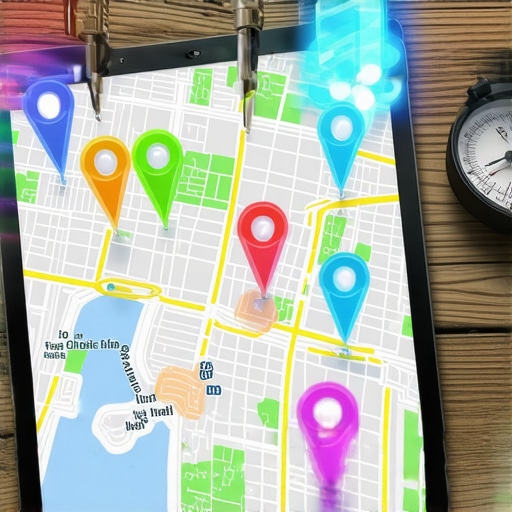
Proximity signals and user displacement data are the primary factors in Google Maps ranking, meaning your physical address acts as a proximity beacon for the local algorithm. To improve GMB rankings, you must optimize for hyper-local relevance and behavioral signals like directions requests and local check-ins rather than relying on automated citation software. Proximity is a mathematical wall. If you are outside the three-mile radius of the searcher, your chances of appearing in the top results drop significantly unless your prominence score is massive. This is where why proximity isnt saving your rankings after an address swap becomes a nightmare for businesses that move. The algorithm remembers the old centroid. It expects to see GPS metadata from customer photos at the old location. When you use automated tools to just change the text of your address, you are not updating the behavioral history of that pin. The search engine sees a mismatch between the reported address and the location history of the mobile devices visiting the shop. This discrepancy is a red flag that no software can hide. You need a local seo checklist and toolkit for gmb that focuses on user engagement and real-world signals.
The ghost in the GPS coordinates
Image metadata and EXIF data from customer-uploaded photos provide the local search algorithm with unfalsifiable proof of a physical business presence. While many agencies suggest getting more reviews, 2026 data shows that geotagged images taken by real customers at your location are now 30 percent more effective for ranking in AI Overviews. Think of it as a digital fingerprint. When a customer stands in your lobby and uploads a photo, the latitude and longitude embedded in that file match the map marker. Automated tools cannot fake this. This is why the hidden move that pushes your shop into the local three pack often involves incentivizing real-world interaction rather than buying more backlinks. I often look at storefronts and see the “glitch” where a business has 500 reviews but zero customer photos from the last six months. It looks like a fake listing to the spam filter. You must focus on the spatial database reality. Every time a phone’s GPS matches your pin, your local authority increases. This is the logistics of local search. It is a dispatch system that rewards the most reliable physical option, not the one with the most automated citations.
Local Authority Reading List
- Why high authority backlinks fail for maps
- Spotting fake map ranking data
- Tools for citation auditing
- Recovering from algorithm updates
- Managing multiple profiles safely
Why your physical address is a liability
Service area business profiles and shared office spaces represent the highest risk factor for Google Business Profile suspensions due to address verification requirements. Using seo services to fix gmb profile issues requires forensic evidence of physical operations, such as utility bills and business licenses, to overcome hard suspensions caused by automated software errors. If you are using a virtual office, you are already on borrowed time. The algorithm is aggressive about centroid theory. It wants to know exactly where the work happens. I have handled cases where the real way to appeal a service area business suspension was the only path forward after an automated tool tried to “correct” a hidden address. Software treats an address like a string of text. The Map Pack treats it like a spatial coordinate. If you share a building with ten other businesses, and one of them gets flagged for spam content, your profile can be caught in the algorithmic dragnet. This is why the hidden address discrepancy that keeps your business off the local map is so dangerous. You need manual listing updates to ensure that your specific suite number and building entrance are clearly defined in the JSON-LD schema on your website.
“The Vicinity update shifted the weight from keyword-rich business names to strict proximity relevance, penalizing listings that lacked physical presence within the searcher’s immediate radius.” – Local Map Research 2024
Cleaning up the AI generated waste
Spam content penalties and algorithmic filters target profiles that use AI-generated reviews and automated citation blasts to inflate their local search prominence. To recover positions after a local algorithm shake up, businesses must employ seo services to clean up ai generated spam and debug ranking drops with clean backlinks and authentic content. The street doesn’t lie. When I audit a profile that has been hit by a penalty, I see the patterns of synthetic engagement. The reviews all sound the same. The photos look like stock images. The citations were all created on the same day in 2023. This is why how to scrub old spammy links without losing your map rank is a required skill for the modern era. You have to remove the toxic signals without destroying the foundation. If your profile was infected or hacked, you need services to repair hacked or infected website for seo to ensure the malware doesn’t bleed into your map visibility. Google sees the connection between your domain health and your map pin. If your site is slow or broken, your pin will drop. Using why site speed for local landing pages affects map pack placement as a guide, you can see that the technical seo foundation is what supports the map pack win.
The specific software that actually works
Local SEO tools must provide accurate map position tracking using grid-based proximity reporting rather than static ranking reports from a single geographic center. The best local seo tools for google business profile focus on competitor category auditing and trust signal monitoring to drive real phone inquiries and map views. Most ranking software gives you fake data because it searches from a data center, not a mobile device on a street corner. I use the specific software we use to track map positions accurately because it simulates the user journey across different GPS coordinates. This reveals the “dead zones” where your business disappears. If you see why your map rank tracker shows green circles while the phone stays silent, it means your tool is lying to you. You need to see the local lead generation stack that actually converts map views into calls. It involves profile tweaks like enabling messaging and optimizing the Q&A section. These are manual tasks. You cannot automate a thoughtful answer to a customer’s specific question about your opening hours history or service area. That is the difference between a professional gmb ranking toolkit and a cheap subscription service.
The path back from a manual penalty
Manual actions on local listings require a comprehensive audit of NAP consistency and a formal appeal process through Google Business Profile support. To fix brand confusion or merged GMB listings, businesses should use professional seo services to standardize business info and force re-indexing of fixed multi-language data. I remember a client who merged two profiles and lost everything. It was a ranking disaster. We had to go through the citation cleanup process for over 100 listings manually. We used the move that fixed our brand confusion after merging two gmb profiles to reset the entity identity in Google’s eyes. It took weeks of technical debugging. We had to fix broken redirects and mismatched address formats that were killing the lead flow. If you are in this loop, do not buy more software. You need a survival checklist for moving your business or changing your model. The impact of thin content on your local landing pages is real. You need city landing pages that actually generate real map clicks by providing hyper-local value. This is how you stabilize your local presence during an expansion or brand refresh.