How to identify if your business was hit by a map algorithm update
The air in the dispatch office smelled like diesel fumes and cold coffee when the phone stopped ringing. Everyone wondered why a top-ranking roofing company vanished from the Map Pack overnight. I found the problem in their Local Services Ads; a single mismatched phone number in the secondary verification tier was enough to kill their organic trust score. This was not a slow fade. It was a centroid collapse. As a logistics manager of data, I view Google Maps as a dispatch system where any friction in the flow of information leads to a total shutdown. When your rankings vanish, you are not just losing visibility; you are experiencing a logistical failure in your proximity beacon.
Signs the digital pavement shifted
To identify if you were hit by a map algorithm update, you must track sudden drops in Map Pack visibility that do not correlate with a suspension notice. Check your primary categories for new competitors who appeared overnight. Look for shifts in the proximity radius where you once dominated. If your phone calls dropped but your website traffic stayed steady, the map layer is the culprit. You can analyze the analytics behind why your map clicks stopped overnight to see if the user behavior changed or if Google simply stopped showing your pin for high-intent queries. A true update hit is often widespread. It affects entire niches. It does not target just you. It changes the math of the neighborhood. The algorithm might have recalculated the weight of your reviews or decided your office is too far from the city center. You need to understand why your phone stopped ringing after the map algorithm update before you change a single line of code. Data does not lie. It only hides behind bad reporting.
“Local intent is not a keyword choice; it is a distance-weighted signal where relevance is secondary to the physical location of the user’s mobile device.” – Map Search Fundamental
The ghost in the GPS coordinates
GPS coordinate salience is the microscopic math that determines if your business exists in the eyes of a mobile searcher. Google looks at the precise latitude and longitude of your verified pin and compares it to the coordinates of the user. If an update shifts the ‘centroid’ of your city, you might find yourself outside the new golden circle. We see this often in sprawling metros. A business in the suburbs suddenly loses to a smaller shop downtown because the proximity filter tightened. You might need the hidden address discrepancy that keeps your business off the local map investigated to ensure your pin is actually where the data says it is. Even a 0.0001 decimal shift in your coordinate metadata can trigger a mismatch. This is why mismatched address formats are destroying your local lead flow for so many service providers. The system hates ambiguity. It demands precision. If your warehouse is in one zone and your showroom is in another, the algorithm might get confused. Confusion equals invisibility.
Why technical debt kills local rankings
Technical SEO issues such as slow page speeds and broken schema markups can cause your Google Business Profile to lose its ranking authority during an update. Google uses your website as a verification layer for your map listing. If your site is sluggish, the map pin suffers. Many businesses require seo services to fix slow website and technical issues to maintain their position. A half-second delay in mobile load time is a signal of poor reliability. This is especially true for those using site speed for local landing pages as a primary conversion tool. During an algorithm refresh, Google often raises the bar for technical excellence. If your JSON-LD code has errors, the search engine cannot verify your local presence. This leads to a ranking slide. You should fix the metadata errors killing your map pack visibility immediately after an update is confirmed. The digital foundation must be solid. You cannot build a skyscraper on wet sand.
The recovery protocol for expansion errors
Expanding your service area too quickly or changing your business model often triggers a volatility filter during major Google Map updates. If you recently opened a second branch and saw both listings drop, you are likely caught in a proximity overlap. You may need local seo services to stabilize volatile map rankings after expansion to fix the conflict. Google dislikes when two listings from the same brand compete for the same searcher. It creates a filter effect. One listing usually wins while the other vanishes. We have seen this happen to franchises dozens of times. You might require local seo services to repair ranking after switching business model if your primary categories no longer match your website content. The algorithm checks for consistency. If you were a plumber and now you are a HVAC specialist, the trust score resets. This is why your expansion strategy is actually hurting your local seo if not handled with surgical precision. The map is a reflection of your physical reality. If that reality is messy, the map will be too.
Local Authority Reading List
- The survival checklist for moving your business to a new city
- The city landing page structure that actually generates real map clicks
- The specific software features needed for multi-location map tracking
- Why manual listing updates beat automated tools for local authority
- How to find high-traffic keywords that actually move the map marker
Tools that reveal the hidden data
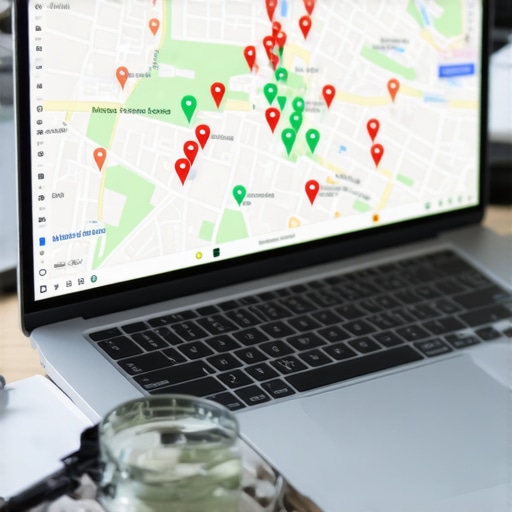
Professional GMB ranking toolkits allow agencies to see beyond the basic dashboard and identify the exact moment an algorithm update impacted a local profile. You cannot rely on the free Google Insights alone. They are too laggy. You need the only toolkit you need for local map dominance to see heatmaps of your ranking across different zip codes. These tools show if your ‘green circles’ turned red. If you are managing multiple spots, you need the specific tools we use for large-scale map optimization to keep the data clean. I often recommend the 3 ranking tools that actually show your real map position because accuracy is everything. If your software shows you are number one but the phone is silent, the software is lying. You must know if your ranking software is giving you fake map data before you make strategic decisions. A real gmb ranking tools for agencies setup will alert you to category changes or competitor surges. It is the only way to stay ahead of the curve. Visibility is not a guess. It is a measurement.
Defending against negative seo and spam
Negative SEO attacks involving spammy backlinks or fake reviews often coincide with algorithm updates as Google’s spam filter becomes more aggressive. If your ranking dropped, check your backlink profile. You might need services to clean up spammy backlinks that are dragging down your authority. Google’s ‘Opossum’ and ‘Vicinity’ updates were designed to kill businesses that used low-quality link building. You might need services to recover from negative seo attack if a competitor bombarded you with bot traffic. The algorithm sees these patterns and suppresses the listing. We often use the citation cleanup process that actually moves the needle to restore trust. It is a slow grind. You cannot rush the cleanup. If you try to take shortcuts, you get caught in a suspension loop. You must remove a google manual action in less than 30 days by showing Google you have purged the toxic data. The map is a high-trust environment. Any trace of spam is a liability. Clean your data. Protect your pin.
“The proximity of the searcher to the business remains the single most impactful factor in the local pack algorithm.” – Location Intelligence Research
The forensic trace of a service area polygon
Service Area Businesses must maintain a precise polygon of their operations to avoid being hidden by algorithm updates that target ghost locations. If you do not have a physical storefront, your service area settings are your only lifeline. During an update, Google might decide your service radius is too broad. You need to fix a hard suspension if your service area business is hidden because of a boundary error. The math of the polygon is complex. It looks at population density and travel time. If your service area includes a body of water or a mountain range, the algorithm might flag it as unrealistic. You should use a gmb review and reputation management toolkit to gather location-specific reviews from customers inside your polygon. This proves to Google you are actually there. The more data points you have within your boundaries, the harder it is for an update to shake you. Proximity is a physical fact. Your data must reflect that reality. Stop guessing where your customers are. Use the data to prove it. The logistics of search are cold. They do not care about your feelings. They only care about the flow of the pin.