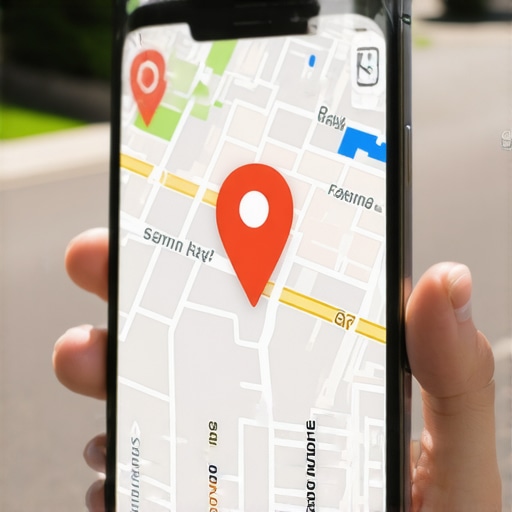
Fixing the Temporary Closed Glitch That Affects Rankings
The ghost in the GPS coordinates
A temporary closed status glitch can instantly suppress your Google Business Profile visibility, dropping your local rankings to zero because search engine crawlers prioritize operational availability within the local three pack ecosystem. When Google’s algorithms mistakenly apply a temporarily closed tag to your location, your local search visibility collapses entirely. This system failure happens when automated bots scrape outdated aggregate directories, or when bad actors trigger malicious edits to your digital maps presence. Fixing this issue requires immediate, systematic intervention using specialized local SEO software to improve map pack rankings and diagnostic verification protocols.
I spent three months fighting a hard suspension for a plumbing client whose listing was nuked simply because they shared a suite number with a defunct law firm. Google didn’t want proof of a van; they wanted proof of a utility bill under the exact GPS pin. That grueling administrative battle taught me that Google views the physical world through an incredibly rigid spatial data lens. When the system glitched and flagged my plumber as temporarily closed, his phone stopped ringing entirely. The local map pack has no room for businesses it suspects are inactive; even a single day of incorrect status can send your organic trust score off a cliff. I had to scrub the raw data, verify the coordinate markers, and submit a manual reinstatement request to prove the location was active, operating, and fully staffed.
“Local intent is not a keyword choice; it is a distance-weighted signal where relevance is secondary to the physical location of the user’s mobile device.” – Map Search Fundamental
Why your physical address is a liability
Mismatched business data signals across external web platforms often cause Google to flag an active storefront as temporarily closed, forcing manual profile audits to restore search rankings. The primary algorithm reads signal discrepancies as instability. If your business hours on Facebook or Yelp do not match your Google Business Profile, the ranking engine assumes your physical location is unreliable. When the system detects these conflicts, it defaults to a closed status to protect users from driving to an empty shop. Solving this requires local seo services to normalize rankings after keyword stuffed business name edit routines and structural data audits.
For multi-location enterprises, the vulnerability multiplies. A single bad directory listing can corrupt the data stream for five other branches. If your brand uses the lean toolkit for local seo that most pros use to track citation health, you will see that map engines constantly crawl old directories. When an outdated site says you are closed, Google believes it. The proximity engine prioritizes accuracy above all else; it will push your map marker out of the three pack if it suspects your operational hours are inconsistent. This is why automated systems need manual supervision; the robots cannot distinguish between a real business closure and an unpolished database entry.
The three mile radius that determines your revenue
The geographic boundaries of your local market shrink immediately when a temporary closed bug corrupts your Google Business Profile dashboard, making neighborhood level tracking vital for recovery. When the glitch is active, your search ranking radius drops from miles to mere feet. Users sitting right outside your office might find you, but customers two blocks away will only see your competitors. This localized shrinkage occurs because Google’s Vicinity algorithm reduces the priority of listings that lack clear, active operational validation. To diagnose how far your visibility has shrunk, you must know how to audit your gmb toolkit for better performance across different search nodes.
Using diagnostic software, we can map out the exact points where your listing disappears. If you notice a sudden ranking drop, it is usually not a slow decline; it is an instant cliff. Many business owners panic and start editing their primary categories or changing their phone numbers, which only triggers further algorithmic distrust. If you make erratic edits during a glitch, Google’s spam filters may interpret it as suspicious behavior. The correct path is to identify the root cause, clean up the conflicting data points on your website, and then approach support with undeniable physical proof of your open status.
Local Authority Reading List
- Read our blueprint: the first three things to check when your business profile is suspended
- Explore our strategies: our process for getting high-risk profiles reinstated successfully
- Learn about recovery: the best proof for resolving profile verification issues
- Analyze local maps issues: why your map marker is being pushed out of the three pack
- Understand verification: a recovery path for wrongful address suspensions
How to audit your business profile with a toolkit
Resolving system bugs requires a meticulous analysis of your profile backend data, local page crawl errors, and schema markups to eliminate conflicting status signals. A thorough manual audit is the only reliable way to stop an unexpected visibility slide. You must inspect your JSON-LD structured data to verify that your business status is explicitly marked as open. Furthermore, checking for crawl errors on your landing pages ensures that Google can read your operational status directly from your website code without getting blocked by server firewalls. Business owners often find that choosing the best free tools for auditing your local map visibility helps reveal these hidden technical problems instantly.
We start by checking the Google Search Console for any indexing issues on the local landing pages. If the Googlebot cannot access your store page, it cannot confirm your operating hours. Next, we use specialized local seo services to fix missing map pack rankings by auditing all active citations. If an old directory lists your business as permanently closed or moved, we must submit manual update requests. These old listings act like digital anchor weights; they pull down your organic trust score and prevent your profile from climbing back into the top search spots.
The data points that prove your storefront is open
To resolve a persistent closed status glitch, you must present structured physical evidence to Google Support, including geotagged photos, utility bills, and official licensing documents. Google’s support team is overwhelmed by fake lead generation listings, so they demand clear proof of a real, operational physical location. Providing a photo of your storefront showing permanent signage alongside an official government license is the fastest way to get your active status restored. This process is highly critical if you want to secure our process for getting high risk profiles reinstated successfully after an algorithmic suspension.
When submitting your reinstatement case, do not send blurry photos or generic stock images. The support agents look for specific details; they want to see your commercial vehicle parked out front, your address plaque on the brickwork, and your business license matching your utility bills exactly. If you run a service area business without a public storefront, you must show your branded service vans, tools of the trade, and registration documents matching your home address. The goal is to make it mathematically impossible for the support team to claim your business does not exist.
“When automated data sources conflict with user-generated real-world signals, the maps engine defaults to a highly conservative state to prevent listing fraud.” – Vicinity Update Analysis
Why your website code is blocking the index
Unoptimized backend coding, blocked script files, and broken redirect loops on your primary domain can prevent Google’s search crawlers from indexing your store location data. If the search engines cannot crawl your local pages, they cannot verify your operating status, leading to a loss of search rankings. This is why emergency seo services for sudden ranking drop situations always inspect site accessibility first. We often discover that poorly configured security plug-ins are blocking the Google crawler, causing the algorithms to assume the business website has gone offline.
Correcting these technical errors requires removing unnecessary script files, fixing broken page elements, and optimizing your mobile loading speed. If your website takes too long to load on a mobile device, Google’s crawlers may skip it entirely to save their crawl budget. When your site is skipped repeatedly, your map profile loses its organic foundation, making it highly vulnerable to status glitches and ranking drops. Keeping your code clean and your server response fast is the best defense against sudden listing errors.
The silent threat of incorrect phone number listings
Mismatched contact numbers across online directories confuse Google’s map data crawlers, triggering automatic ranking drops and potential profile suspensions. Your primary phone number is a key identifier that links your website to your physical map marker. If you change your number without updating your external citations, you create a major data conflict. Business owners often require why your store hours inconsistency is a ranking factor research to understand how deeply these small details affect their overall digital authority.
We recommend keeping a master record of all active directory listings. If you must change your business number, use professional services to fix mismatched business address and phone number issues across major databases simultaneously. This coordinated update ensures that search crawlers encounter a consistent message wherever they look. When your NAP data is perfectly aligned, Google’s algorithms reward you with higher map rankings and improved local visibility, securing your place in the competitive three pack ecosystem.