The Best Proof for Resolving Profile Verification Issues
I spent three months fighting a hard suspension for a plumbing client whose listing was nuked simply because they shared a suite number with a defunct law firm. Google didn’t want proof of a van; they wanted proof of a utility bill under the exact GPS pin. That gritty battle in the local trenches taught me that Google Business Profile is no longer a simple directory. It is an aggressive, distance-weighted spatial database. When your business is flagged, a simple screenshot of a website dashboard is completely useless. You need undeniable, physical, and official proof that ties your legal entity to a precise spatial coordinate on the earth surface.
The air in my tiny workspace smells like stale peppermint and faded folders containing decades of local registration documents. I have watched hundreds of honest merchants get swept away by automated spam sweeps while real bad actors abuse virtual offices. To win a reinstatement or clear a tricky verification roadblock, you must understand how Google verifies physical proximity. The algorithm cross-references public records, utility databases, and government listings to confirm your store actually exists. If you want to survive, you need to provide clean documentation that leaves zero room for algorithmic doubt.
The real world documents that solve verification blocks
Resolving profile verification issues requires official tax registration, utility bills, business licenses, and matching rental agreements that verify your physical address. You must submit clean PDFs where your business name and address precisely match your Google Business Profile. If your paperwork contains slight spelling variations or incorrect suite numbers, the automated verification parser will instantly reject your request. This process relies on absolute precision.
When you upload your reinstatement request, remember that a real human investigator or a highly trained machine vision model is looking at your files. Do not send low-resolution photos of a document crumpled on a desk. Scan your official papers at a high resolution. Ensure your utility bills show active service, a recent date, and the exact business name. If you use the best proof for resolving profile verification issues, you can restore your visibility and recover your map rankings quickly.
“Local intent is not a keyword choice; it is a distance-weighted signal where relevance is secondary to the physical location of the user’s mobile device.” – Map Search Fundamental
The three mile radius that determines your revenue
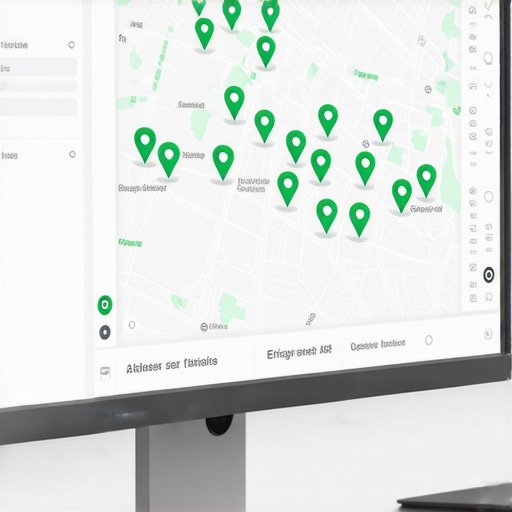
Your business ranking drops off sharply as a searcher moves further away from your physical GPS centroid. Proximity is the absolute strongest ranking factor in the Map Pack, meaning that your organic visibility is heavily determined by physical distance. If your competitor is keyword-stuffing their business name, they might briefly cheat this radius, but clean listings must rely on hyper-local behavioral signals to expand their reach.
The physical location of your business is a fixed coordinate, but your ranking radius is highly elastic. If your profile is healthy, well-optimized, and free of crawl errors, Google will trust your business enough to show your pin to searchers several miles away. To achieve this, you need to ensure your site is perfectly indexed. Using targeted technical seo services to fix indexing and crawling issues will help search crawlers easily associate your web pages with your local map marker.
Below is your essential reading list for building total map dominance and securing your listing:
- The Step-by-Step Recovery Process for Google Business Profiles
- The Toolkit Essentials for Pro-Level Google Business Audits
- Why Your Store Hours Inconsistency is a Ranking Factor
- How to Outrank Local Spammers in the Map Pack
- Our Process for Getting High-Risk Profiles Reinstated Successfully
Why your physical address is a liability
Using residential addresses, shared co-working spaces, or UPS stores will trigger an automatic suspension filter. Google actively purges these listings because they are commonly used by lead generation networks that create fake locations. Real storefronts must prove their presence with permanent outdoor signage and a clear entrance that is accessible to the general public during stated business hours.
If you run a service area business and do not have a physical storefront, you must hide your address on your profile. Revealing a residential address will get your profile flagged. However, hiding your address means you must rely entirely on your service area settings. If you want to check if your hidden address is causing issues, you can implement seo audit and penalty recovery services to scan your local data footprint and remove any toxic connections to dead lead networks.
Many agencies make the mistake of renting cheap office suites to expand their map rankings. This is a massive mistake. Google uses advanced street view data, postal records, and local business registries to verify buildings. If you are caught using a ghost address, your main listing can be suspended as a penalty for spammy behavior. If you need to recover from this specific issue, looking into seo services to rebuild trust after spammy lead gen listings will help you clean your digital records and regain search engine trust.
How to stabilize volatile map rankings after expansion
A sudden expansion into a new territory often triggers algorithmic volatility that drops your local visibility overnight. When you open a secondary location or expand your service area, Google treats your entire brand with temporary suspicion until your new location is fully verified. You must keep your citations consistent and avoid changing your core category settings during this sensitive transition.
This volatility is often caused by mismatched citations or inconsistent information across local business directories. Crawlers get confused when they find different phone numbers or addresses for the same brand. If you are facing ranking drops, utilizing local seo services to stabilize volatile map rankings after expansion can help keep your listings steady. Ensuring that your online listings are clean and synchronized is the best way to prevent sudden drops.
In addition, do not make the mistake of over-optimizing your categories or stuffing keywords into your new profile name. Keep your business name natural and clean. If your ranking is still fluctuating, using tools to track and improve gmb rankings will give you a clear, grid-based view of how your listing performs at different distances. This allows you to spot ranking drops in specific neighborhoods and address them before they spread.
“Relevance is calculated dynamically, but structural consistency remains the foundation of local trust across all search engines.” – Local Search Federation Journal
The technical schema fixes that devs often miss
Mismatched JSON-LD schema on your website will confuse search crawlers and break your Map Pack alignment. Your website code must contain structured data that matches your Google Business Profile name, address, and phone number exactly. If your site code tells Google one thing and your map listing says another, your organic trust score will tank.
Many web developers paste generic organizational schema that lacks specific local coordinates or social media connections. You need to connect all your profiles using structured data to show search engines that your business is verified across the entire web. To resolve these issues, using professional seo services to fix schema and structured data errors will ensure that search engines read your geographic location and local identity correctly.
Furthermore, ensure that your local landing pages are fully indexable and free of crawling blocks. If your website code prevents Google from indexing your service pages, your map profile will lose its organic power. If you suspect your site has deeper indexing issues, you can apply technical seo services to fix indexing and crawling issues. This will keep your server responses fast, clean up your internal links, and ensure your local pages are crawlable.
The strategic toolkit to audit and track your rankings
To compete at a high level, you must use grid-tracking tools that show your map rankings from multiple GPS points. Relying on a single search from your office computer is misleading because search results change every few hundred feet. A professional local audit will reveal exactly where your competitors are outranking you and why.
To run a deep diagnostic audit of your business presence, you should utilize best toolkit to improve local search rankings to analyze your proximity limits, citation health, and review velocities. Identifying these weak points is the first step toward building a dominant local presence. Once you have identified these issues, you can target specific local signals to push your competitor out of the top spot.
Finally, keep an eye out for competitor spam, fake reviews, and malicious edits. Spammers often suggest edits to your listing to change your hours or mark your business as closed. To defend your listing, utilizing proactive gmb spam fighting and review cleanup services is essential. This protects your hard-earned positioning and ensures that your profile remains clean, verified, and dominant in the local map pack.