How to identify ranking gaps with professional map tracking tools
How to identify ranking gaps with professional map tracking tools
Identifying ranking gaps requires a microscopic look at the spatial database that Google uses to determine which business deserves the top spot in the local map pack. Most business owners look at their own storefront and see a physical building, but I see a proximity beacon emitting signals that either align with the algorithm or clash with it. When those signals clash, the map marker vanishes. This process involves auditing every coordinate, every citation, and every behavioral trigger that the search engine uses to validate your existence in a specific geographic radius.
The night the centroid collapsed
Everyone wondered why a top-ranking roofing company vanished from the Map Pack overnight. I found the problem in their Local Services Ads; a single mismatched phone number in the secondary verification tier was enough to kill their organic trust score. I remember standing on the wet concrete outside their office, smelling the rain and looking at their sign. The digital version of that sign was fractured. Their business wasn’t actually gone, but in the eyes of the centroid math, they had ceased to be a reliable local entity. We spent weeks using professional software to monitor their listings to find where the data leak started. It was a classic case of the algorithm prioritizing verification over historical performance. If the secondary data does not match the primary pin, the trust score drops to zero. You cannot rank a business that the system thinks is a ghost.
The three mile radius that determines your revenue
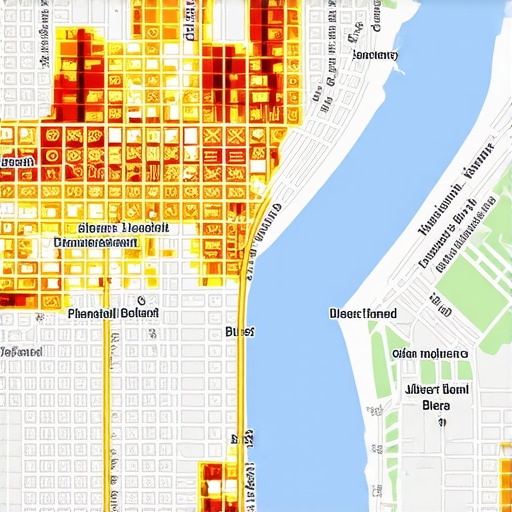
Proximity is the most aggressive ranking factor in the modern local search ecosystem because it relies on the physical location of the user device. If a customer is standing two blocks away, you might be number one; if they move one mile south, you might fall to position ten. This is why most local seo tools give you fake map ranking data by only checking from a single point. You need to see the grid. Professional map tracking tools use a multi-point coordinate system to show you exactly where your visibility drops off. This is the spatial reality of the map pack. If your competitors are winning at the four mile mark and you are failing at the two mile mark, you have a signal salience problem. This often stems from proximity issues after an address swap or having a service area that is too broad for your current authority level.
“Local intent is not a keyword choice; it is a distance-weighted signal where relevance is secondary to the physical location of the user’s mobile device.” – Map Search Fundamental
Why your physical address is a liability
Your address is not just a place where you work but a data point that must be corroborated by thousands of third party sources. If you have moved recently, or if you are using a location with hidden address discrepancies, the map algorithm will filter you out. I often see businesses that share a suite with a defunct company. The search engine sees two businesses at one set of GPS coordinates and triggers a duplicate filter. This is a quiet killer of rankings. You need to break the duplicated location loop by proving the physical separation of your workspace. This requires more than a photo of your door. It requires a forensic trail of utility bills, lease agreements, and signage that the AI can parse as unique entities. The ghost of the previous tenant can haunt your rankings for years if you do not scrub the local database properly.
The forensic trace of a service area polygon
Service area businesses face a unique challenge because they do not have a physical storefront for customers to visit, which makes their polygon data essential. When you define your service area in your profile, you are telling the engine where you are willing to travel. However, if your website content does not mention those specific neighborhoods, the engine sees a disconnect. This is often the service area error that makes your business invisible to the very people you want to reach. You need to align your Google Business Profile categories with your site structure. If you are a plumber in one city but your profile says you cover the entire county, you will lose to the hyper-local specialist every time. We use specialized tools for large scale map optimization to ensure that every zip code in your service area is backed by a local landing page with unique, geo-specific content.
Local Authority Reading List
Fixing the hacked website before the map marker dies
A compromised website is an immediate signal to the local algorithm that your business is no longer a safe recommendation for users. If your site is infected with malware or redirect loops, the map pack will drop you within forty-eight hours. This is why broken redirects are a silent killer of rankings. You need emergency seo services to repair a hacked website before the damage to your local trust score becomes permanent. The search engine checks the health of your linked website constantly. If it finds garbage code, it assumes the business is no longer operational or is being run by bad actors. We have seen profiles get suspended simply because the owner ignored a few suspicious links in their footer. Cleaning up the code and scrubbing old spammy links is the first step in any map recovery project.
The cleanup of old and closed locations
Leaving old or closed business locations active on the map creates data confusion that dilutes the ranking power of your primary location. Google hates redundancy. If you have three closed shops still showing up in search results, the algorithm does not know which one is the current authority. You need to fix duplicate listings using a manual cleanup process. Automated tools often miss the deep-level directories that feed the main map engine. We look for the fragments of your business name across the web and aggregate them into a single, powerful profile. This is especially important for saving rankings after a business model pivot. If you used to be a bakery and now you are a cafe, the old data is an anchor dragging you down. You must force the re-indexing of your new data to clear the path for the map marker to move up.
The math of mass review removal
When the spam filter catches a wave of reviews and deletes them, it often takes legitimate customer feedback along with it. This sudden drop in review count is a massive red flag to the ranking algorithm. We use data to understand why reviews are being removed. Usually, it is because of suspicious IP patterns or a lack of GPS confirmation from the users. If a person reviews your business from a thousand miles away, it carries no weight. If they review you while standing in your shop, that is a gold-plated signal. We help clients recover after mass review removal by implementing a strategy that focuses on high-intent, local signals. You should also check why brief customer feedback often outranks detailed testimonials in the current environment. The engine wants authenticity, not a polished marketing script.
“Relevance is determined by the thematic alignment between the user query and the entities present in the business profile and its linked web assets.” – Map Search Fundamental
The toolkit for turning map views into phone calls
Ranking is only half the battle because a high position is useless if nobody clicks the call button. You need to audit your profile for conversion triggers. This includes using specific profile tweaks that drive inquiries like high-quality photos of your team and clear service descriptions. Many businesses fail because their opening hours are inconsistent across different platforms. This creates a trust gap. We use a three-part toolkit to turn map views into calls by focusing on the metadata of your images and the frequency of your profile updates. If you haven’t posted a status update in six months, the engine assumes you are asleep. You have to stay active to stay visible. The map is a living document; it requires constant feeding to remain healthy.
The lead generation secret in your ranking data
Hidden inside your map tracking reports is a map of exactly where your future customers are located. When you see a ranking gap in a specific neighborhood, that is not just a failure; it is an opportunity. By creating targeted content for that specific area, you can bridge the gap. We look for the secrets hidden in your ranking data to find high-value keywords that your competitors are ignoring. This might mean optimizing for a secondary category that has less competition but high intent. For example, a single category shift can sometimes double your views in seven days. It is about being the most relevant answer to the specific question the user is asking. If the toolkit shows you are failing in the suburbs, that is where your next campaign belongs.
The strategy for multi-location map consistency
Managing fifty locations is a logistics nightmare that requires a centralized system to prevent brand confusion. If one manager changes the hours on Yelp but the corporate office doesn’t update Google, the ranking for that location will suffer. We use a multi-location toolkit for consistency to ensure every pin is identical. This includes managing map pins for franchises where local owners might try to go rogue with their own SEO tactics. You need a unified front. If the search engine sees conflicting data for the same brand, it lowers the authority of all locations. You must be the source of truth for your own business. Clean data is the foundation of every map pack win, and without it, you are just guessing in the dark.