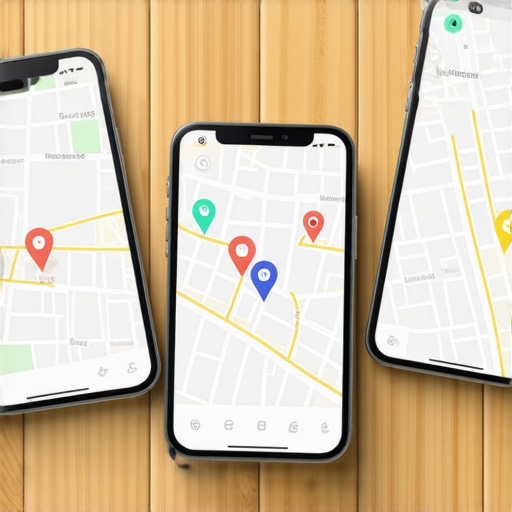
Why Buying Cheap Local SEO Software Is Usually a Math Problem You Lose
I see the city through a 35mm lens, looking for the jagged edges where the digital map fails to align with the physical storefront. I smell the wet concrete after a morning rainstorm, that sharp, metallic scent that rises from the pavement where your customers actually stand when they pull out a phone. My job is to find the glitches. I spent years as a map-spam investigator, hunting down ghost offices and fake lead-gen hubs that clutter the local algorithm. I have seen businesses disappear because they trusted a nineteen dollar monthly subscription to handle their physical existence. It never ends well. The math of the local map pack is unforgiving, and when you try to solve a high-stakes proximity equation with discount tools, you usually end up with a zero.
The centroid collapse that killed a roofing empire
A top ranking roofing company vanished from the Map Pack overnight because a single mismatched phone number in their secondary verification tier killed their organic trust score. Everyone wondered why they fell off the grid, but the answer was buried in the math of their Local Services Ads (LSA) verification loop. They had been using a discount service that auto-filled their data across hundreds of low-tier directories. One of those directories pulled an old tracking number from a defunct marketing campaign five years ago. Google saw the conflict between the verified LSA number and the scraped directory data, flagged the profile for inconsistency, and pulled the plug on their map visibility. It took four months to prove to a support agent that the business actually existed at the physical GPS coordinates they claimed. This is the reality of the service area business that disappeared overnight. If you are not careful, your own data will become your primary enemy.
“Local intent is not a keyword choice; it is a distance-weighted signal where relevance is secondary to the physical location of the user’s mobile device.” – Map Search Fundamental
The ghost in the GPS coordinates
Cheap local SEO software fails because it relies on static scraping rather than dynamic proximity signals which determine your map pack position. These automated platforms often ignore the specific latitude and longitude discrepancies that cause your business to appear invisible to users standing only two blocks away from your storefront. When you use tools that provide fake map ranking data, you are looking at a simulated reality. These scrapers check rankings from a single data center in Virginia or a proxy in a different zip code. They do not account for the “Vicinity” update logic, where the algorithm calculates the density of competitors within a three mile radius of the searcher. I have seen rank trackers show green circles across an entire city while the business owner sits in an empty office because their phone is not ringing. The software was measuring a ghost, not a customer. To truly understand your position, you need ranking tools that show your real map position based on actual coordinate math rather than cached search results. The physics of local search dictates that if your coordinates are off by even a few meters, you might be filtered out of the local three pack entirely.
Why your physical address is a liability
Your physical business address becomes a liability when you move offices or change suites without a forensic cleanup of your legacy data signals. Google maintains a memory of every location your brand has ever occupied, and if those old signals remain active, they create a “data haze” that prevents your current profile from ranking. I have worked with clients who needed seo services to fix gmb ranking loss after address change because their old office was still being cited by a cheap citation bot. These bots are programmed to “set and forget,” but they never go back to clean up the mess. They just keep pushing new data on top of old errors. This creates a conflict in the Knowledge Graph. Google hates conflict. If the algorithm is even one percent unsure about where you are actually located, it will favor a competitor with a cleaner data trail. This is why mismatched address formats are a silent killer for your lead flow. It is not just about the street name; it is about the way the suite number is formatted and whether the post office recognizes the sub-unit. Cheap software ignores these nuances, but the algorithm does not.
The three mile radius that determines your revenue
The proximity radius of the local map pack is a mathematical boundary that shrinks or expands based on the quality of your behavioral signals. While a national SEO campaign focuses on broad authority, local search is governed by the density of your local relevance. If your software tells you to just “get more backlinks,” it is giving you the wrong prescription for a local ailment. You need to understand how to expand your local reach by feeding the algorithm specific proofs of location. This includes customer photos with embedded metadata, reviews that mention specific neighborhoods, and localized landing pages that do not trigger spam filters. I often see local hvac contractors losing jobs to much smaller companies simply because the smaller company has more “check-in” signals within a specific neighborhood. The algorithm sees those signals as proof of a service area polygon. Cheap software cannot manufacture these organic behavioral traces; it only knows how to build low-quality citations on directories that no human has visited since 2012.
Local Authority Reading List
- The hidden cost of discount local marketing
- What to look for before hiring a strategist
- The tools that actually move the needle
- Correcting the math behind your map pin
- Cleaning up the digital trash in your citation profile
The math of mismatched phone numbers
A single inconsistent phone number across your digital footprint acts as a poison pill that devalues your local authority in the eyes of Google. Automated tools often scrape whatever number is easiest to find, which leads to a fragmented NAP (Name, Address, Phone) profile. I remember a case where a law firm lost their top spot because their receptionist had set up a separate Yelp profile with her direct line instead of the main office line. The cheap software they used for “syncing” didn’t catch the error; it actually started using the receptionist’s line as the primary source of truth for new citations. This is why you need seo services to debug ranking drops with a forensic eye. We had to manually hunt down every instance of that secondary number to restore the firm’s centroid authority. The algorithm calculates trust based on the consensus of data across the web. If five sources say one thing and fifty sources say another, Google will hedge its bets. When it hedges its bets, you drop to the second page of the map pack. Most best gmb ranking tools are just glorified scrapers that lack the logic to identify these conflicting trust signals.
“The proximity of the searcher to the business location remains the single most significant factor in the local algorithm, overriding even strong backlink profiles in high-density urban markets.” – Vicinity Research Whitepaper
Multi location logistics and the toolkit trap
Managing multiple locations requires a sophisticated data hierarchy that most entry level local SEO toolkits are incapable of processing without creating internal competition. If you own a chain of dental clinics, you cannot simply copy and paste the same strategy for every zip code. Each location has its own unique competitive density and centroid. When you use a generic local seo toolkit for multi location businesses, you often end up with “cannibalization” where your own profiles fight each other for the same search terms. I have seen businesses where the office in the north of the city was outranking the office in the south for a search happening right next to the southern office. This happens because the internal linking and category settings were not tuned to the specific neighborhood. You must learn secondary category mistakes that push you out of the map pack. A single wrong category choice can link your business to the wrong search intent, making you a “dentist” when the user is looking for an “orthodontist.” Cheap software defaults to broad categories, but the profit is in the niche.
Debugging the ranking drop with clean signals
When your rankings flatline, the solution is rarely to add more data, but rather to purge the toxic and redundant signals that are confusing the algorithm. Many business owners think they need more citations or more reviews when they see a drop. In reality, they often need seo services to fix google ranking drop by identifying hidden technical errors. This could be a slow website that fails Core Web Vitals, a common issue requiring seo services to fix slow website, or a hidden schema error. If your website is slow, Google will not want to send a mobile user to your page, even if your map profile is perfect. The map pack is an extension of your overall web presence. I have seen ranking jumps occur simply by removing fifty low-quality “directory” links that were clearly paid for by an automated tool. These garbage citations are a waste of time and money. They do not provide information gain; they provide noise. Google is getting better at filtering noise, and if your profile is ninety percent noise, the algorithm will eventually mute you.
The final verdict on local search math
Local SEO is not a lottery; it is a calculation of physical and digital proximity. When you buy cheap software, you are paying for a dashboard that makes you feel productive while your actual business visibility remains stagnant. I see the results of these automated failures every day in the streets, businesses that should be thriving but are hidden behind a wall of bad data and ignored GPS nuances. You need to move beyond the basic scrapers and start looking at the microscopic math of your profile. Whether you are dealing with fake reviews issues or trying to figure out how to repair rankings after a business pivot, the answer is always found in the forensic details. Stop chasing the cheapest package and start investing in the technical accuracy of your map presence. The city is waiting to find you, but only if your digital pin is exactly where your storefront stands on the wet pavement. Your revenue depends on that single point of truth.