Why Local Roofers Are Losing Jobs to Map Listings With Worse Reviews
Why Local Roofers Are Losing Jobs to Map Listings With Worse Reviews
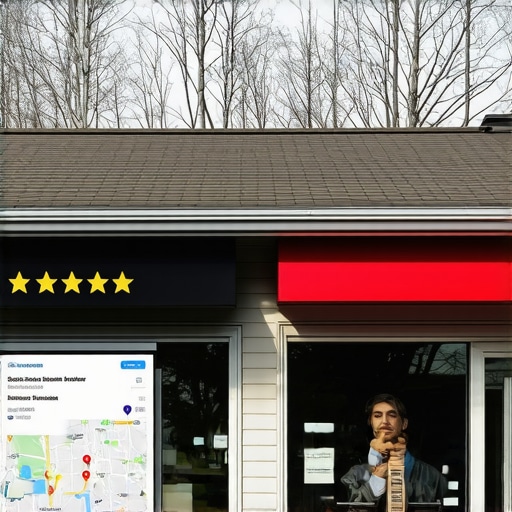
Imagine this scenario: You are a roofing contractor with fifteen years of experience, a pristine fleet of trucks, and 150 verified five-star reviews. You’ve worked hard for your reputation. Yet, when a homeowner half a mile away searches for “roof repair near me,” you are nowhere to be found. Instead, the Google Map Pack – the coveted top three spots on the search results page – is occupied by a guy with 12 reviews, a 3.8-star rating, and a business name that looks like it was typed in a hurry. This isn’t a glitch in the system; it is the reality of google business profile seo in 2026.
As a Senior SEO Specialist, I see this frustration daily. Local roofers assume that being the “best” business automatically entitles them to the best ranking. Unfortunately, Google’s algorithm doesn’t care who the best roofer is; it cares about which business provides the most mathematically relevant answer to the user’s query at that exact moment. If you aren’t appearing in those top three spots, you are effectively invisible to over 70% of local search traffic. To reclaim your leads, you must understand that your reputation converts the lead, but your technical optimization gets you the call.
The Review Paradox: Why Google Doesn’t Always Pick the “Best” Business
One of the most common myths in local marketing is that reviews are the primary driver of rankings. While reviews are vital for conversion and trust, they are only a fraction of the ranking equation. According to data from ReviewPush, reviews only account for roughly 17% to 20% of Local Pack ranking factors. This is what I call the “Review Paradox.”
Google’s primary objective is to satisfy the searcher’s intent as quickly as possible. If a user is searching from their driveway, Google prioritizes proximity over a perfect 5.0 rating. A roofer with a 3.8-star rating who is located 0.5 miles from the searcher is often viewed by the algorithm as a “better” result than a 5.0-star roofer located 8 miles away. The algorithm assumes the closer business can respond faster to an emergency leak or an inspection request.
Furthermore, Google looks at “Review Velocity” and “Review Diversity” rather than just the raw score. A competitor might outrank you with fewer reviews if they are receiving new reviews more consistently than you are. If you got 100 reviews three years ago and nothing since, Google views your business as potentially stagnant. To combat this, savvy contractors use google business profile seo to ensure their profile remains active and relevant in the eyes of the AI-driven algorithm.
Why Your Competitors Outrank You on Maps Even with Fewer Reviews
It often comes down to the “freshness” of the data. Google values a business that is actively engaged with its customers. This includes responding to reviews within 24 hours, posting weekly updates, and uploading new photos. If your “mediocre” competitor is doing these things while you rely solely on your old 5-star reputation, they will likely win the visibility battle every time.
The “Holy Trinity” of Local Rankings: Relevance, Distance, and Prominence
To master the Map Pack, you must align your business with Google’s official ranking pillars: Relevance, Distance, and Prominence. These three factors form the foundation of any successful google business profile optimization strategy.
1. Distance (Proximity)
This is the most difficult factor to manipulate because it is tied to your physical office location. Google creates a “centroid” based on the user’s location and scans for businesses within a tight radius. However, many roofers make the mistake of thinking proximity is a fixed barrier. By using advanced local seo software, you can identify “blind spots” in your service area where your ranking drops off and use targeted local content to push your influence further. For more on this, read our guide: Stop Relying on Proximity: How to Expand Your Local Search Radius.
2. Relevance
Relevance is how well a local business profile matches what someone is searching for. If a homeowner searches for “metal roof installation” and your profile only mentions “roofing,” you might lose to a lower-rated competitor who specifically listed metal roofing as a service. This is where google business profile seo becomes a surgical tool. You need to ensure your primary and secondary categories are perfectly aligned with the high-intent keywords in your market.
3. Prominence
Prominence refers to how well-known a business is. This is calculated using information that Google has about a business from across the web, like links, articles, and directories. This is where your brand power comes into play. If your roofing company is mentioned in local news outlets or has strong backlinks from local hardware stores and community blogs, your prominence score will rise, allowing you to outrank closer competitors who lack that digital footprint.
3 Common Mistakes Keeping 5-Star Roofers Out of the Top 3
Even the most established roofing companies often fail at the basics of google business profile optimization. Here are the three most frequent errors I encounter in the field:
1. Category Errors: The “Generalist” Trap
Many roofers set their primary category to “General Contractor” because they also do siding or gutters. This is a fatal mistake. If you want to rank for roofing jobs, your primary category must be “Roofing Contractor.” Google’s algorithm is highly literal. By choosing a broad category, you are diluting your relevance for specific roofing queries. We’ve detailed the impact of this in our analysis: The Category Mistakes That Cost Local Contractors Real Leads.
2. Service Area Mismanagement
Roofers are service-area businesses (SABs). If you have a physical showroom but also travel to clients, you must balance your settings carefully. Many roofers either fail to define their service area at all or define it so broadly (e.g., the entire state) that Google loses confidence in their ability to serve any specific neighborhood. You need to define your service area by specific zip codes or counties to signal to Google exactly where your “boots on the ground” are located.
3. Ignoring the “Open Now” Filter
Google has increasingly prioritized businesses that are currently open. If a homeowner has a roof leak at 6:00 PM and your profile says you closed at 5:00 PM, Google may hide your listing entirely in favor of a 24-hour emergency roofer – even if that roofer has terrible reviews. While you shouldn’t lie about your hours, ensuring your “Special Hours” are updated for holidays and considering a 24/7 answering service to justify “Always Open” status can drastically improve your google business ranking during off-hours.
The 2026 Shift: New Signals That Are Changing the Map Pack
The landscape of local search is shifting. We are moving away from static signals toward “Kinetic Search Signals” and “AI-Scan Tests.” This is why many traditional agencies are failing their clients; they are still using 2020 tactics in a 2026 world. Modern google maps ranking service providers now focus on how users interact with your business in the real world.
Kinetic Search Signals involve Google tracking the movement of mobile devices. If Google sees that 50 people a week are driving to your competitor’s office, but only 5 are driving to yours, they infer that the competitor is more “prominent” and relevant, regardless of your online reviews. This “pedestrian traffic data” is becoming a massive weight in the algorithm.
Furthermore, Google’s AI now performs AI-Scan Tests on the photos you upload to your profile. Google’s Vision AI can “see” the equipment in your photos, the logos on your shirts, and even the types of shingles you use. If you upload a photo of a high-end slate roof repair, Google’s AI logs that as a relevance signal for “slate roof repair” searches. Roofers who aren’t using local seo software to track these visual signals are leaving money on the table. To stay ahead, you should consult The 2026 Google Business Profile Checklist: What Actually Moves the Needle Now.
How to Outrank the “Mediocre” Competition (Action Plan)
If you are tired of losing jobs to inferior competitors, you need a technical intervention. It starts with a comprehensive audit using a google maps rank tracker to see where you actually stand. Don’t trust your own phone’s search results; your history biases the data. You need a tool that shows you a grid-based view of your rankings across the entire city.
- Audit Your Categories: Ensure “Roofing Contractor” is your primary category. Add “Siding Contractor” or “Waterproofing Service” only as secondary categories.
- Geotag Your Content: When you finish a job in a specific neighborhood, upload photos from that job site directly to your profile. The metadata in those photos tells Google exactly where you are working, reinforcing your local map pack seo.
- Optimize for “Near Me” Queries: Use your business description to mention specific neighborhoods, local landmarks, and even local weather patterns (e.g., “Helping homeowners repair hail damage in North Hills since 2010”).
- Leverage Local Citations: Consistency is key. Your Name, Address, and Phone Number (NAP) must be identical across the web – from Yelp to the local Chamber of Commerce.
The results of a dedicated gmb ranking service strategy are undeniable. Data from Steady Slope Marketing shows that a targeted local SEO strategy can lead to a 2.5x increase in qualified leads. Even more impressively, Kodescape reported up to a 145% growth in GBP leads for contractors who shifted their focus from “just reviews” to full-profile optimization. You can see how you measure up by using The 3 Ranking Tools That Actually Show Your Real Map Position.
Conclusion: Reputation is Great, but Visibility is Currency
At the end of the day, having 150 five-star reviews is a powerful asset, but it’s an asset that only pays off once the customer actually finds you. If you are buried on page two of the maps, those reviews are a secret that no one is hearing. The “mediocre” roofer in the Top 3 is winning because they have mastered the mechanics of rank google business profile strategies that prioritize relevance and proximity over raw sentiment.
Stop letting inferior competitors steal your leads. Your reputation is your foundation, but SEO is your megaphone. It is time to treat your Google Business Profile as the high-performance lead generation engine it was meant to be. Start by auditing your current standing with rank google business profile tools and begin the process of reclaiming your territory in the Map Pack. Visibility is the only currency that matters in the local digital economy.