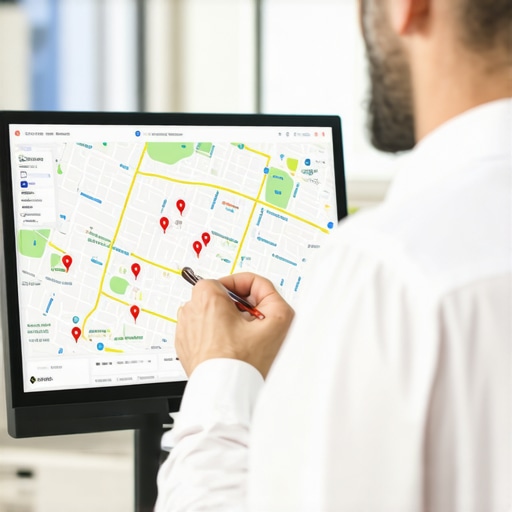

3 Sneaky Ways to Audit Your Map Pack Competitors for Free
3 Sneaky Ways to Audit Your Map Pack Competitors for Free
In the high-stakes world of local search, the “Map Pack” (also known as the Local 3-Pack) is the ultimate digital gold mine. It is the first thing a potential customer sees when searching for services in their area, and it commands over 60% of all local clicks. But for many business owners, it is a source of immense frustration. You look at your listing, then you look at your competitor – who has half the reviews and a slower website – and yet, they are sitting comfortably at the top. Why? The answer lies in the three pillars of the Google algorithm: proximity, relevance, and prominence. To win, you must understand how your competitors are manipulating these levers. These insights come directly from the desk of Kevin F. Yeaman Denver SEO, an expert in sophisticated local search strategy, who has spent years uncovering the “hidden” signals that drive google business profile seo.
Why Standard Audits Fail (And Why You Need to Get “Sneaky”)
Most local business owners and even many “pro” agencies rely on basic audits. They check for NAP (Name, Address, Phone) consistency across the web, count the number of reviews, and call it a day. While these factors mattered significantly in 2015, the landscape of 2025-2026 is far more nuanced. Standard audit tools often fail because they only look at the surface-level data that Google chooses to display publicly. They miss the underlying architecture of a listing that actually triggers a ranking boost.
To truly understand why a competitor is winning, you need to analyze what we call “Signal Density.” This is the concentration of specific local relevance signals that tell Google’s AI your business is the most authoritative answer to a user’s query. If you are relying on automated reports, you are likely getting a skewed version of reality. In fact, we’ve documented Why Most Local SEO Tools Give You Fake Map Ranking Data, which explains how automated scrapers often miss the hyper-local nuances of the Map Pack.
Getting “sneaky” means looking where others aren’t. It means diving into the source code, analyzing entity relationships, and tracking the velocity of user interactions. By performing a manual, “insider” audit, you can identify the exact gaps in your own strategy and implement the google business profile optimization needed to leapfrog the competition without spending thousands on software suites.
Sneaky Method #1: The “Invisible” Category Spy
When you look at a competitor’s Google Business Profile (GBP), you see their Primary Category – for example, “Plumber” or “Personal Injury Attorney.” What you don’t see are the Secondary Categories. Google allows businesses to select up to ten categories in total. These secondary categories are massive drivers for long-tail “near me” traffic and help define the business’s relevance across a broader range of searches. If a competitor is ranking for “water heater repair” but their primary category is “Plumber,” they are almost certainly using a secondary category to capture that niche.
You can uncover these hidden categories for free using a simple manual “View Source” hack or a browser extension like GMB Everywhere. To do this manually, follow these steps:
- Go to Google Maps and search for your competitor.
- Click on their listing to open the full profile.
- Right-click anywhere on the page and select “View Page Source.”
- Press Ctrl+F (or Cmd+F) and search for their Primary Category (e.g., “Plumber”).
- Look for the strings of text immediately following or preceding that category. Google stores these in a specific array format like
[null,["Plumber","Heating contractor","Drainage service"]].
By identifying these hidden categories, you can see exactly how they are casting a wider net than you. Many businesses make the mistake of choosing redundant or conflicting categories, which can actually dilute their ranking power. For a deeper dive into what to avoid, check out 3 Secondary Category Mistakes That Push You Out of the Map Pack. Mastering your category selection is a fundamental step to rank google business profile listings effectively. If you want to accelerate this process, using a professional google business profile seo strategy is essential for long-term dominance.
Sneaky Method #2: The “Located In” & Proximity Entity Hack
Proximity is often the hardest ranking factor to overcome because you cannot easily move your physical office. However, “Prominence” can often override physical distance if Google perceives your business as being part of a significant “Entity.” One of the sneakiest ways competitors gain an edge is by leveraging the “Located In” tag. This tag associates a business with a high-traffic landmark, a well-known medical building, or a major shopping center.
When Google’s algorithm sees that a business is “Located In” a major hub, it inherits some of that hub’s authority and prominence. This is known as Entity Association. During your audit, check if your top competitors have a “Located In” designation. If they are in a nondescript office building but have managed to get themselves tagged as being “Located In” a nearby landmark, they are effectively “stealing” the landmark’s geographic relevance. We have seen massive success stories where businesses strategically updated their address data to reflect these associations; read more about it here: How We Used ‘Located In’ Tags to Steal Competitor Map Traffic.
Furthermore, look for “Redundant Listings” or “Ghost Offices.” Some competitors use virtual offices or co-working spaces to create a proximity footprint in areas they don’t actually inhabit. While this is technically against Google’s Terms of Service, many get away with it for months or years. Part of your audit should include checking the Street View of a competitor’s address. If it’s a UPS Store or a residential mailbox, you have the opportunity to report the listing and clear the way for your own profile to rank higher on google maps.
Sneaky Method #3: Review Velocity & Sentiment Keyword Gap
It is a common myth that the business with the most reviews wins. In reality, Google prioritizes Review Velocity and Sentiment Keywords. Review Velocity refers to how frequently a business receives new reviews. A competitor with 50 reviews who gets 5 new ones every week will often outrank a business with 500 reviews that hasn’t received a new one in three months. Google views recent reviews as a signal that the business is active and currently popular.
To audit this, look at the last 10 reviews of your top three competitors. Note the dates. Are they consistent? If you see a gap, that is your opening to increase your own velocity and rank in google map pack results. But don’t just look at the dates – look at the “Place Topics.” These are the small buttons or “bubbles” at the top of the review section (e.g., “professionalism,” “price,” “emergency repair”). These bubbles are generated by Google’s Natural Language Processing (NLP) based on keywords found within the text of the reviews.
If your competitor has a bubble for “emergency repair” and you don’t, Google views them as more relevant for that specific search query. You need to encourage your customers to use specific keywords in their reviews to close this “Keyword Gap.” This is a core component of google business profile optimization. For a full breakdown of why total review count isn’t the end-all-be-all, read Why Your Competitors Outrank You on Maps Even with Fewer Reviews. To stay ahead of these trends, many experts utilize local seo tools to monitor sentiment trends across hundreds of listings simultaneously.
The Role of Technical Signals: Schema and Hours
While the “sneaky” methods above focus on the GBP itself, your website plays a massive role in your Map Pack success. Specifically, Schema.org (LocalBusiness) markup acts as the bridge between your website and your Google Business Profile. If your competitor has a robust Schema implementation that includes their Map CID and specific service areas, they are providing Google with a high-confidence data set that you might be missing. You should also check for the The 2026 Google Business Profile Checklist: What Actually Moves the Needle Now to ensure your technical foundation is solid.
Another often-overlooked factor is the “Open Now” filter. Google’s algorithm is increasingly sensitive to business hours. If a competitor is ranking #1 at 2 PM but disappears at 6 PM because they are “closed,” while you are still open, you have a massive opportunity to capture that late-day traffic. However, if your hours aren’t optimized or if they are inconsistent with your website, Google may penalize your visibility across the board. Small technical details like these are what separate a standard gmb ranking service from a high-level strategic partner.
Don’t forget the power of visual content. Are your competitors using “Products” or “Posts” to occupy more screen real estate? There is a The Sneaky Way Competitors Are Using ‘Products’ to Steal Your Map Pack Clicks, which involves listing services as physical products to trigger a different display type in the search results.
Automating the “Sneaky” Stuff: When Free Isn’t Enough
The manual methods described above are incredibly effective for auditing one or two local competitors. They give you the “why” behind the rankings that automated tools often miss. However, if you are managing multiple locations or trying to dominate an entire metropolitan area, manual audits become a bottleneck. To scale your success, you eventually need to transition to professional-grade automation.
While manual sleuthing is great, a professional google maps ranking service allows you to track these “sneaky” signals across thousands of data points in real-time. This is where SEO Viper Tools comes into play. As a premier local seo software, it provides the “signal density” reports and google maps rank tracker capabilities needed to maintain a top-3 position in even the most competitive markets. Whether you are looking for a google business profile audit tool or a comprehensive gmb seo tools suite, shifting from manual to automated monitoring is the final step in your local SEO evolution.
By combining the insider knowledge of Kevin F. Yeaman Denver SEO with powerful local seo tools, you can stop guessing why your competitors are winning and start taking their traffic. Remember, the Map Pack isn’t just about being the best business – it’s about being the best at communicating your relevance to Google’s algorithm. For more advanced strategies, don’t miss our guide on The 3 Ranking Tools That Actually Show Your Real Map Position.
If you’re ready to stop playing catch-up and start leading the pack, visit SEO Viper Tools today to see how our google business profile seo automation can transform your local presence.
![5 Local Maps Optimization Fixes for AR Viewports [2026]](https://mapsrankingmastery.com/wp-content/uploads/2026/02/5-Local-Maps-Optimization-Fixes-for-AR-Viewports-2026.jpeg)