Why Most Local SEO Tools Give You Fake Map Ranking Data
Why Most Local SEO Tools Give You Fake Map Ranking Data (and How to See the Truth)
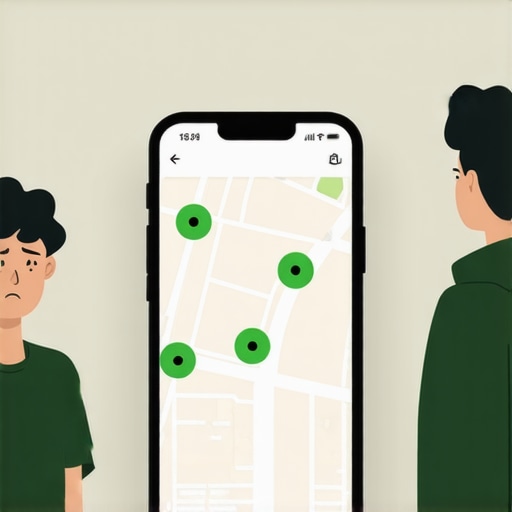
Imagine this: You’re sitting at your office desk, coffee in hand, and you decide to check how your business is performing. You open a private browser, type in your primary service, and – boom – there you are at #1 in the Google Map Pack. You feel a surge of pride. You check your expensive google business profile seo software, and it confirms the win with a bright green “1” next to your name. But then you look at your phone. It isn’t ringing. Your lead volume is stagnant. Why the disconnect?
The truth is, you’ve fallen for a “false positive.” You are caught in what I call the “Proximity Trap,” and those fancy reports you’re paying for are likely feeding you sanitized, inaccurate, or outright fake data. In the world of 2026 local search, traditional rank tracking is not just obsolete – it’s dangerous to your ROI. If you want to actually The One Tweak That Pushes Your Listing From the Second Page to the Top Spot, you have to stop trusting the single-point metrics that legacy tools provide.
The “Office Trap”: Why Your #1 Rank is Often an Illusion
The most common reason for “fake” ranking data is the mechanics of the Proximity Trap. When you search for your own business while sitting inside your place of business, Google isn’t giving you an objective view of the market. It is giving you a hyper-localized result based on your precise GPS coordinates or your office’s static IP address.
Google’s algorithm prioritizes three things: Relevance, Prominence, and Distance. When you are standing in your own lobby, your “Distance” score is mathematically perfect. You are zero feet away from the entity. Therefore, Google will almost always show you at the top of the Map Pack for that specific search. However, this ranking is a “bubble.” As soon as a potential customer moves three blocks away, your prominence might drop, and a competitor closer to them will take the top spot.
Rank is no longer a static number; it is a fluid entity that changes every 50 to 100 feet. Many business owners don’t realize that there is a massive difference between mobile GPS coordinates and desktop IP addresses. A desktop search from a centralized office might show you ranking well across the whole city because the IP is routed through a regional hub, whereas a mobile user on the street sees the brutal reality of your lack of reach. This is Why Your Business is Losing to Proximity: 3 Ways to Expand Your Local Reach.
Why Traditional “Linear” Rank Trackers Fail Local Businesses
For years, the industry relied on “Linear Tracking.” This is the practice of checking a “Keyword + City” (e.g., “Plumber Chicago”) from a single data center. If the tool’s server is located in a warehouse in Virginia, it pings Google and asks, “What does the map look like for Chicago?” Google provides an answer, and the tool records it.
The problem? Nobody searches like that anymore. Users search for “plumber near me” or simply “plumber.” When a tool uses a single ZIP code center to pull data, it provides an “Average Rank.” According to recent findings from the Local Data Exchange, the concept of “Average Rank” is officially dead. It is a meaningless metric in 2026 because it masks the volatility of the local landscape. You might be #1 at your front door and #20 just two blocks away. An “Average Rank” of 10 tells you absolutely nothing about where your leads are actually coming from.
Most legacy local seo ranking tools are still built on this linear architecture. They provide a spreadsheet that says you are #3. But #3 where? At the city hall? At the airport? At the tool’s proxy location? Without geographic context, a ranking number is just a vanity metric designed to make an agency look good while the client’s phone stays silent. To truly rank google business profile listings effectively, you need to see the “spread” of your visibility, not a single point of data.
The Science of Geo-Grid: Visualizing the “Real” Map Pack
If linear tracking is the past, Geo-Grid tracking is the present and future. Instead of pings from a single location, a geo-grid simulates searches from hundreds of specific coordinates across a map. This creates a heatmap of your visibility. When you look at a 13×13 grid covering your city, you quickly realize that your “Rank #1” is actually a tiny green dot in a sea of red “ranking dead zones.”
This visualization is the only way to perform a real google business profile seo audit. It reveals exactly where your competitors are out-muscling you. For instance, you might find that you dominate the wealthy suburbs to the North but are completely invisible in the commercial district to the South. Linear tools would never show you this; they would just give you a “4” and call it a day. By using 3 Map Ranking Analytics Tools That Show Exactly Where You Are Losing Real Leads, you can stop guessing and start targeting specific neighborhoods with your optimization efforts.
Geo-grids also expose the “Swiss Cheese” effect, where you rank well in disparate pockets but fail in the areas immediately surrounding your business. This usually indicates a problem with your entity’s “Prominence” or “Relevance” signals, rather than just a proximity issue. Without a grid, you are flying blind.
4 Technical Reasons Your Current SEO Reports Are Lying to You
Beyond the proximity issue, there are four major technical hurdles that cause most google maps ranking service providers to deliver “dirty” data:
1. Data Latency
Google’s local algorithm is more volatile than ever. Rankings can shift hourly based on traffic patterns and real-time updates. Many budget local seo tools use cached data that is 24 to 48 hours old to save on API costs. By the time you see the report, the data is already a relic of the past. In 2026, “Data Latency Fixes” are mandatory for any agency that wants to provide accurate reporting.
2. The “Open Now” Filter
This is a silent killer of ranking accuracy. Google’s Map Pack results change dramatically after 5:00 PM. If your business is closed, Google often suppresses your listing in favor of competitors who are “Open Now.” If your rank tracker runs its scans at midnight, but your customers search at 10:00 AM, the report you receive is a complete fabrication of your actual visibility during business hours.
3. Proxy Interference
Google is incredibly sophisticated at detecting automated scrapers. When a cheap rank tracker uses a low-quality proxy network to check your positions, Google often recognizes the “bot” behavior and serves “sanitized” or “generic” results that don’t reflect what a real human user sees. This has led to famous industry complaints, such as the Morocco car rental case study, where tools reported #1 rankings that were impossible to replicate on a real device.
4. User Intent and Search History
Google personalizes results. If a “fake” report is generated by a tool that doesn’t properly clear cookies or simulate a “clean” user environment, the search history of the proxy can bleed into the results. Furthermore, the “User Intent” for a search can change based on the time of day or even the weather, which old-school local seo software simply cannot account for.
The 2026 Shift: AI-Scans, Pedestrian Traffic, and Hyper-Localization
As we move deeper into 2026, the factors that determine your google business profile seo success are evolving. We are seeing the rise of “Kinetic Search Signals.” Google is no longer just looking at where a user *is*; it’s looking at where they are *going*.
New ranking signals include “Pedestrian Traffic Data” (how many people actually walk past your storefront with their phones in their pockets) and “High-Resolution Entrance Fixes” (ensuring your map pin is at the actual door, not the middle of the building). We are also seeing the integration of “Wearable Search” via AR glasses, where the “Map Pack” is overlaid on the physical world.
Traditional tools cannot track these signals. They are designed for a 2015 version of the internet. To stay ahead, you need to implement 5 Specific Interaction Fixes for the 2026 Maps Algorithm Update. This includes optimizing for “AI-Scan Tests,” where Google’s AI analyzes your storefront photos to confirm you are a legitimate, high-quality business. If your tool isn’t showing you how you perform in these “Kinetic” environments, it’s giving you a half-truth.
How to Audit Your True Visibility (The Expert’s Checklist)
Stop relying on the “dopamine hit” of a green number in a PDF. If you want the truth, follow this expert checklist to audit your google maps rank tracker data:
- Kill the Manual Office Search: Never check your rankings from your own WiFi or office desktop. It’s a guaranteed false positive.
- Demand Geo-Grid Reporting: If your agency or tool doesn’t provide a heatmap, find a new one. You need to see the “Dead Zones.”
- Check “Off-Hours” vs. “On-Hours”: Run scans at 10 AM and 8 PM. If the results are wildly different, you have an “Open Now” authority problem.
- Verify with Real-World Mobile Pings: Use a tool that allows you to simulate a search from a specific latitude and longitude on a mobile device agent.
For a full breakdown of the modern requirements, refer to The 2026 Google Business Profile Checklist: What Actually Moves the Needle Now.
Conclusion: Stop Chasing Ghost Rankings
The era of simple, linear ranking is over. If you continue to rely on outdated local seo tools, you will continue to wonder why your “Number 1” ranking isn’t producing a “Number 1” bank account. Transparency is the only path to real growth. You must look past the “Office Trap” and the latency of cheap proxies to see the actual footprint of your business.
Stop chasing ghost rankings. Use a professional google maps ranking service that utilizes geo-grid technology and real-time data. Only then can you begin the real work of google business profile seo and dominate your local market for real customers, not just for your own ego.