Why Your Map Rank Tracker Shows Green Circles While the Phone Stays Silent
Why Your Map Rank Tracker Shows Green Circles While the Phone Stays Silent
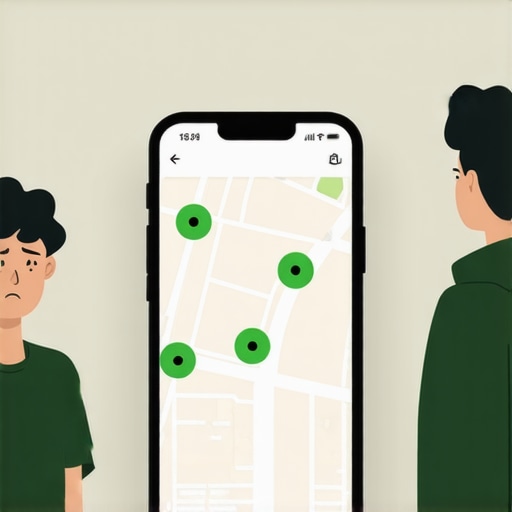
It is a scene I see far too often in my consultancy. A business owner sits across from me, laptop open, showing off a 13×13 grid from their favorite google maps rank tracker. It’s a sea of emerald – beautiful, vibrant green circles with the number “1” proudly displayed across their entire service area. By all technical accounts, they are winning at google business profile seo. But then comes the “but.”
“Tim,” they say, “if I’m ranking number one everywhere, why isn’t the phone ringing? Why is my shop empty?”
Welcome to the “Green Circle Mirage.” It is a phenomenon where vanity metrics and technical rankings decouple from real-world revenue. In the world of local marketing, ranking is merely a prerequisite; it is not a guarantee of a single dollar in your bank account. As we move into 2026, Google’s algorithm has evolved to prioritize user engagement and real-world trust signals over simple keyword density. If you are staring at a green grid while your staff stares at a silent phone, you aren’t winning – you’re being lied to by your data. Let’s diagnose the disconnect.
The “Green Circle” Illusion: Why Trackers and Reality Disconnect
To understand why your google maps ranking service might be showing you a false reality, you have to understand how local seo tools actually work. Most grid trackers use a “geo-grid” method. They send a request to Google’s API from a specific set of GPS coordinates, pretending to be a user at that exact spot. While this is helpful for a bird’s-eye view, it is a sterile environment that rarely mimics how a human actually searches.
Google’s local search results are built on three primary pillars: Relevance, Distance, and Prominence. While a rank tracker can measure distance and relevance (to an extent), it often fails to account for the dynamic nature of prominence and user-specific variables. For instance, Google knows if a user has visited your competitor before, if they are currently driving, or if they have a preference for certain types of businesses. Your tracker sees a “1,” but a real user might see you at “4” because Google is tailoring the result to their specific search history.
Furthermore, the “Open Now” filter is a silent killer of rankings. If your tracker runs its scan at 10:00 AM on a Tuesday, you might look like a king. But if a customer searches at 6:00 PM when you’ve just closed, you disappear from the map entirely. The tracker doesn’t show you the “dark hours” where your visibility drops to zero. This is why many businesses find that Why Most Local SEO Tools Give You Fake Map Ranking Data is a hard truth they have to swallow before they can actually improve their lead flow.
According to Google Support, prominence is based on information that Google has about a business from across the web. This means that if your digital footprint is shallow – even if your google business profile optimization is technically “perfect” – Google may still hesitate to show you to high-intent users who are likely to convert.
The Conversion Gap: Why They See You But Don’t Call
If the tracker is right and you truly are in the top three positions, but the calls aren’t coming, you have a conversion problem. You have successfully navigated the local map pack seo landscape to get “impressions,” but you are failing the “trust test.”
The Review Paradox
Most business owners think more reviews are always better. However, there is a psychological threshold where perfection becomes suspicious. We have found that Why Flawless 5-Star Reviews Are Actually Scaring Away Your Customers is a real phenomenon. A profile with 500 reviews and a perfect 5.0 rating often looks “manufactured” to the modern consumer. Users are increasingly looking for the “real” experience, which includes a few 4-star reviews and, more importantly, how the business owner responds to criticism. If you aren’t engaging with your reviews, you aren’t building trust.
Visual Trust and the “Stock Photo” Trap
When someone finds you on Google Maps, the first thing they do is look at your photos. If your profile is filled with generic stock photos of “happy people in a boardroom” or a “generic plumber holding a wrench,” you’ve lost. In 2026, Google’s AI-scan tests for storefronts and service vehicles are sophisticated. They want to see your truck, your office, and your team. Real-world photos act as a google maps lead generation engine because they provide visual proof of existence. If you want to rank higher on google maps and actually get the call, you need to ditch the professional stock photography for high-quality, authentic smartphone photos of your work in progress.
To truly understand how your profile stacks up against the competition, you need a professional google maps ranking service that looks beyond the grid and analyzes the conversion elements of your listing. I have seen profiles with 907 views (as tracked in the GBP insights) result in zero calls because the “Call” button was buried under a mountain of irrelevant information or poor visual cues.
Your google business profile posts also play a massive role here. If your last post was from 2022, you are telling the customer that you might not even be in business anymore. Regular updates – at least once a week – signal to both Google and the user that you are active and ready to serve.
The Hidden Competitors: LSAs and the “Ads Above the Fold” Problem
You can rank google business profile listings at the #1 spot all day long, but if you are in a high-competition industry like HVAC, Law, or Locksmithing, you are likely being pushed “below the fold.”
Google Local Services Ads (LSAs) – the “Google Guaranteed” checkmarks – sit at the very top of the mobile search results. Below those are the traditional Google Ads. By the time a user gets to the organic Map Pack, they have already scrolled past 3 to 5 paid options. If your competitors are running LSAs and you aren’t, they are intercepting the “ready to buy” traffic before they even see your beautiful green circles.
This is why How Local Dental Clinics are Winning the Map Pack Without Paying for Ads is such a vital case study. It highlights that while you can’t always beat the ads, you can optimize your listing to be so compelling that users continue scrolling past the paid results to find the “authentic” local choice. This requires a local business seo strategy that focuses on “Brand Prominence.” If your brand name is well-known in the community, users will skip the ads specifically to find you. If you are just another generic “Plumber Near Me,” you will lose to the person willing to pay $50 per lead in the LSA auction.
Combatting “ad blindness” involves making your Map Pack listing stand out with “Review Snippets” and “Service Tags.” When Google pulls a quote from a review that matches the user’s search query (e.g., “fast emergency repair”), it creates a bolded text highlight that draws the eye away from the ads and toward your organic listing.
Technical Mismatches That Kill Your Lead Flow
Sometimes, the reason you aren’t getting calls is purely technical, but it’s not the kind of “technical” a standard google business profile audit tool will catch. It’s about how you’ve positioned your business in the ecosystem.
Primary vs. Secondary Categories
I often see businesses misusing categories. If you are a “Personal Injury Lawyer” but your primary category is just “Lawyer,” you are competing in a much broader, more difficult pool. Conversely, if you have too many secondary categories, you can “dilute” your relevance for your primary service. We’ve identified 3 Secondary Category Mistakes That Push You Out of the Map Pack that often lead to a business ranking for terms that don’t actually drive calls. For example, a landscaping company ranking for “garden center” might get plenty of views, but if they don’t actually sell plants, those views are useless.
The “Located In” Strategy
One of the most underutilized tactics in google business profile seo is the “Located In” feature. If your office is inside a well-known professional building or shopping center, tagging your location correctly can help you capture traffic from people searching for that landmark. This is part of a broader 2026 trend where Google uses “Pedestrian Traffic Data” and “AI-Scan Tests” to verify the physical reality of a business. If Google’s data shows thousands of people walking past your door, but your profile says you are a “Service Area Business” with no physical address, there is a mismatch that can suppress your visibility to local foot traffic.
Furthermore, the “Open Now” filter is more aggressive than ever. If your hours aren’t meticulously updated – especially for holidays – Google may proactively hide your listing to avoid a poor user experience. This is Why the Open Now Filter Is Quietly Killing Your Maps Ranking for thousands of businesses that forget to toggle their hours on a bank holiday. If you want a consistent lead flow, you need to use a google business profile seo tool that monitors these status changes in real-time.
The Engagement Death Spiral: How Unanswered Calls Tank Your Rank
This is perhaps the most critical “2026” factor that many SEOs are ignoring: The Short-Circuit Signal.
Google is no longer just looking at whether you rank google business profile high; they are looking at what happens *after* the click. If a user clicks the “Call” button on your profile, hangs up after 5 seconds (because no one answered), and then immediately goes back to the search results to call your competitor, Google notices. This is a “short-circuit.”
In Google’s eyes, you failed to solve the user’s problem. If this happens repeatedly, your “Prominence” score will drop. You are essentially in an “Engagement Death Spiral.” You rank high, you don’t answer the phone, Google sees the user is unhappy, and Google slowly replaces you with someone who *does* answer the phone. This is why treating your GBP as a live customer service portal is non-negotiable. You need to respond to messages within minutes and answer every call.
We call these “Kinetic Search Signals.” To learn more about how to optimize for these, check out 3 Kinetic Search Signals to Boost Map Visibility in 2026. The algorithm is moving away from static signals (keywords) toward dynamic signals (user behavior). If your gmb ranking service isn’t talking about “dwell time” on your photos or “call-to-conversion ratios,” they are living in 2018.
To stay ahead, you must ensure your google business profile optimization includes a strategy for handling the leads you actually get. Ranking is the start of the marathon, not the finish line. If you can’t close the lead, Google will eventually stop giving them to you.
Conclusion: Moving Beyond the Grid
If you are tired of looking at green circles that don’t pay the bills, it’s time to change your perspective. Google maps lead generation is a holistic discipline. It requires the technical precision of local seo services combined with the psychological triggers of high-level conversion rate optimization (CRO).
Stop obsessing over whether you are #1 or #2 on a grid that no human will ever see. Instead, focus on how you appear to the person standing on the street corner with a broken pipe or a legal emergency. Do you look like a trusted local authority? Are your photos current? Do your reviews tell a story of reliability? Do you answer the phone every time it rings?
Moving from the second page to the top spot is often just a matter of one or two technical tweaks. For example, The One Tweak That Pushes Your Listing From the Second Page to the Top Spot often involves refining your primary category or fixing a NAP (Name, Address, Phone) inconsistency. But staying at the top – and making it profitable – requires a commitment to the user experience.
Your next step should be a comprehensive google business profile audit. Don’t just look at where you rank; look at why you aren’t converting. Use professional SEO Viper Tools to get a clear picture of your actual market presence. Only then can you turn those silent phones into a ringing success. If you’re still struggling to see why your competitors are beating you, even with fewer reviews, read our deep dive on Why Your Competitors Outrank You on Maps Even with Fewer Reviews. The answer is usually hidden in the engagement data.
Rankings are a vanity metric. Revenue is a sanity metric. It’s time to choose sanity.