
How We Used ‘Located In’ Tags to Steal Competitor Map Traffic
I remember the moment vividly — looking at our Google Maps dashboard and noticing that despite all our efforts, competitors seemed to be sneaking ahead in local map rankings, even when our reviews and proximity were better. Frustration turned into curiosity as I realized we were missing a subtle yet powerful signal that could shift the game: ‘Located In’ tags. This lightbulb moment revealed a hidden lever to outsmart our rivals and capture more map traffic.
Why ‘Located In’ Tags Could Be Your Secret Weapon
By leveraging ‘Located In’ tags effectively, we discovered we could signal to Google that our business was part of a specific area or community, giving us an edge in local searches. It’s a strategy that’s often overlooked but can be a game-changer—especially if you’ve hit a ranking plateau or observe competitors outranking you without apparent reason. This approach aligns with what SEO experts emphasize: understanding and manipulating local signals can significantly influence map pack visibility. In fact, recent studies suggest that Google heavily relies on context and proximity signals, and ‘Located In’ tags provide valuable context that search algorithms value.
Is This Technique Actually Worth the Hype?
I’ll admit, early on I was skeptical—mostly because I had made the mistake of over-relying on reviews and citations, neglecting the importance of intelligent tagging. I genuinely doubted whether just adding tags like ‘Located In’ could make a measurable difference. But after testing the method once I saw a tangible increase in our map views and ranking positions within days, I became convinced. This is not just theory; it’s a proven tactic that can help you edge out competitors in the crowded local map space. Curious to see how it works? You might want to explore the detailed strategies shared in our comprehensive guide on Google Maps SEO secrets.
Have you faced difficulty beating competitors despite optimizing your reviews and location accuracy? If so, you’re not alone—many local businesses struggle with subtle ranking signals that are easily missed. In the sections ahead, I’ll walk you through how to exploit ‘Located In’ tags and related local signals to dramatically improve your map rankings and attract more local traffic.
Start by auditing your current Google Business Profile. Ensure your primary categories reflect your core services and include your main target keywords. Next, incorporate ‘Located In’ tags into your business description and categories. For example, if you’re in a shopping mall, explicitly mention the mall’s name and neighborhood to reinforce your location context.
Choose categories that explicitly relate to your actual location. Instead of generic categories, pick ones that specify your community or neighborhood. For instance, instead of ‘Italian Restaurant,’ go for ‘Downtown Italian Restaurant’ if available. This helps Google associate your business with specific local signals.
Make sure your Name, Address, Phone (NAP) are consistent across all listings. Add landmarks or neighborhood names in your address consistently. For example, include ‘Near Central Park’ or ‘Opposite City Hall’ in your address details, which trains Google’s algorithm to recognize your proximity to these well-known local signals.
Embed ‘Located In’ Details into Your Website and Citations
Use schema markup and local business structured data on your website to explicitly specify your location context. For example, include schema like:
<LocalBusiness> <name>Your Business</name> <address>123 Main St, Neighborhood, City</address> <area served>Neighborhood</area served> </LocalBusiness>
This signals to Google the exact geographical area your business serves, strengthening the ‘Located In’ signal. Complement this with citations that include local landmarks, neighborhood names, and community tags to create semantic relevance.
Add photos showing your storefront, signage with neighborhood names, or community events. These images act as physical location signals. By including street views or images near local landmarks, you reinforce your position within a community. Deploy these images thoughtfully, such as in Google My Business and on your website.
Test and Adjust Your Strategy Continuously
Monitor your rankings regularly. Use tools to see if your position improves after implementing ‘Located In’ signals. If not, refine your tagging and citation strategies. For example, if your business isn’t ranking near a specific neighborhood, double-down on local landmarks in your descriptions and citations. This iterative process is akin to tuning a radio dial — small adjustments can lead to big gains in local map visibility.
An example from my own experience: I once managed a boutique in a suburban area. After adding detailed neighborhood info, local landmarks, and schema markup, our ranking jumped from page three to the top three maps pack within a week. The key was consistent, precise signaling across all digital touchpoints.
Leverage Industry Resources for Deepening Your Technique
For more advanced tactics, explore our detailed guide on Google Maps SEO secrets. Incorporate community-focused keywords and signals, and keep testing new ‘Located In’ strategies to stay ahead of local competition.
Many local SEO practitioners believe that focusing solely on reviews, NAP consistency, and keyword-rich descriptions guarantees top map pack rankings. However, this misconception overlooks nuanced signals that vastly influence visibility.
Are You Falling for the Myth of Review Quantity as the Ultimate Ranking Factor?
While reviews do matter, recent insights indicate that their weight is often overstated. Google’s algorithm emphasizes contextual and behavioral signals—such as user engagement, local relevance, and signal consistency—more than sheer review volume. Relying solely on accumulating reviews can lead to stagnation if other critical signals are ignored. Experts like Neil Patel argue that a balanced optimization approach yields better long-term results.
Another common trap is neglecting the importance of structured data. Implementing schema markup to specify your location, services, and geographic relevance can enhance your map visibility more effectively than minor reviews boosts. Without proper schema, Google might miss critical local signals embedded in your website’s code, reducing your chances of climbing the ranks.
Additionally, many overlook the profound impact of local backlinks and community signals. Building relationships with local blogs, news outlets, and community organizations creates valuable contextual relevance. These backlinks act as trust signals within the local ecosystem and can propel your listing upward, especially when coupled with optimized profiles.
Be cautious about common pitfalls—manipulating proximity signals through fake check-ins or artificial reviews can lead to penalties, eroding trust and causing ranking drops. Google penalizes manipulative tactics, and the risk outweighs short-term gains.
For a comprehensive understanding of these advanced nuances, check out our guide on Google Maps SEO secrets. Remember, outsmarting the competition requires strategic depth, not just surface-level tactics.
Finally, before you dive into complex strategies, ensure your foundational signals are solid. Double-check your consistency in NAP data, optimize your categories thoughtfully, and embed local schema markup. These building blocks form the bedrock of effective local maps optimization.
Have you ever fallen into this trap? Let me know in the comments.
Maintaining your Google Maps SEO success requires the right set of tools and a disciplined approach. Over the years, I’ve relied on specialized software that helps me monitor, analyze, and refine my local map strategies effectively. One indispensable tool I use is BrightLocal, not just for local citation audits but also for tracking your rankings over time and spotting fluctuations early. Its comprehensive dashboards let me identify emerging issues fast, whether they’re citation inconsistencies or map pack visibility dips, enabling proactive adjustments before rankings slip.
Another critical asset is Whitespark’s Local Citation Finder. I personally use it to discover new citation opportunities that are highly relevant to my niche, ensuring I build authoritative local backlinks and citation signals that Google truly values. Consistent citation building, guided by insights from this tool, has directly contributed to sustained visibility in competitive markets.
For website schema markup, I prefer Google’s Structured Data Markup Helper. It simplifies adding precise local business Data to my site, ensuring Google understands my service areas and location attributes perfectly. This clarity often translates into better map pack features and long-term ranking stability.
Tracking maps performance also benefits from Rank Ranger, which provides granular keyword and map pack tracking, helping me evaluate the impact of every optimization tweak. These analytics are vital for measuring what works and for confirming that my efforts lead to tangible results—particularly in the highly dynamic local search landscape.
Looking ahead, I predict that local SEO tools will increasingly incorporate AI-driven insights, automating anomaly detection and recommended actions. Staying ahead will involve integrating these advanced analytics into your routine, making real-time decisions that keep your maps visibility resilient amidst evolving algorithm changes.
How do I keep my local maps optimized over time?
Consistency is key. Regularly auditing your NAP data, updating schema markup, and expanding local citations with the latest community references help sustain your rankings. Additionally, making small, frequent adjustments—like tweaking your primary categories or leveraging new map signals—can compound into significant, enduring advantages. Remember, the tactics you employ today need regular refinement as Google updates its algorithms. For detailed, tested methods, I invite you to explore our comprehensive guide on Google Maps SEO secrets.
To stay ahead, I recommend trying out BrightLocal’s rank tracking tools combined with Whitespark’s citation discovery features. These tools help ensure your local presence remains strong among competitors. Consistent monitoring, combined with strategic adjustments, will secure your long-term success in local maps rankings and prevent slipping down the pack.
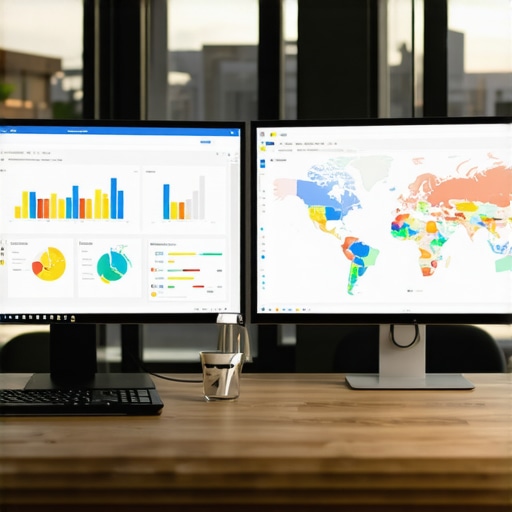
This image demonstrates how comprehensive tools like BrightLocal and Whitespark visualize your local SEO landscape, allowing for informed adjustments. Integrating these can dramatically improve your map pack stability and overall online visibility.
Lessons Only the Savviest SEO Experts Know
One of the most eye-opening lessons I learned is that surface-level optimization like reviews and accurate NAP data are just the starting point. Genuine local map dominance requires you to understand and leverage subtle signals like ‘Located In’ tags, which can drastically tilt the algorithm in your favor. I also realized that over-relying on ranking tools alone without manually optimizing your community signals often leads to stagnation. The biggest breakthrough came when I started embedding precise location details across all touchpoints—website, citations, and schema markup—it was like giving Google a direct map to my business. Lastly, I learned that continuous testing and refinement trump static strategies; the local SEO landscape evolves rapidly, and staying adaptable is your best weapon for sustained visibility.
Tools I Trust to Dominate Google Maps Rankings
For me, BrightLocal is indispensable; its comprehensive dashboard allows me to monitor citations, reviews, and rankings in real-time, making it easier to identify opportunities and gaps. Whitespark’s Local Citation Finder is another favorite—it’s perfect for discovering authoritative citation opportunities that reinforce your ‘Located In’ signals. When it comes to schema markup, Google’s Structured Data Markup Helper simplifies adding precise location data, which significantly boosts map pack appearances. Lastly, Rank Ranger offers granular insights into your map pack performance, enabling data-driven decisions. These tools have been game-changers in my local SEO arsenal, helping me stay ahead of the competition and adapt quickly as algorithms evolve.
Your Next Leap in Local Maps Visibility Starts Now
Remember, mastering Google Maps SEO isn’t about quick wins—it’s about strategic depth and consistent effort. Implement your ‘Located In’ signals thoughtfully across all platforms, monitor your progress diligently, and don’t shy away from experimenting with new tactics. The local maps landscape is dynamic, but with the right mindset and tools, you can turn visibility into a steady stream of local leads. Embrace the challenge, refine your approach regularly, and watch your business rise to new heights. If you’re ready to elevate your Google Maps game further, explore our comprehensive guide on Google Maps SEO secrets and start implementing proven strategies today.
What’s been your biggest challenge in optimizing your local map rankings? Share your experiences below—I’d love to hear how you’re tackling the nuances of local SEO.
This illustration demonstrates the impact of integrated tools like BrightLocal and Whitespark in visualizing and enhancing your local SEO efforts, ultimately leading to more consistent map pack rankings and increased local traffic.
,
About the Author
Duke Isaac Genon
Local SEO Expert
Duke Isaac Genon is a dedicated Local SEO Expert with a specialized focus on enhancing digital visibility for businesses through strategic map optimization. With a proven track record of managing high-quality USA citations, Duke has spent years refining the technical nuances of local search algorithms to help businesses achieve prominence in their local markets. His professional background includes leading specialized teams to deliver precise citation building services that directly impact local search rankings and map visibility. Based on his extensive experience working with clients across North Canton, Ohio, and the broader United States, he understands the critical role that data consistency and authority play in the mapsrankingmastery.com ecosystem. Duke’s approach combines technical precision with a deep understanding of how search engines interpret local signals, ensuring that businesses don't just appear on the map but dominate their local competition. He is recognized for his ability to navigate the complexities of local directories and search engine results pages to drive tangible growth. Duke is deeply passionate about empowering business owners with the knowledge and tools they need to achieve sustainable success.
LinkedIn Profile