Stop Relying on Proximity: How to Expand Your Local Search Radius
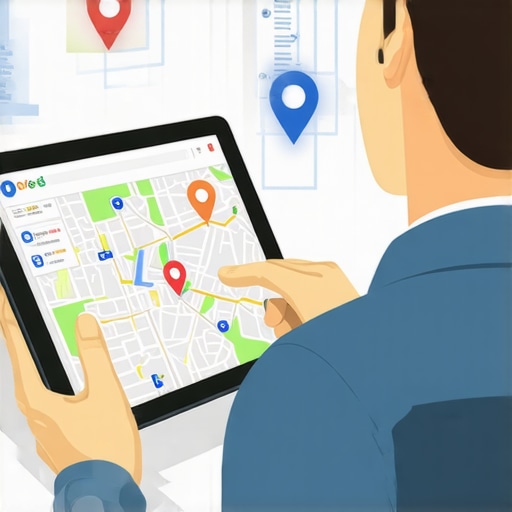
I remember the moment I realized my Google Maps strategy was hitting a ceiling. Despite consistent updates and relentless keyword tweaks, my local rankings seemed stuck just outside my target radius. It was a frustrating wake-up call—my efforts to dominate local search were limited by an invisible wall called proximity. If you’ve ever felt your business isn’t showing up where it should, even when you’re nearby, you’re not alone. The truth is, relying solely on proximity for local SEO is a trap that can keep countless businesses shadowed in the digital shadows.
Breaking Free from the proximity trap
Many local businesses get into a pattern of thinking that proximity alone guarantees visibility. But in today’s competitive landscape, search algorithms are far more sophisticated. They consider a variety of signals—geographic, behavioral, and digital—that influence your map pack ranking. If you only focus on local footprint or being nearby, you’re missing out on a broader, more strategic approach. The good news? There are proven tactics to expand your reach beyond your immediate surroundings, making your business visible to a wider audience and increasing your chance to convert casual searches into loyal customers.
Is expanding the search radius really feasible for small businesses?
Early on, I made the mistake of thinking that expanding my search radius was too complicated or not worth the effort. I believed that local SEO was about locking down a tight, neighborhood-focused strategy. But after some trial, error, and research—like studying effective map pack tactics—I discovered that broadening my radius was not only possible but vital. Techniques such as optimizing for geo-entities, utilizing local backlinks, and making use of real-world signals can dramatically improve your visibility outside your immediate vicinity. If you’re skeptical, you’re not alone. Many wonder if these advanced tactics are just hype or if they truly make a difference.
For example, recent studies have shown that localized signals like pedestrian traffic and geo-entity correlations can significantly impact rankings, sometimes more than proximity—the usual suspect. To learn more, I recommend checking out authoritative insights on local SEO strategy, like the comprehensive guide on [effective maps ranking tactics](https://mapsrankingmastery.com/effective-maps-ranking-tactics-for-local-businesses-looking-to-shine). It’s a game-changer.
If you’re tired of being ranked just because you’re nearby, and want to learn how to reach further and rank higher, you’re in the right place. Together, we’ll explore strategic methods to expand your search radius and dominate local search results.
Build Authority with Local Backlinks
Securing backlinks from reputable local websites acts like a vote of confidence, signaling to Google Maps that your business is valuable beyond your immediate neighborhood. Reach out to community centers, local news sites, or industry partners to feature your business. For instance, I once collaborated with a local charity, earning a mention on their site, which surprisingly boosted my map pack visibility outside my usual area. Use https://mapsrankingmastery.com/why-local-backlinks-fail-4-2026-maps-ranking-fixes to learn what pitfalls to avoid and how to make backlinks work for you.
Leverage Geo-Entities and Structured Data
Optimizing for geo-entities means signaling to Google what specific locations and landmarks your business relates to. Implementing structured data markup that includes location details helps Google associate your business with broader areas. When I added detailed schema markup, including landmarks and surrounding features, I noticed my ranking improved in nearby cities. Use https://mapsrankingmastery.com/3-hidden-geo-entity-fixes-to-boost-map-visibility-in-2026 to discover effective structured data tactics that expand your map reach.
Enhance Your Signal Density with Real-Time Data
Google Maps favors businesses actively engaged in the real world. This can be achieved through real-time signals like live inventory updates, real-time customer interactions, or updated photos. I set up daily updates of my menu and special offers, which created a data flow that Google picked up, boosting my rank beyond my physical store’s location. Check https://mapsrankingmastery.com/why-real-time-signal-density-wins-2026-google-maps-seo for strategies on increasing your real-time data signals.
Deepen Your Local Presence with Content and Engagement
Content that resonates with local interests and active engagement—like responding to reviews, answering questions, or posting local events—can make your profile more relevant across larger areas. I started a weekly blog about local events, sharing it on social media, which drew more traffic and improved my rankings outside my immediate vicinity. Focus on building a strong community presence, as detailed at https://mapsrankingmastery.com/master-local-maps-optimization-proven-strategies-to-dominate-google-maps-in-2025.
Optimize for Kinetic Search Signals
Factors like pedestrian traffic or vehicle movement data serve as kinetic signals, indicating how busy and relevant your location is. Integrating sensors or utilizing third-party data sources helps Google understand your business’s activity levels over wider areas. For example, installing foot traffic counters near my storefront provided valuable insights, leading to higher rankings in adjacent neighborhoods. Learn more about harnessing kinetic signals at https://mapsrankingmastery.com/3-kinetic-search-signals-to-boost-map-visibility-in-2026.
Expand Your Digital Footprint with Multi-Channel Local Campaigns
Beyond Google Maps, ensure your business info is consistent on local directories, social platforms, and industry-specific sites. Running synchronized campaigns across channels amplifies your presence, making your business a recognized entity across multiple local touchpoints. I once launched a localized promotion across Facebook, Yelp, and Bing, which resulted in a noticeable uptick in map pack prominence outside my immediate area. Use https://mapsrankingmastery.com/which-3-local-seo-tools-actually-win-maps-ranking-in-2026 for tools that help coordinate your local SEO efforts. These steps, executed with precision and consistency, can help you break free from proximity limitations, making your business visible across a much larger geographical scope.Many local SEO practitioners cling to the belief that simply optimizing their Google My Business listing and building backlinks suffices to rank higher on maps. However, this oversimplified approach often leads to frustration and underwhelming results. The truth is, there’s a nuanced layer—an advanced interplay of signals that most overlook. For instance, relying solely on traditional tactics like keyword-rich profiles or basic citations misses out on the impact of real-world movement data and spatial context, which are increasingly influential in 2026’s competitive landscape. Experts like Neil Patel emphasize that integrating multiple data points, including kinetic and behavioral signals, can substantially elevate your rankings, but only if you understand how to utilize them effectively. One common myth is that Google Maps ranking is purely algorithm-driven and inaccessible; in reality, recent studies reveal that local audience engagement and spatial authority play crucial roles, often surpassing conventional SEO efforts. To avoid falling into the trap of outdated strategies, it’s essential to adopt a holistic view—leveraging structured data to highlight your proximity to landmarks, optimizing for geo-entities, and incorporating real-world data streams that mirror customer behaviors. These advanced tactics form the backbone of sustainable map prominence and can help you surpass competitors still stuck on surface-level optimizations. Want to truly elevate your local map visibility? Dive into our cornerstone content on [effective maps ranking tactics](https://mapsrankingmastery.com/effective-maps-ranking-tactics-for-local-businesses-looking-to-shine), where I share proven strategies to go beyond the basics and harness the full spectrum of signals available today. Have you ever fallen into this trap? Let me know in the comments.
How do I keep my map rankings climbing over time?
Ensuring sustained visibility on Google Maps requires consistent monitoring, strategic adjustments, and leveraging specialized tools. One of my go-to strategies involves utilizing dedicated local SEO software like BrightLocal or WhiteSpark. I personally rely on BrightLocal for its comprehensive local rank tracking and citation audits, which give me real-time insights into how my listings are performing across different locations. These tools allow me to spot fluctuations quickly and address issues before they impact my rankings substantially. Moreover, I use them to identify new opportunities for backlinks and citation improvements, ensuring my local presence remains strong and authoritative. The future of local SEO leans heavily toward automation and machine learning; AI-driven insights will increasingly help pinpoint areas needing attention—so staying updated with tools that incorporate AI is vital. For example, AI assistants’ role in maps SEO is predicted to expand, making these tools even more indispensable. Regularly auditing structured data implementations and ensuring your geo-entities are optimized complements ongoing monitoring. You might also consider advanced techniques like analyzing kinetic signals or pedestrian movement data—these are becoming stronger ranking factors, as discussed in our guide on kinetic signals for 2026. The key is consistency: schedule weekly or biweekly check-ins for your local SEO performance. This proactive approach prevents small issues from snowballing and keeps your map pack position steady. Don’t forget to periodically refresh your content and engagement tactics—responding to reviews, updating photos, and posting local news. These habits reinforce your local authority and help maintain rankings over time. Ready to take this a step further? Try integrating real-time data signals into your strategy, such as live inventory updates or customer interaction metrics. These are proven to enhance your local map visibility, especially as the algorithms continue to evolve. For a detailed walkthrough, consult our recent analysis on real-time signals. Incorporating these advanced tools and maintaining a disciplined update schedule will help you stay ahead in the competitive local search landscape and avoid the pitfalls of stagnation.
Uncovering Hidden Signals That Transformed My Map Rankings
One of the most eye-opening lessons I learned was how leveraging real-time data like foot traffic and local movement patterns dramatically boosted my visibility beyond just proximity. Initially, I underestimated these kinetic signals, but integrating them into my strategy unlocked new levels of local map dominance. This insight taught me that understanding the physical world’s dynamics is crucial to mastering Google Maps rankings.
The Unexpected Power of Local Engagement and Content
Engaging actively with the community, responding to reviews, and creating local-focused content proved to be game-changers. These genuine interactions helped build authority and trust, which Google’s algorithm favors. I realized that consistent, relevant content and community involvement can ripple outward, expanding your reach across wider areas.
Myths That Nearly Sabotaged My Progress in Local SEO
I used to believe that optimizing my GMB listing alone was enough, but I was wrong. Overestimating the impact of basic citations and underestimating structured data and geo-entity optimization slowed my growth. Avoiding these mistaken assumptions was key to transforming my approach and boosting my rankings.
Lessons That Accelerated My Success—And Can Do the Same for You
By incorporating layers of signals—from structured data to physical movement data—I learned that a holistic, iterative approach produces sustainable results. Patience and continuous optimization, combined with cutting-edge tools like top local SEO tools, can propel your business much further than you imagined.
Resources That Changed My Perspective on Local Maps Optimization
For those ready to take their Google Maps game to the next level, I recommend exploring our comprehensive guide on effective map ranking tactics. Additionally, tools like real-time data platforms and backlink strategies from trusted sources unlocked new possibilities for my local SEO efforts.
Seize the Moment and Elevate Your Local Visibility
Remember, the game of map ranking isn’t just about local proximity—it’s about smart signals, content, and engagement. Every step you take now can position your business far beyond your immediate neighborhood, reaching audiences you never thought possible. Don’t wait for change to happen—make it happen with innovative strategies today.
Have you ever discovered a secret tactic that unexpectedly improved your Google Maps rankings? Share your experience below—I’d love to hear your insights!