How to Track the 3 Numbers That Actually Prove Your Map Ranking ROI
How to Track the 3 Numbers That Actually Prove Your Map Ranking ROI
In the world of local search, there is a dangerous trap that many business owners and even some agencies fall into. I call it the “Green Circle Fallacy.” You open your google business profile seo report, see a beautiful grid of green circles showing you at number one across your entire city, and you celebrate. But then you look at your sales floor or your service schedule, and it’s quiet. The phone isn’t ringing, the door isn’t swinging, and the revenue isn’t moving.
As a Local SEO Expert, I, Fahed Awan, have seen this disconnect hundreds of times. Ranking is not the end goal; revenue is. If your google business profile seo strategy doesn’t translate into a measurable return on investment (ROI), then those rankings are nothing more than vanity metrics. To truly understand if your local presence is working, you have to look past the surface-level positions and dive into the data that actually moves the needle.
Google’s local algorithm is built on three pillars: Relevance, Distance, and Popularity. While these determine where you rank, they don’t tell the whole story of how customers interact with your brand. In 2026, the landscape has shifted. We are no longer just fighting for a spot on a map; we are fighting for “Live Signals” and “Pedestrian Traffic Data” that Google now uses to validate a business’s real-world importance. To prove your ROI, you need to track the three numbers that bridge the gap between a search query and a bank deposit.
Why Traditional Rank Tracking Often Lies to You
The first thing you must realize is that a single “rank” for a keyword no longer exists. If you are sitting in your office and search for “plumber near me,” you might see your business at #1. If a potential customer searches for that same term from a coffee shop three miles away, you might be at #12. This is the reality of proximity-based results.
Traditional rank trackers that give you a static number are outdated. They provide a false sense of security. This is exactly Why Your Map Rank Tracker Shows Green Circles While the Phone Stays Silent. In 2026, Google’s hyper-local focus means that your visibility can fluctuate block by block. If your tracking software isn’t accounting for these micro-shifts, you’re flying blind.
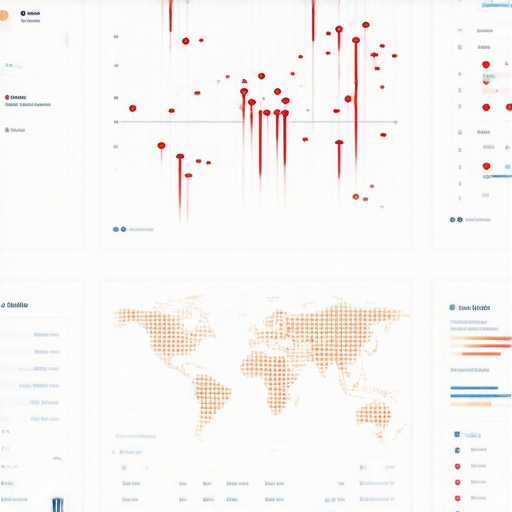
We now use “GeoGrids” to visualize rankings. These grids show your position at various GPS coordinates across a service area. However, even a perfect GeoGrid doesn’t guarantee a lead. A competitor might have a lower rank but a much higher “Review Velocity” or a more enticing “Special Offer” showing in their profile, stealing the click right from under you. To combat this, you need a google maps rank tracker that doesn’t just show a number, but analyzes the competitive landscape surrounding that number.
Furthermore, we must account for “Data Latency.” Google Business Profile Insights data is often delayed by 48 to 72 hours. If you make an optimization today and look for the result tomorrow, you are looking at ghosts. Patience and a deep understanding of these three specific metrics are the only ways to measure true success.
Metric #1: Search Visibility & Map Pack Impression Share
The first number you must master is your Search Visibility, specifically your Map Pack Impression Share. This is the “top of the funnel” for local SEO. If people don’t see you, they can’t call you. But we need to distinguish between “Impressions” and “Views.”
An Impression occurs when your business profile appears in a user’s search results, even if they don’t click on it. Views are more specific to when a user actually looks at your profile details. To prove ROI, we want to see a steady increase in impressions for high-intent keywords – those “money” keywords like “emergency roof repair” or “best divorce attorney near me.”
When performing google business profile seo, I look for visibility gaps. Are you appearing for your brand name but disappearing for your service keywords? If your impression share is high but your actions are low, you have a conversion problem (the profile looks boring). If your impression share is low, you have a ranking problem (the algorithm doesn’t trust you yet).
To track this accurately, you should use professional local seo tools that can pull API data directly from Google. This allows you to see the “Search Terms” report. This report is a goldmine. It tells you exactly what people typed into Google before they saw your profile. If you see a lot of “near me” searches, you know your proximity signals are strong. If you see specific service-based searches, your content and “Services” section optimizations are working.
In 2026, we also have to consider “Zero-Click Searches.” Many users get the information they need – like your hours or phone number – directly from the search results without ever clicking into your website. This is why high visibility in the Map Pack is so crucial; you are capturing intent at the very moment of discovery.
Metric #2: Customer Actions (The “Intent” Signal)
If visibility is the “look,” then Customer Actions are the “touch.” This is where the rubber meets the road. Google tracks several types of actions, but the three core ones are: Phone Calls, Website Clicks, and Direction Requests.
As I often tell my clients, “Ranking is a vanity metric; customer actions are the pulse of your business.” However, not all actions are created equal. The “North Star” metric depends entirely on your industry:
- For Plumbers and Locksmiths: Phone Calls are the primary ROI driver. If someone has a burst pipe, they aren’t browsing your blog; they are hitting the “Call” button.
- For Restaurants and Retail: Direction Requests are king. They represent a high-intent “Live Signal” that the customer is physically traveling to your location.
- For Lawyers and Consultants: Website Clicks are vital. These clients usually need to read bios, check case results, or fill out a detailed contact form before committing.
To get the most out of these numbers, you need to look at the “Interaction Rate.” If 1,000 people saw your profile (Impressions) but only 5 people called, your interaction rate is 0.5%. That is a signal that your profile isn’t persuasive. Maybe your photos are outdated, or your recent reviews are negative. By focusing on google business profile optimization, you can double your calls without even increasing your rank, simply by improving that interaction rate.
Another factor to watch in 2026 is “Booking Actions.” If you have integrated a booking software (like Calendly or Mindbody) directly into your GBP, Google tracks these as high-value conversions. These are even more valuable than a phone call because the lead has already self-qualified and set an appointment. You can find more about how to analyze these specific interactions in my guide on 3 Map Ranking Analytics Tools That Show Exactly Where You Are Losing Real Leads.
Metric #3: Conversion ROI (The “Dollar” Number)
This is the most technical but most important section. How do we prove that a click on Google Maps actually turned into a $5,000 contract? To do this, we have to bridge the gap between Google’s ecosystem and your internal sales data. We use two primary methods: UTM Parameters and Call Tracking.
UTM Parameters
Never just put your website URL (e.g., www.yourbusiness.com) into your Google Business Profile. If you do, Google Analytics will often lump that traffic in with “General Organic” search. You won’t know if the visitor came from the Map Pack or the standard blue links below it. Instead, use a UTM-tagged URL:
www.yourbusiness.com/?utm_source=google&utm_medium=organic&utm_campaign=gbp
By doing this, you can go into Google Analytics (GA4) and see exactly how many leads, form fills, or sales came specifically from your Map listing. This is one of the 3 Hidden Numbers in Your Business Profile Insights That Actually Predict New Leads because it allows you to assign a dollar value to your Map traffic.
Call Tracking
Google’s native “Call History” is okay, but it’s not perfect. It often misses calls or doesn’t track long-term lead quality. I recommend using a service like CallRail. You can place a unique tracking number on your GBP. When someone calls that number, the software records the call, tracks the duration, and can even use AI to “score” the call as a lead or a non-lead. When you can tell a business owner, “Your Map profile generated 42 qualified leads this month with an average ticket price of $800,” you have proven ROI beyond a shadow of a doubt.
In 2026, we are also seeing the rise of “Message Conversions.” Google Business Messages allows customers to text your business directly. Tracking the conversion rate of these chats into sales is the next frontier of local ROI. If you aren’t monitoring these, you are missing a massive chunk of your local seo ROI data. To see how your current setup compares to the latest standards, check out The 3 Ranking Tools That Actually Show Your Real Map Position.
Essential Tools for Tracking Map Success in 2026
To manage all this data, you need the right stack. You can’t rely on the free tools alone if you want to dominate a competitive market. When looking for local seo software, you need something that provides more than just a rank. You need a tool that offers competitive insights, review monitoring, and automated reporting.
I personally recommend SEO Viper Tools. What sets it apart as a google maps rank tracker is its ability to simulate real-world user behavior. In 2026, Google’s algorithm is much smarter; it looks for “Live Signals” like how many people are searching for your brand name specifically or how many people click your profile and then *don’t* click back to a competitor. SEO Viper Tools helps you identify these behavioral patterns so you can optimize for humans, not just bots.
Another essential part of your toolkit should be a robust google maps ranking service that includes automated citation auditing. Citations (your Name, Address, and Phone number listed across the web) are still a foundation of local SEO, but in 2026, “Unstructured Citations” – like mentions in local news articles or blog posts – carry more weight than old-school directory listings. Your tools need to be able to find and track these high-authority mentions.
Finally, don’t forget about “Review Velocity” tracking. If your competitors are getting 10 reviews a month and you are getting 1, your ranking will eventually drop, regardless of your technical SEO. You need software that alerts you the moment a new review is posted so you can respond immediately – a key signal to Google that your business is active and cares about customer experience.
Conclusion & The 2026 Roadmap
Proving the ROI of your google business profile seo isn’t about looking at one chart. It’s about connecting the dots between Visibility (Impressions), Intent (Actions), and Revenue (Conversions). If you only track rankings, you are only seeing 33% of the picture.
To stay ahead of the curve, you must adapt to the “Live Signal” era. Google now prioritizes businesses that show real-world engagement. This means your profile needs to be a living, breathing extension of your business, updated with fresh posts, new photos, and rapid responses to customer inquiries. For a full breakdown of what you need to do right now, refer to The 2026 Google Business Profile Checklist: What Actually Moves the Needle Now.
Your Monday Morning ROI Checklist:
- Audit Your Links: Ensure your GBP website link has UTM parameters so you can track conversions in GA4.
- Check Your Search Terms: Look at your GBP Insights. Are you ranking for “discovery” keywords (services) or just “branded” keywords (your name)?
- Set Up Call Tracking: If phone calls are your primary lead source, stop guessing and start measuring with a dedicated tracking number.
- Verify Your GeoGrid: Use a google maps rank tracker to see where your visibility drops off and target those specific neighborhoods with local content.
If you find that your numbers aren’t where they need to be, it might be time for a professional google business profile optimization. You can visit the official site of SEO Viper Tools to get an advanced audit of your current standing. Remember, in 2026, the businesses that win aren’t just the ones that rank – they are the ones that prove their value to both Google and the customer every single day.