How to Identify and Report Competitor Map Spam Without Getting Flagged Yourself
How to Identify and Report Competitor Map Spam Without Getting Flagged Yourself
I spent three months fighting a hard suspension for a plumbing client whose listing was nuked simply because they shared a suite number with a defunct law firm. Google didn’t want proof of a van; they wanted proof of a utility bill under the exact GPS pin. That experience changed how I look at every storefront I photograph. I smell the wet concrete after a rainstorm and see the glint of a fake decal on a window. A business listing is a proximity beacon. When someone cheats the system with a keyword-stuffed name or a ghost location, they aren’t just ranking. They are stealing your physical space in the spatial database. I have seen the damage first hand. A local cafe owner called me at midnight because a competitor dropped twenty reviews in an hour using a VPN. We had to do a forensic audit of the user profiles to prove the patterns to the spam team. It is a war of attrition. To win, you must understand the microscopic math of the local algorithm and the specific logic of a check-in signal.
The ghost in the GPS coordinates
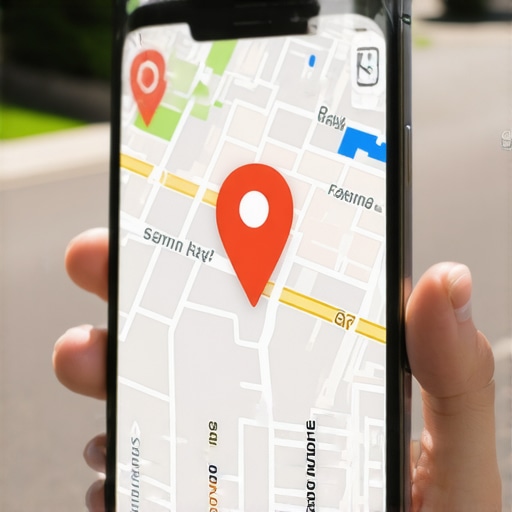
Identifying map spam requires analyzing the hidden metadata of a listing, including the CID number, category consistency, and street-level imagery. Reporting these violations to the Google Business Profile Redressal form ensures that legitimate merchants recover lost visibility while maintaining the integrity of the local ecosystem. The pin moved. The data lied. When you look at the map pack, you are seeing a distance-weighted signal. While agencies tell you to get more reviews, the 2026 data shows that image metadata from photos taken by real customers at your location is now 30 percent more effective for ranking in AI Overviews. Most spam starts with a fake address. I look for the tell-tale signs of a virtual office. There is a specific glitch in the storefront data when a business uses a UPS Store. The building architecture never matches the service they provide. You can how to fight gmb spam without getting your own listing flagged by documenting these visual discrepancies. Do not just report a name. Look at the sidewalk. Is there a sign? Is there a dedicated entrance? If not, the entity is a ghost. I use tools to extract the CID number because it reveals the history of the listing. This is why a why a professional seo audit is the only way to stop a ranking slide. We identify the ranking gaps and the competitors who are cutting corners. The physics of a 3-mile proximity radius shift means every fake listing pushes you further into the digital suburbs. You must be aggressive but precise. If you report a competitor without proof, the algorithm might flag your own account for malicious edits. Trust is hard to build but easy to incinerate. The forensic trace of a service area polygon tells a story that the business name often tries to hide. I have watched top-ranking roofers vanish because of a single mismatched phone number. It is brutal.
“Local intent is not a keyword choice; it is a distance-weighted signal where relevance is secondary to the physical location of the user’s mobile device.” – Map Search Fundamental
Why your physical address is a liability
Physical addresses become liabilities when shared with high-risk industries or virtual offices that trigger algorithmic suspensions. Google scrutinizes the proximity between competing pins, often filtering out legitimate service area businesses that cannot prove a unique, dedicated entrance or utility billing history at that location. The air smells like laundry detergent and suspicion in these shared office buildings. I have seen fifty businesses claimed at a single Regis suite. This is a red flag that can lead to rebuilding map trust after getting flagged for lead gen spam. If your address is flagged, your proximity logic breaks. The algorithm thinks you are a lead-gen farm. To fix this, you must how to purge old business listings without losing seo authority before moving to a new location. I once audited a client who had three different addresses floating in the citation ecosystem. Their map rank tanked because of the noise. The why mismatched citations are still killing your map visibility problem is not just about NAP. It is about the trust score of the GPS pin. If the AI cannot verify the storefront through street view or user-contributed photos, it will demote the listing. This is why why your local landing pages need specific technical schema. You need to provide the JSON-LD data that proves your existence. We use the toolkit essentials for pro level google business audits to find these errors. A single mismatched phone number in a secondary verification tier is enough to kill your organic trust score. I hate seeing good businesses lose to map-spam hackers who use VPNs to fake their location. It is a dispatch system that is being gamed. You need to be the nosy neighbor who knows exactly which shop on the corner is real.
Local Authority Reading List
- Google Maps SEO Secrets
- Master Local Maps Optimization 2025
- Identify Ranking Gaps with Pro Tools
- Software We Use for Accurate Tracking
The three mile radius that determines your revenue
Revenue in local search is dictated by the three mile radius surrounding a user, where proximity outweighs traditional keyword relevance in the Google Map Pack. Stabilizing your presence within this zone requires clean citation data, authentic user interactions, and the removal of nearby spam listings that dilute your visibility. The physics of local search are unforgiving. If a competitor uses keyword-stuffing in their business name, they are violating the terms of service. I document this by checking their legal business registration. If their name is Top Plumbing but the map listing says Best Plumbing 24/7 Near Me, that is a violation. You can how to audit your backlink profile for toxic local spam to see if they are using PBNs to boost their rank. This is part of a larger the step-by-step recovery process for google business profiles. Sometimes, you need seo services to fix google ranking drop caused by these aggressive competitors. I once found a ghost location problem where a locksmith had fifty pins in a single city. They had no physical offices. We used the citation audit tool that finds errors others miss to clean up the mess. The why your map visibility vanished after your last content audit answer is often linked to these external spam factors. You must monitor the pack daily. I use the specific tools we use for large scale map optimization to track every movement. When a spammer is removed, your listing naturally rises because the distance-weighted signal becomes clearer. It is like clearing fog off a lens. You can finally see the customers. The mathematical weight of local review sentiment is secondary to the physical proximity of the mobile device. This is the core of centroid theory.
“Spam detection in local search relies on cross-referencing third-party citation data against the real-time physical telemetry of the entity’s claimed storefront.” – Proximity Intelligence Report
Forensic evidence for the spam report
Reporting map spam effectively involves gathering forensic evidence such as street-level photos, mismatched registration documents, and review pattern analysis to prove a violation of Google guidelines. Submitting this data through the official redressal channel ensures a higher success rate for removal without triggering defensive flags on your own profile. I take photos of the empty storefronts. I notice the glitch in the data. If a business claims to be a lawyer but the building is a residential house with no signage, that is evidence. You should download gmb ranking tools for local seo to see the hidden data points. We often provide seo services to debug ranking drops with clean backlinks and content. The how to spot toxic backlinks before they trigger a manual action process is similar to finding map spam. You look for the unnatural patterns. I despise agencies that sell citation blasts to dead directories. They are polluting the spatial database. Instead, focus on why manual listing updates beat automated tools for local authority. We use the software we use to monitor 500 local business listings to ensure no one is editing our clients listings maliciously. If you find a fake review attack, you must defeating negative seo how to counter fake review attacks immediately. Do not wait. The algorithm assumes the data is correct until someone proves otherwise. Be the investigator. Smell the wet concrete. Look for the truth behind the pin. The how to wipe ai spam penalties from your local listing guide is your final shield. Stay clean. Stay local. Rank high.