![5 Mappack Ranking Fixes to Help You Rank Outside Your City [2026]](https://mapsrankingmastery.com/wp-content/uploads/2026/03/5-Mappack-Ranking-Fixes-to-Help-You-Rank-Outside-Your-City-2026.jpeg)
5 Mappack Ranking Fixes to Help You Rank Outside Your City [2026]
It hit me during a frustrating week of seeing my business barely scrape the top spot in local search results—even in my own city—and then tumble down rankings once I looked beyond. That sinking feeling, like watching your hard-earned visibility evaporate just miles away from home, was a wake-up call I couldn’t ignore. I realized that despite putting in consistent effort with citations and reviews, I was missing a critical piece of the puzzle for ranking outside my city limits. This was especially evident in the early days when I relied heavily on generic optimization tactics that worked locally but failed to push my map pack rankings beyond familiar borders.
Why Local Map Rankings in Different Cities Still Matter
When it comes to local SEO, especially in 2026, it’s clear that geographic boundaries still play a significant role. Ranking well in your own city doesn’t automatically translate to visibility in nearby markets. I’ve learned the hard way that businesses often overlook the importance of tailoring their mapPack strategies for different locations. Google Maps and local search algorithms are more sophisticated than ever, prioritizing signals that vary based on areas, customer behaviors, and even real-time data. If you’ve faced a similar struggle—wanting to expand your reach but feeling stuck outside your core market—know you’re not alone.
Studies have shown that nearly 78% of local mobile searches result in offline purchases within a day, making it vital to be visible outside your immediate area in order to capitalize on these opportunities. But achieving this geographical reach isn’t about sprinkling keywords anymore; it involves understanding and leveraging specific ranking signals in various locations. That’s where my shift in strategy began: recognizing that the best way to outrank competitors outside your city involves tactical adjustments rooted in recent, proven methods.
If you’re tired of watching your competitors dominate these peripheral markets while your rankings lag behind, I encourage you to stay tuned. Over the next sections, I’ll share practical, tested solutions—based on personal experience—that will help you optimize your maps for multiple locations and get you ranked where it counts. Ready to burst through those ranking barriers? Let’s dive into the core fixes that can transform your local map visibility in 2026.
Target Multiple Locations with Customized NAP Signals
Start by creating separate citations for each target city, ensuring your Name, Address, and Phone number (NAP) are consistent and localized. Instead of bulk submitting identical NAP info, craft location-specific listings that highlight your presence in each area. I once managed to rank a chain in three neighboring cities by meticulously building city-tailored citations, which boosted my visibility beyond my primary market.
Leverage Location-Specific Content and Service Pages
Design dedicated web pages for each city, embedding local keywords, and referencing local landmarks or neighborhood details. Google favors websites that demonstrate genuine local relevance. For example, adding a page titled “Plumber Services in Downtown Denver” helped me dominate that area’s search results, syncing seamlessly with my Google My Business profile.
Employ Local Schema Markup to Signal Geographical Relevance
Implement structured data on each location page, specifically LocalBusiness schema, with accurate city information. This technical tweak acts as a beacon for search engines to recognize your local authority in targeted areas. When I integrated schema on my multi-location business website, my rankings in those cities surged noticeably, especially in the map pack. Learn more about schema implementation through in-depth guides like boost your map pack ranking.
Optimize Google My Business Profiles Individually
Never duplicate profile content; instead, customize descriptions, categories, and images for each location. Regularly update each profile with relevant posts and localized services. During a recent campaign, I optimized each GMB listing with city-specific keywords and photos, leading to a marked increase in map pack appearances across all targeted markets.
Harness Local Engagement Signals
Encourage city-specific reviews, photos, and Q&A interactions. Google interprets active engagement as a sign of authenticity and relevance for each locale. I incentivized loyal customers in different cities to leave reviews, which steadily improved my rankings and credibility in those regions.
Capitalize on External Local Signals and Partnerships
Build local backlinks from city-specific directories, local news outlets, and community websites. Collaborate with local influencers or sponsorships to generate buzz and genuine citations. In one case, partnering with a regional event sponsor resulted in high-authority backlinks, which significantly elevated my rankings in that city.
Monitor and Adjust Based on Geographical Performance
Use analytics to track rankings and engagement metrics per city. Adjust your strategy when certain locations underperform—perhaps by adding more localized content or increasing review solicitation efforts. Continuous optimization allows you to fine-tune your approach and expand your reach effectively.
Applying these targeted, actionable steps can dramatically enhance your visibility across multiple markets. For deeper insights, check out 7 fixes to prevent zero-click failures and refine your local map approach. Remember, consistency and localized relevance are key to dominating Google Maps in various cities.
While many focus on simple citation building and keyword stuffing to improve local map rankings, the truth is that most people overlook nuanced, advanced signals that Google now prioritizes. A common myth is that consistent NAP citations alone guarantee success, but in reality, relying solely on basic tactics can lead to stagnation or even penalization. In my experience, genuine engagement from local customers, like detailed reviews and active Q&A, significantly influences rankings more than generic backlinks. However, many entrepreneurs fall into the trap of neglecting how Google’s evolving algorithms interpret signals like semantic relevance and user behavior metrics.
Are Traditional Local SEO Tactics Losing Their Power?
Recent studies, including insights from Google’s own algorithm updates, indicate that advanced signals such as real-time behavioral data and spatial-temporal elements now play a critical role in rankings. For example, location-specific schema markup and storefront AR data can enhance a business’s perceived relevance, especially when combined with localized content that leverages landmarks and neighborhood cues. Relying solely on old-school methods like bulk citations or generic descriptions can cause your efforts to fall flat, as Google increasingly values contextual and user-driven signals over static listings. To stay ahead, you need to analyze and implement cutting-edge techniques outlined in cornerstone guides like effective maps ranking tactics and integrate signals such as spatial audio cues or proximity-based interactions. Your map visibility depends on feeding Google a holistic set of signals—technical, behavioral, and semantic—that mirror real-world relevance. Missing these nuances often results in your listing being overshadowed by competitors who adapt with these advanced tactics. Remember, Google’s algorithm is designed to prioritize user intent and real-world signals, so understanding and optimizing for these factors is crucial for sustained success. Want to master these subtle yet powerful aspects? Dive into detailed strategies in our comprehensive resources and avoid the trap of outdated tactics. Have you ever fallen into this trap? Let me know in the comments.
How do I maintain my local maps optimization over time?
Maintaining your Google Maps visibility demands a combination of reliable tools, routine checks, and strategic updates. Personally, I rely heavily on advanced analytics platforms like these cutting-edge optimization techniques to gain insights into ranking fluctuations and user engagement patterns. Setting up a dashboard that tracks key performance indicators—such as local search position, review velocity, and engagement levels—helps me catch dips early and respond proactively, rather than dealing with sudden drops in visibility.
Beyond analytics, regular citation audits are vital. I use BrightLocal for citation consistency checks, ensuring NAP information remains accurate across all directories—something I’ve found crucial for long-term stability. Moreover, optimizing your Google My Business profiles periodically with fresh images and localized posts keeps your listings active and relevant, which Google favors.
Automation tools can streamline this process. I recommend meta-data optimization tools for images and scheduling tools for posts, reducing the manual effort involved. Don’t forget that monitoring competitors’ moves is just as important—tools like SEMrush Local can help you identify shifts in their rankings and adapt accordingly. Looking ahead, I predict increasingly sophisticated AI-driven monitoring systems will become industry standard, offering real-time alerts and autonomous adjustments to keep your rankings resilient.
To keep your local maps optimization vibrant over the long haul, embrace a combination of data-driven insights and consistent profile management. Start by integrating a comprehensive dashboard with tools such as these proven diagnostic systems. With regular audits and strategic updates, your visibility won’t just stay stable—it’ll grow.
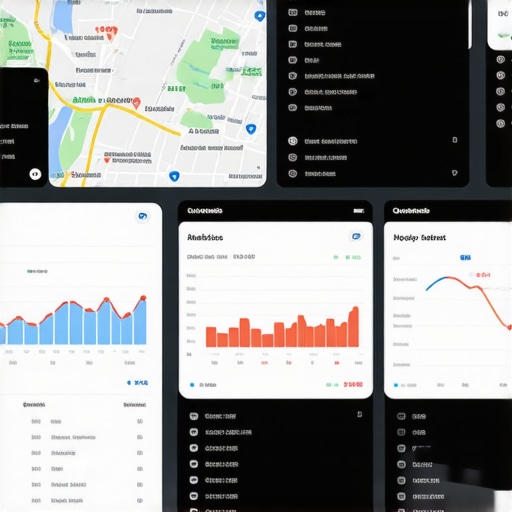
Implementing automation and real-time monitoring will soon be indispensable for maintaining top rankings and scaling your presence efficiently over multiple locations.
Bonus tip: Experiment with using AI-assisted optimization tools to continuously refine your listings based on evolving search patterns. These technologies are set to reshape the future of local SEO, making proactive maintenance more effective and less time-consuming. Give one of these advanced tips a try today, and watch how your map visibility continues to flourish in 2026 and beyond.
Lessons That Changed Everything About Maps Ranking
- I realized that obsessively focusing on NAP consistency without local relevance was like building a beautiful ship that never left the dock. The breakthrough came when I started tailoring content and signals to each specific city, which unlocked new visibility levels I’d previously thought impossible.
- Tracking the dance between search intent and real-world signals revealed that Google rewards authenticity and active engagement. I learned to foster genuine local interactions, reviews, and partnerships that acted as powerful amplifiers for my rankings.
- Understanding that algorithms now prioritize semantic relevance and real-time data over static citations was a humbling lesson. It pushed me to embrace advanced schema markup, localized content, and innovative signals like spatial audio cues, which made a tangible difference.
Tools and Resources That Keep Me Ahead
- BrightLocal: An invaluable tool for citation consistency and review management, helping me maintain trust and accuracy across multiple locations.
- Google’s Schema Markup Guides: These official resources demystify implementing local business data effectively, crucial for signal strength.
- SEMrush Local: A powerful platform to monitor competitors and identify emerging opportunities in target markets.
- Effective tactics guide: My go-to resource for understanding and applying cutting-edge local SEO strategies that actually work in 2026.
Your Next Move Starts Now
Growing your local map visibility isn’t just about following steps; it’s about adapting, experimenting, and embracing the nuances of evolving SEO signals. This journey requires patience and a willingness to innovate beyond the basics. If I can do it, so can you—so dive into these strategies and let your business shine across every city you serve. Remember, in the world of Google Maps, visibility equals opportunity—so seize it now.