The Toolkit Essentials for Pro-Level Google Business Audits
The Toolkit Essentials for Pro-Level Google Business Audits
A local cafe owner called me at midnight because a competitor had dropped twenty 1-star reviews in an hour using a VPN. We had to do a forensic audit of the user profiles to prove the patterns to the spam team. I stood on the sidewalk outside that cafe and the smell of wet concrete was heavy in the air. I looked at the storefront and then at the digital ghost on my screen. The glitch was obvious to me but invisible to the algorithm. That night was a reminder that local search is not about keywords. It is about the physical truth of a business being reflected in a digital mirror. When that mirror cracks, the revenue stops. I spent the next six hours surviving negative seo attacks by documenting the IP trails and the lack of local GPS pings from those accounts.
The review extortion case that changed everything
Review cleanup services and GMB spam fighting are the primary defenses against coordinated attacks from bad actors. Google Business Profile integrity depends on the verification of user intent and the geographic signals sent by mobile devices. Local SEO software helps identify these anomalous patterns before they tank a Map Pack ranking. I remember the graininess of the fake profile photos. They were stock images of people in winter coats in a city that was currently eighty degrees. These small details are the grit that gets into the gears of a local business. We managed to win by defeating negative seo with a process that prioritized the removal of accounts with zero local history. The pin moved. The trust returned. But the audit process had to become much more aggressive to prevent a second wave.
Digital grit and the ghost location problem
Ghost locations and outdated business pins represent the digital debris that confuses the Map Pack algorithm. Cleaning up duplicate citations is the first step in restoring local authority to a Google Business Profile. Professional SEO services often find that old storefront data is dragging down new map rankings. Every time a business moves or changes names, it leaves a forensic trace. If you do not purge ghost locations, you are essentially competing against your own shadow. I often see businesses with three different pins for the same address. One is for a company that died in 2012. Another is a misspelling. The third is the real one. Google sees this and lowers the confidence score. The math is simple. If the engine cannot be certain where you are, it will not show you to a customer standing fifty feet away.
“Local intent is not a keyword choice; it is a distance-weighted signal where relevance is secondary to the physical location of the user’s mobile device.” – Map Search Fundamental
The physics of a three mile proximity radius shift
Proximity signals and centroid theory dictate that your business visibility is a function of GPS coordinates and user distance. Map Pack success requires an understanding of how Google Maps draws a service area polygon. Location page strategy must be calibrated to the physicality of the market. Proximity is a harsh master. If your competitor is half a mile closer to the user, you need ten times the authority to bridge that gap. This is why proximity isnt saving your rankings if your metadata is a mess. I have seen rankings vanish simply because a business moved across the street. The shift in the centroid was enough to put them behind a competitor who stayed put. You have to treat the map like a physical grid. Every inch matters. Every signal from a customer phone that checks in at your location is a vote for your relevance in that specific square of pavement.
Tools to rank higher in local map pack environments
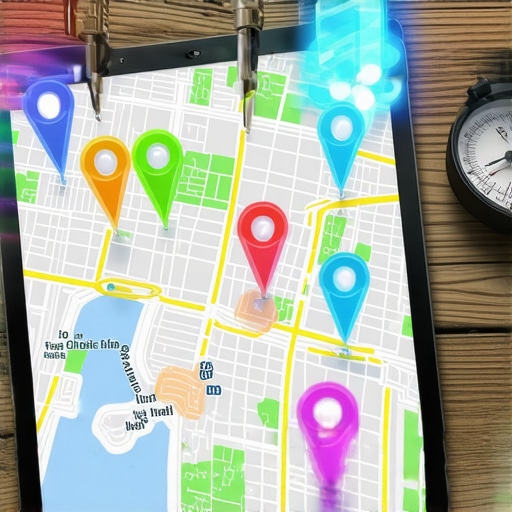
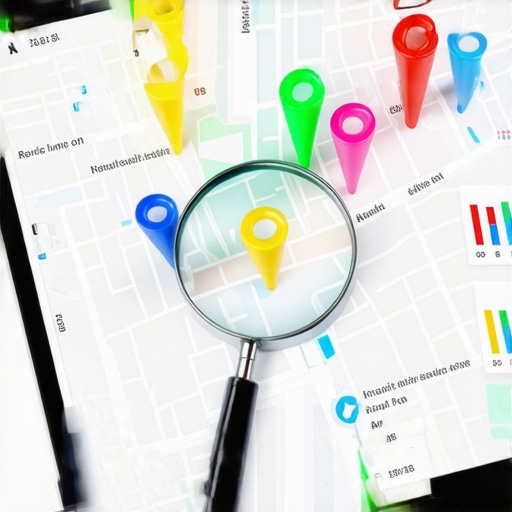
Local SEO toolkits and Google Business Profile tools are mandatory for agencies managing multi-location map tracking. Ranking higher in the pack requires audit software that detects metadata errors and citation inconsistencies. Real-time map data provides the analytics needed to debug ranking drops. You cannot guess where you rank. You need a grid scan. I use a professional gmb ranking toolkit to see exactly where the visibility drops off. Is it at the park? Is it at the highway? If your rankings stop at a major road, you have a signal strength problem. We often use local seo software to improve map pack rankings by identifying which specific zip codes are underperforming. Then we build content that addresses those neighborhoods. It is about filling the gaps in the digital net.
Local Authority Reading List
- How to standardize your business info across different language listings
- Fixing the metadata errors killing your map pack visibility
- How we removed a google manual action in less than 30 days
- How to appeal a suspended business profile and win
- Why your map ranking flatlined after expanding your service area
- The exact toolkit we used to triple our local call volume
Cleaning up mixed language listings hurting local rankings
Mixed language listings and multi-language GMB confusion cause indexing errors that hide local landing pages. Standardizing business info across different language tiers is a technical SEO requirement for local authority. Forcing Google to re-index fixed data is the final step in a listing cleanup. I once spent months fixing a listing that was half in English and half in Spanish. The algorithm could not decide which audience to serve. We had to use the process for cleaning up multi language gmb confusion to wipe the slate clean. We audited the LocalBusiness Schema and the alt text of every photo. If you have Japanese characters in your metadata for a shop in Chicago, you are going to have a bad time. The engine sees it as a spam signal. It thinks you are a global lead gen site pretending to be local. You have to scrub the grit out.
The mathematics of the vicinity algorithm update
The Vicinity update and the Opossum algorithm changed the weight of proximity and keyword stuffing in business names. Ranking higher in local maps now requires clean backlinks and content audits that prioritize information gain. Identifying ranking gaps is the only way to restore map visibility after an update. The math changed. It used to be that the most famous business won. Now, the closest business often wins, unless that business has a history of manual actions. I have seen companies recover from a phone that stopped ringing by removing the keywords they had stuffed into their business title. Google wants the real name on the sign. If the sign says Joe’s Pizza, but the listing says Best Pizza in New York Joe’s Pizza, you are begging for a suspension. The audit must be ruthless about following the TOS. The street photographer knows the sign is the truth. The listing should be a photo of that truth.
Why your physical address is a liability
Hard suspensions and service area business hidden status often result from address rentals or mismatched utility bills. Appealing a suspended business profile requires proof of physical existence at the GPS pin. Moving your business to a new city is a major SEO risk that requires a survival checklist. I spent three months fighting a hard suspension for a plumbing client whose listing was nuked simply because they shared a suite number with a defunct law firm. Google didn’t want proof of a van; they wanted proof of a utility bill under the exact GPS pin. If you are using a virtual office, you are building on sand. We had to go through fixing a hard suspension by providing video evidence of the office, the signage, and the staff. The street does not lie. If the camera can’t find you, the customer won’t either. The audit must verify that your NAP consistency is backed by physical reality.
Technical fixes for local pages that wont index
Discovered currently not indexed errors and broken redirects are technical SEO killers for local landing pages. Site speed and technical schema affect Map Pack placement more than most agencies realize. Auditing content for local ranking signals is the foundation of long-term visibility. If your website is slow, your map rank will suffer. The two are connected. I have seen technical fixes for local pages move a pin from page four to the top of the pack in a week. It was just a matter of fixing the internal linking and the mobile response time. Google is a dispatch system. It does not want to send a user to a broken website. The audit needs to look at the metadata errors and the server response codes. A single 404 on a location page can ghost your entire profile. Keep the paths clean. Keep the data flow smooth.
Rebuilding trust after getting flagged for lead gen spam
Lead gen listings and toxic local spam destroy the trust score of a Google Business Profile. Restoring map visibility after a failed ownership change or spam penalty requires backlink audits and manual listing updates. Purging deadweight citations is the only way to rebuild trust with the local algorithm. Many businesses buy cheap local seo software that uses automated bots. This is a math problem you lose every time. The bots leave a trail. Google follows the trail back to your profile and shuts it down. We had to help a client rebuild map trust after they hired an agency that created 50 fake locations for them. It was a disaster. We had to close every single one of those pins and beg for reinstatement for the original office. It took months. The audit must identify every toxic link and every ghost address. You have to be cleaner than clean.
The final audit checklist for local map dominance
Pro-level audits must cover metadata, citation health, proximity signals, and technical indexing. Standardizing business info and cleaning up old listings ensures that local authority is not diluted. The only toolkit you need is the one that allows you to see the grit in the data. Start with the basics. Check the NAP consistency. Look for duplicate pins. Verify the Schema JSON-LD. Use the only toolkit you need to track your map positions accurately across a hyper-local grid. If you notice a drop, check the user photos first. Are they real? Are they geotagged? The engine values customer-generated content more than your professional shots. A candid photo of a customer eating a sandwich is worth more than a studio photo of the same sandwich. It is proof of life. It is proof of location. It is the final signal that you are where you say you are. Use the tools. Trust the data. Keep the street in sight.