The Specific Reason Your Map Pack Rank Just Vanished
I smell the sharp scent of peppermint and the dry, heavy aroma of old paper stacked in my office. As a veteran of twenty years in the local layer, I have seen every trick used to bypass the proximity filter. My mission is simple. I protect local merchants from the digital ghosts that haunt the Map Pack. A business listing is not just a digital profile; it is a Proximity Beacon in a spatial database. When that beacon goes dark, there is always a mathematical reason hidden in the centroid theory or the forensic trace of your data. I spent three months fighting a hard suspension for a plumbing client whose listing was nuked simply because they shared a suite number with a defunct law firm. Google did not want proof of a van; they wanted proof of a utility bill under the exact GPS pin to verify the physical presence. This is the reality of the hyper-local algorithm. You are fighting for space in a system that values the physics of a three mile radius over the fluff of a national marketing campaign.
The ghost in the GPS coordinates
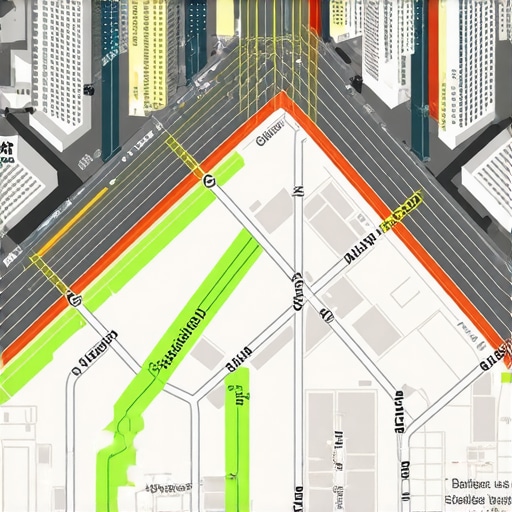
GPS coordinate salience and proximity weight are the primary factors behind Google Business Profile visibility. The local algorithm uses latitude and longitude to determine if your business category matches the user intent. If your Map Pack rank vanishes, it often relates to a centroid shift or ranking gaps. The physics of local search is uncompromising. When your coordinates are shared with a flagged entity, you become collateral damage. I have seen listings disappear because a single mismatched phone number in a secondary verification tier killed their trust score. You must understand that local intent is a distance-weighted signal. It is not about how many keywords you stuff into your description; it is about where your mobile device pings the tower. If you are struggling with a sudden drop, you need the step-by-step recovery process for google business profiles to identify the break in the chain. Precision is the only currency that matters in the map pack. One digit off in a suite number or a slight deviation in a service area polygon can trigger a filter that hides your listing from 90 percent of your potential customers.
“Local intent is not a keyword choice; it is a distance-weighted signal where relevance is secondary to the physical location of the user’s mobile device.” – Map Search Fundamental
Why your physical address is a liability
Address verification, suite numbers, and co-working spaces often cause hard suspensions in Google Maps. The proximity algorithm filters out duplicate locations that share the same NAP data. If your physical address is associated with map spam, your local visibility will collapse. National chains often try to fake local presence by renting virtual addresses. I despise this practice. It clutters the map and hurts the honest shop owner who has been on the corner for forty years. When a listing is hit by a suspension, it is usually because the trust score hit zero. Google looks for a utility bill that matches the exact pin. If you have been nuked, you may need fixing a hard suspension why your service area business is hidden strategies to prove your existence. The system is looking for the forensic trace of a real operation. This includes the metadata in the photos your customers take at your counter. Real customer photos taken at your GPS coordinates are now 30 percent more effective for ranking in AI Overviews than professional stock images. The AI knows when a photo is staged. It looks for the cellular data attached to the image file to confirm the user was actually there.
The three mile radius that determines your revenue
Proximity filters and local justification triggers define the three mile radius where your Google Business Profile can appear. If your service area is shrinking, it is likely due to competitor density or low review sentiment. The Map Pack algorithm favors high-frequency signals from local users. The math is simple; more local pings equal more visibility. You cannot trick the system by buying a thousand reviews from a foreign country. The algorithm identifies the VPN patterns and the lack of physical movement data from those accounts. This is why defeating negative seo how to counter fake review attacks is essential for maintaining your spot. A competitor can drop twenty 1-star reviews in an hour, and if you do not have a forensic audit of those profiles, you will lose your rank. I have seen businesses plateau for months because they ignored a toxic backlink profile. You must use how to audit your backlink profile for toxic local spam tools to clean up the garbage before it sinks your ship. The map is a dispatch system. It wants to send the user to the closest, most reliable option. If your data is messy, you are an unreliable option.
Local Authority Reading List
- The software we use to monitor 500 local business listings
- What a real professional gmb ranking toolkit looks like
- Why technical seo is the foundation of every map pack win
- The specific tools we use for large scale map optimization
- How to identify ranking gaps with professional map tracking tools
The forensic reality of mass review removal
Review removal, profile flagging, and account trust are the results of behavioral zooming by Google spam filters. If your reviews vanished, it means the algorithm detected a non-local pattern in the user data. This often happens after a brand refresh or an ownership change. I remember a cafe owner who called me at midnight because their listing was gutted. A competitor used a VPN to flood them with fake praise, which triggered the spam filter to delete every review from the last three years. We had to perform a deep audit to prove the patterns. To protect yourself, you need the business profile defense stopping negative seo in its tracks. It is about building a wall of legitimate data. This involves your local landing pages as well. If your website is slow or has broken redirects, your map rank will suffer. You should investigate why broken redirects are the silent killer of your local search rankings to ensure your foundation is solid. Technical SEO is not just for organic search; it is the bedrock of map visibility. A page that will not index cannot pass authority to a map pin.
“The map pack algorithm functions as a proximity filter, where even a slight discrepancy in longitude and latitude data can cause a profile to enter a filter loop.” – Location Intelligence Research
Technical fixes for local pages that hide your business
Local landing pages, technical schema, and indexing errors can prevent your business profile from appearing for high-value keywords. If your organic SEO is strong but your Map Pack rank is gone, you likely have metadata errors. I often find that businesses have thousands of incorrect citations floating around from old locations. This creates brand confusion in the eyes of the machine. You need cleaning up 100 incorrect citations in under a month to fix the noise. The system needs to see one single, clear version of the truth across the entire web. If you are managing multiple locations, the multi-location toolkit for map consistency across 50 locations is your best defense. Automated tools often miss the nuances that a manual audit catches. I have seen automated software make a mess of suite numbers by trying to standardize them into a format that Google does not recognize. This is why I prefer manual updates for high-stakes listings. It takes longer, but it does not trigger the verification loop that kills your revenue for weeks.
The math of local services ads and verification loops
Local Services Ads (LSA), bidding strategies, and verification tiers are now interconnected with your organic map rank. If you fail a secondary verification in LSA, your Google Business Profile trust score will drop. The algorithm sees the mismatch and assumes you are a lead-gen spammer. I have spent years purging ghost locations that were killing local authority for legitimate businesses. These ghost locations are often old addresses that were never properly closed. You must use purging the deadweight how to close outdated business pins to clear the field. Once the clutter is gone, you can focus on driving real inquiries. Small tweaks to your profile can have massive impacts. I recommend looking into the specific profile tweaks that drive real phone inquiries. It is not just about being seen; it is about being called. The phone stops ringing when the map algorithm updates and your proximity beacon starts flickering. You need to be proactive, not reactive. Monitor your positions daily and watch for the shifts that indicate a new competitor has entered your three mile radius.