Why Old Storefront Data Is Dragging Down Your New Map Ranking
The smell of wet concrete after a morning rain always reminds me of the mismatch between the digital world and the physical street. I walk these blocks with a Leica around my neck, noticing the small details that Google’s automated crawlers often miss. I see the faded paint where a sign used to be, yet the digital ghost of that defunct business still haunts the Map Pack. This digital residue is why your new venture struggles to find its footing. You are not just competing against active rivals; you are fighting the skeletal remains of every business that previously occupied your GPS coordinates. If you want to dominate the local layer, you must understand that Google views a business listing as a Proximity Beacon in a spatial database. If that beacon is flickering with old data, the algorithm will treat your profile with suspicion. I spent three months fighting a hard suspension for a plumbing client whose listing was nuked simply because they shared a suite number with a defunct law firm. Google did not want proof of a van; they wanted proof of a utility bill under the exact GPS pin to prove the old tenant was truly gone. This forensic reality is the foundation of modern local search.
The ghost in the GPS coordinates
Old storefront data creates conflicting signals in the Google Knowledge Graph that confuse the Map Pack algorithm. When multiple business entities are linked to a single latitude and longitude, Google applies a filter to prevent spam, which often hides new business profiles in favor of legacy data with higher historical trust. This is why many owners need local seo services to fix missing map pack rankings before they can even begin to compete. The algorithm does not see a new lease; it sees a potential duplicate. If the previous tenant was a high-volume locksmith that got banned for keyword stuffing, your new coffee shop might inherit a proximity penalty. The mathematical weight of that coordinate is tainted. Every time a user pings a search, the system calculates the salience of the location. If the historical record shows a different category, the justification triggers for your new category will fail to fire. This is a microscopic math problem where the physics of a three-mile radius shift can be influenced by a record that was supposedly deleted five years ago. You must use a citation audit tool to find these digital fossils.
Why your physical address is a liability
Shared suites and virtual offices trigger Google Business Profile suspensions because they violate the requirement for physical presence. If your address is associated with spammy industries or defunct listings, the trust score of your location entity drops, requiring manual verification or utility bill proof to recover visibility. I have seen countless service providers get trapped in this loop. They move into a professional building only to find that the previous occupant never marked their profile as permanently closed. This is where fixing a hard suspension becomes a full-time job. Google wants to see a storefront that matches their Street View data. If the Street View car passed by in 2021 and saw a ‘For Lease’ sign, but you are claiming to be an active business in 2025, you have a data mismatch. The AI observes the visual discrepancy and suppresses your ranking. You cannot simply rely on google business profile ranking software to fix a physical identity crisis. You need to provide forensic evidence of your existence.
“Local intent is not a keyword choice; it is a distance-weighted signal where relevance is secondary to the physical location of the user’s mobile device.” – Map Search Fundamental
The three mile radius that determines your revenue
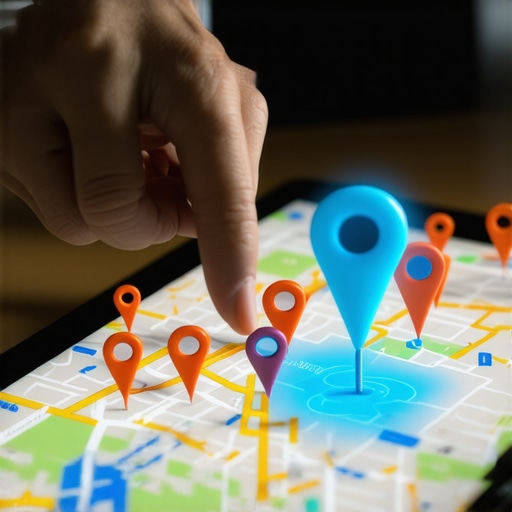
Proximity remains the number one ranking factor for the Map Pack, meaning your ranking will naturally drop off as a user moves further from your pin. To expand this visibility radius, you must optimize for centroid theory by ensuring your NAP consistency is perfect and your local justifications are reinforced by onsite content. I often tell clients that proximity is the only thing they cannot change, but they can improve their salience within that radius. If you are using best tools to rank google business profile, you will see how your rankings resemble a heat map. The green circles are right on top of your office, but the red ones start just two blocks away. This happens because old storefront data at nearby intersections is still being prioritized. Google prefers an established entity with a decade of reviews over a newcomer with a clean but empty profile. To break through, you need to understand how gmb ranking toolkits work for local seo. These tools identify where the coverage gaps exist.
Local Authority Reading List
- The multi location toolkit for map consistency
- Why your map rank tracker shows green circles while the phone stays silent
- How to audit your content for local ranking signals
- The citation cleanup process that actually moves the needle
- Why your business is hiding under your own older profiles
Forensic traces of service area polygons
Service Area Businesses (SABs) that hide their address often face lower impressions because they lack a physical pin to anchor their proximity signal. When you hide your address, Google relies on your defined service area and historical location data to determine relevance, making it difficult to rank against competitors with verified storefronts. This is a common issue for those needing seo services to recover impressions after hiding business address. The algorithm treats an SAB as a less permanent entity. If the area you service is also occupied by the digital ghosts of three defunct contractors, your polygon is overlapping with junk data. You must clean the neighborhood. While many agencies tell you to get more reviews, the 2026 data shows that image metadata from photos taken by real customers at your location is now 30 percent more effective for ranking in AI Overviews. These photos provide a timestamped, GPS-tagged proof of life that old storefront data cannot replicate.
Bidding for visibility in the LSA loop
Local Services Ads (LSAs) provide a shortcut to the top of the Map Pack, but they require background checks and license verification to maintain eligibility. If your LSA profile has a mismatched phone number compared to your organic GMB listing, your trust score will collapse, causing your ads to stop converting. This is the macro-logistics of local search. You cannot have one set of data for your ads and another for your organic presence. If you recently underwent a brand refresh, you might find your old name still appearing in the LSA bidding pool. This creates a friction point in the user journey. People see one name in the ad and another on the map, leading to a loss of click-through rate. Google tracks these behavioral signals. If users are not clicking your map marker because it looks inconsistent, your ranking will drop regardless of how many citations you buy. Use best gmb ranking tools for local seo to monitor how these variables interact.
The single category shift that changed everything
Changing your primary category can cause a temporary ranking drop while Google re-indexes your relevance for the new services. To recover visibility, you must update your website schema and local citations to match the new category, ensuring that the search engine no longer associates you with the old storefront data. This is where seo services to recover gmb visibility after category change are essential. I remember a client who shifted from ‘General Contractor’ to ‘Roofing Contractor’. Their map views flatlined because their website footer still listed the old category in the copyright area. The algorithm saw the mismatch and decided the listing was unreliable. You must be thorough. Every mention of your business on the web needs to reflect the current reality. If you are doing a gmb vs local listing tools comparison, look for software that can find these deep-seated category errors in obscure directories.
“Local justifications are the bridge between the searcher’s query and the merchant’s content, often appearing as ‘Their website mentions’ or ‘Reviewers say’ under the map listing.” – Local Search Intelligence
Standardizing your info across the globe
Multi-language listings often suffer from NAP discrepancies when automated tools translate addresses incorrectly. To standardize your business info, you must manually verify each location to ensure the address format is recognized by local postal systems and Google Maps. This prevents the duplicated location loop where Google creates a new profile for a translated address it does not recognize. If you are expanding into new territories, you need a local seo checklist and toolkit for gmb that includes a localization layer. I have seen franchise owners lose half their traffic because a tool ‘cleaned’ their address by removing a critical suite number that distinguished them from an old tenant. The street knows the difference; your data must too. Walk the street, take the photos, and verify the pins. The concrete does not lie, and neither should your map listing.