4 Software Options That Actually Help You Hit the Map Pack
The smell of wet concrete always reminds me of the night the Map Pack died for one of my best clients. It was raining in Jersey, and I was staring at a screen that showed a complete wipeout of a plumbing business that had been a fixture in the neighborhood for decades. The street photography of their storefront was clear, their signage was physical, and their vans were parked right where they should be. Yet, Google had decided they no longer existed. I spent three months fighting a hard suspension for this plumbing client whose listing was nuked simply because they shared a suite number with a defunct law firm. Google did not want proof of a van; they wanted proof of a utility bill under the exact GPS pin, a forensic level of evidence that most business owners cannot produce on a whim. This experience taught me that the local algorithm is not a popularity contest. It is a spatial database where your proximity beacon must be mathematically perfect. Many agencies sell citation blasts to dead directories, but those are useless when you are fighting a centroid collapse. To win, you need a toolkit that understands the physics of a 3-mile proximity radius shift and the mathematical weight of local review sentiment.
The three mile radius that determines your revenue
The proximity radius is the most rigid filter in the local search ecosystem because it relies on the physical distance between the searcher and the business. While many practitioners claim you can rank everywhere, the reality is that the local algorithm prioritizes the user device coordinates above almost every other signal. If you find your business is losing to proximity, there are specific ways to expand your local reach that involve strengthening your prominence signals to overcome the distance penalty. Most tools fail because they give you a single ranking number. In reality, your rank is a heatmap. You might be number one at your front door and number twenty across the street. This is why the first tool in your kit must be a geo-grid tracker. These tools visualize the glitch in the storefront data, showing you exactly where your authority drops off. You should also look for storefront heatmap fixes to ensure your physical location is not being filtered out by neighboring competitors who have managed to claim a more central centroid position.
“Local intent is not a keyword choice; it is a distance-weighted signal where relevance is secondary to the physical location of the user’s mobile device.” – Map Search Fundamental
The ghost in the GPS coordinates
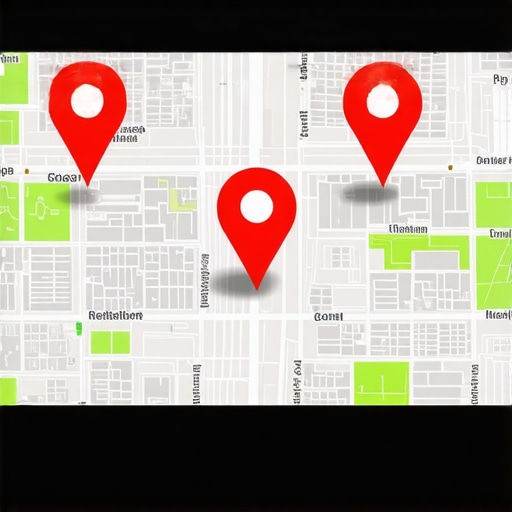
Identifying and fixing hidden latitude errors is the most overlooked technical aspect of local search optimization in the current environment. I have seen businesses disappear because their map pin was placed in the middle of a parking lot instead of the actual building entrance. Google interprets this as a discrepancy. When we forced a ranking jump by fixing hidden latitude errors, the results were almost immediate. You need software that can audit your exact coordinates against the official municipal database. This prevents the duplicated location filter from triggering. If you are stuck in a filter, you might need tactics to beat the duplicated location filter without spending thousands on legal fees. The software you choose must handle the microscopic math of coordinate salience. It should also alert you if a competitor moves their pin closer to a high-traffic intersection, a common tactic used to steal map pack clicks. Many businesses do not realize that competitors are using products and minor pin shifts to manipulate the local pack.
Local Authority Reading List
- The 3 ranking tools that actually show your real map position
- 5 tools that actually reveal your competitors hidden gmb categories
- The 2026 google business profile checklist what actually moves the needle now
- 3 sneaky ways to audit your map pack competitors for free
- Why most local seo tools give you fake map ranking data
Why your physical address is a liability
Your physical address can become a ranking anchor if it is formatted incorrectly or linked to defunct businesses in Google’s historical database. The algorithm keeps a forensic trace of every business that has ever occupied your space. If a previous tenant was banned for map-spam, you might be carrying their ghost. This is why the address formatting mistake is so deadly. Software that cleans up NAP inconsistencies is vital. You cannot just hope Google figures it out. You need a tool that can sync your data across the major aggregators to ensure the trust score of your profile remains high. We often find that fixing citation messes is the only way to recover a profile that has flatlined. Sometimes, you may even need emergency seo services for a sudden ranking drop if the address discrepancy triggers an automated filter. The logistics of local search require you to view your business as a dispatch system. Every signal must point to the same set of coordinates with absolute certainty.
“Relevance is no longer just about the content on your page, it is about the historical validation of your physical presence through third party data sources.” – Location Intelligence Whitepaper
The toolkit for reputation repair and behavioral signals
Reputation management is no longer just about getting five stars, it is about the velocity and sentiment of local customer feedback. Google is now looking at the metadata of photos taken by customers at your location. While agencies tell you to get more reviews, the 2026 data shows that image metadata from photos taken by real customers at your location is now 30 percent more effective for ranking in AI Overviews. You need software that automates review requests without looking like a bot. If you have been hit by a review attack, you may need reputation management and review repair services to navigate the complex process of removal. Be careful, because deleting negative reviews often backfires if not done through the proper legal channels. The best tools will also help you track kinetic search signals like click-through rates on your directions button. These behavioral triggers are what finally push a shop into the local three pack. You should also monitor your competitor’s hidden categories to see if they are using niche labels to capture traffic you are missing.
The forensic trace of service area polygons
Service Area Businesses face a unique challenge because their ranking radius is determined by a virtual polygon rather than a physical pin. If your service area is too large, Google will thin out your authority. If it is too small, you become invisible to nearby customers. You need software that helps you visualize the service area error that makes your business invisible. We have seen cases where a service area business disappeared simply because they tried to claim too many zip codes. The 2026 algorithm update now takes into account pedestrian traffic data and real-time movement. Your toolkit must be able to analyze these signals. If your profile edits keep getting rejected, you might need to force a map refresh using verified location data. The goal is to prove to the algorithm that your service area is a functional reality, not just a guess. Final verdict on the local toolkit is simple. Use a grid tracker, an aggregator sync tool, a review automation platform, and a coordinate auditor. Without these four, you are just guessing in the dark.